Read before this
No earlier guide is required. You can start with this article.
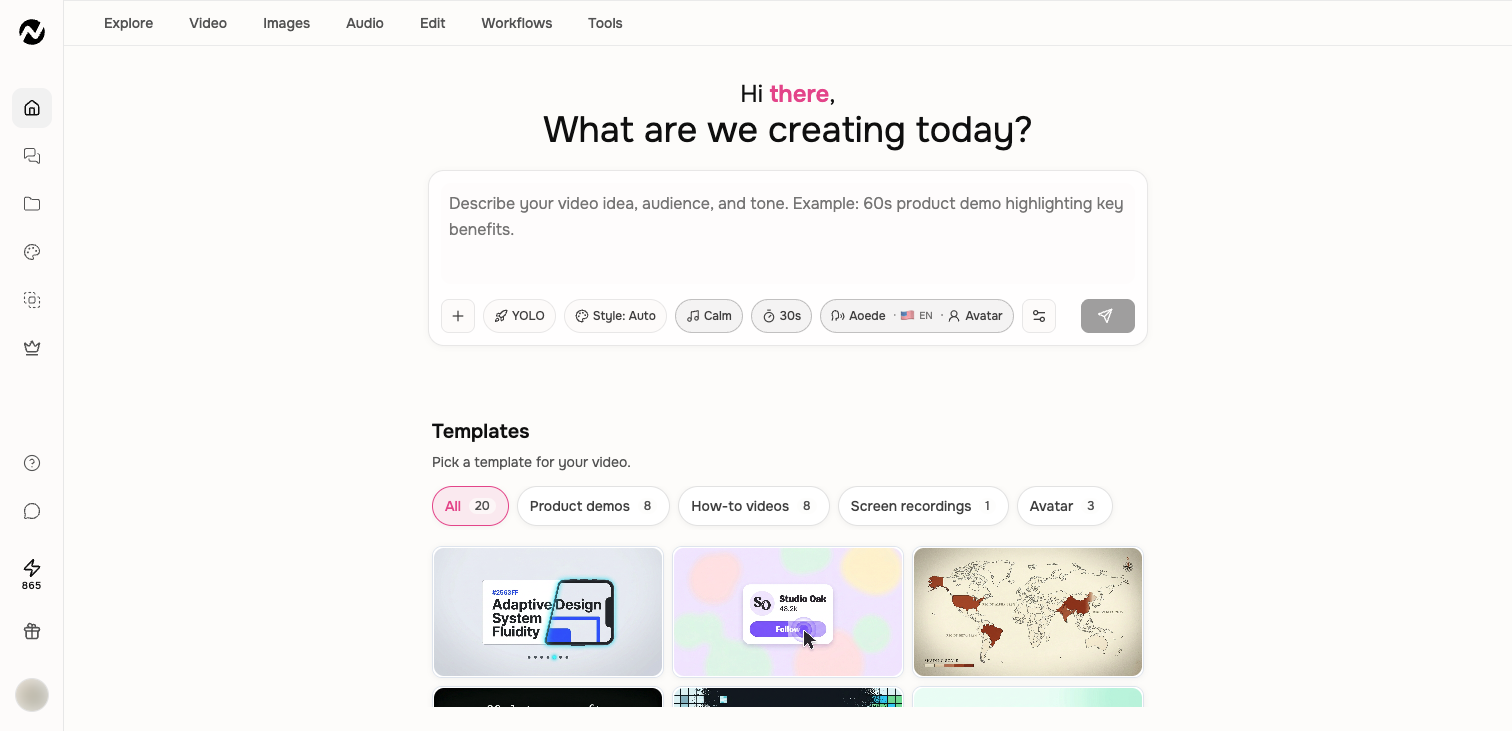
What you can create
Start with an idea, script, URL, document, image, audio clip, or screen recording. ngram plans the story, creates scenes, adds narration and music when requested, and gives you a finished video you can revise.
The exact production path depends on the video type you choose. A motion-graphics explainer, an avatar video, and a polished screencast do not use the same scene structure, so the workspace adapts to the job.
The main Studio surfaces
- Home: prompt-first creation, templates, recent work, and creation settings.
- Agentic workspace: chat, script and scene review, preview, revisions, sharing, and inline editing.
- Projects: agent conversations and one-shot Tool results in one place.
- Tools: focused generators and media-editing utilities.
- Image Lab and Clip Studio: dedicated image and short AI-video workspaces.
- Full editor: a separate, timeline-based editing copy for detailed manual changes.
How work is saved
Creation runs are durable. You can leave a conversation and reopen it from Recents or Projects. Finished agent conversations remain connected to their script, storyboard, revisions, and published video.
One-shot Tool outputs appear under Tool results. Opening a finished agentic video in the full editor creates a separate editor copy; later conversation changes do not automatically update that copy.
Where to begin
- Open Home and describe the video, audience, and goal in plain language.
- Attach source material when factual accuracy or product visuals matter.
- Choose YOLO when you want ngram to continue through generation, or PRO when you want to approve the storyboard first.
- Review the finished video and request targeted changes in chat before opening the full editor.
If the result is not available
If a control or result does not match this guide, confirm that you are in the intended account or team and reopen the current conversation from Projects. Use the closest visible option, then check Help or contact Support when the difference blocks the task.
Keep going
Create a first ngram video from the current Home and agentic workflow.
Learn the current chat, storyboard, preview, editing, download, and sharing controls.
Search and use the current Tools library and understand where Tool results are saved.