Read before this
Read these direct prerequisites in order. Each guide lists any earlier context it assumes.
Before you start
You can prepare the brief while signed out. To follow the workflow in Studio, sign in, open Home, and use an account or team context where you are allowed to create. Have approved source material ready before you submit a factual video.
Chat and progress
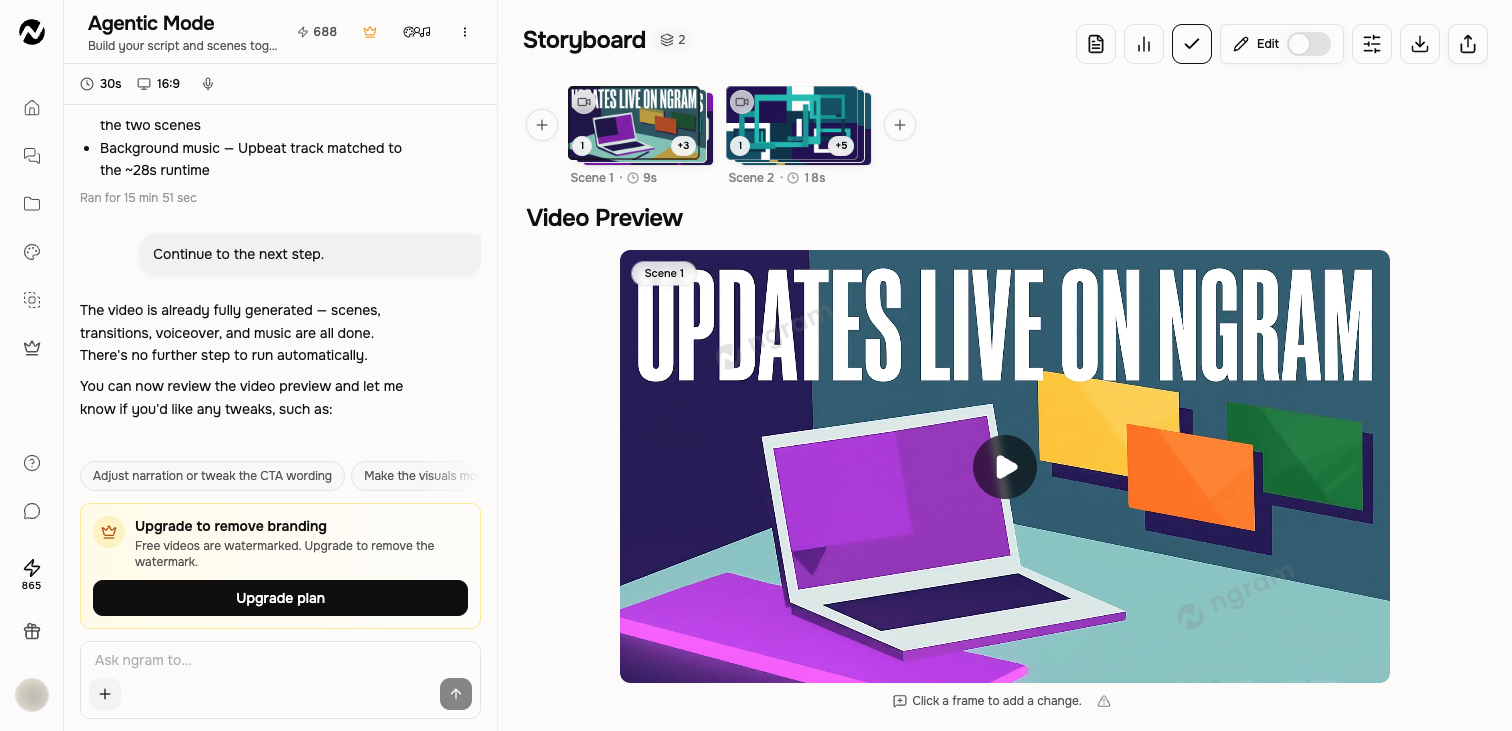
The left side contains your instructions, ngram's progress messages, expandable reasoning summaries, credits used in the session, and suggested next actions. Use the message box for revisions after the first video is ready.
You can rename a conversation, attach more sources, or reopen it later. Eligible checkpoints in newer conversations can also offer fork or undo actions. A long-running generation is tied to the conversation rather than a single browser visit.
Storyboard and preview
- Scene cards show the order and duration of the current scenes.
- Plus controls add a scene before or after the current storyboard.
- View script opens the current script. After generation, ask for script edits in chat.
- Clicking a frame lets you attach a visual change request to that part of the video.
Editing controls
The Edit switch opens the inline workspace for direct scene changes without leaving the conversation. Edit video contains quick controls for captions, music, voiceover, sound effects, and the separate Open in editor path.
Download exports the current finished version. Share controls the public link, embed, social destinations, and republishing when the live version is older than the current edit.
A useful review order
- Check the script for factual and structural problems.
- Check scene order, narration, and pacing.
- Play the complete preview once before making local changes.
- Request targeted changes in chat, then use inline editing for precise visual adjustments.
- Download or publish only after the current preview matches the version you want to share.
If the result is not available
If a control or result does not match this guide, confirm that you are in the intended account or team and reopen the current conversation from Projects. Use the closest visible option, then check Help or contact Support when the difference blocks the task.
Keep going
Review the pre-start script or storyboard approval step and the finished scene plan.
Choose between chat revisions, frame-specific requests, inline editing, and a full-editor copy.
Edit scene content, layers, media, audio, interactivity, and timing inside a conversation.
Use the current Share control and understand the curated Made with Ngram gallery.