Read before this
Read these direct prerequisites in order. Each guide lists any earlier context it assumes.
Use this when
Use this guide when you want to change a finished video, make a shorter version without losing the original, repair an edit that was not applied, or recover when a targeted request changed unrelated content. It helps you choose chat, a selected scene or frame, direct narration editing, or an independent editor copy.
This guide does not restore an earlier render as the active project. Versions can preview and download earlier renders, while forks and editor copies preserve separate editable directions when those actions are available.
Before you start
Open the exact conversation from Projects and play the current render. Write down what must change and what must remain unchanged. Before a broad rewrite or shorter variant, use Fork from here when it is available; otherwise keep the existing rendered version available in Versions or create an independent editor copy before changing it. Review the displayed credit estimate before regeneration.
Use chat for creative intent
- Rewrite narration or the CTA.
- Change tone, pacing, scene order, or visual direction.
- Regenerate a named scene while preserving the others.
- Replace music or revise the script structure.
Target the change
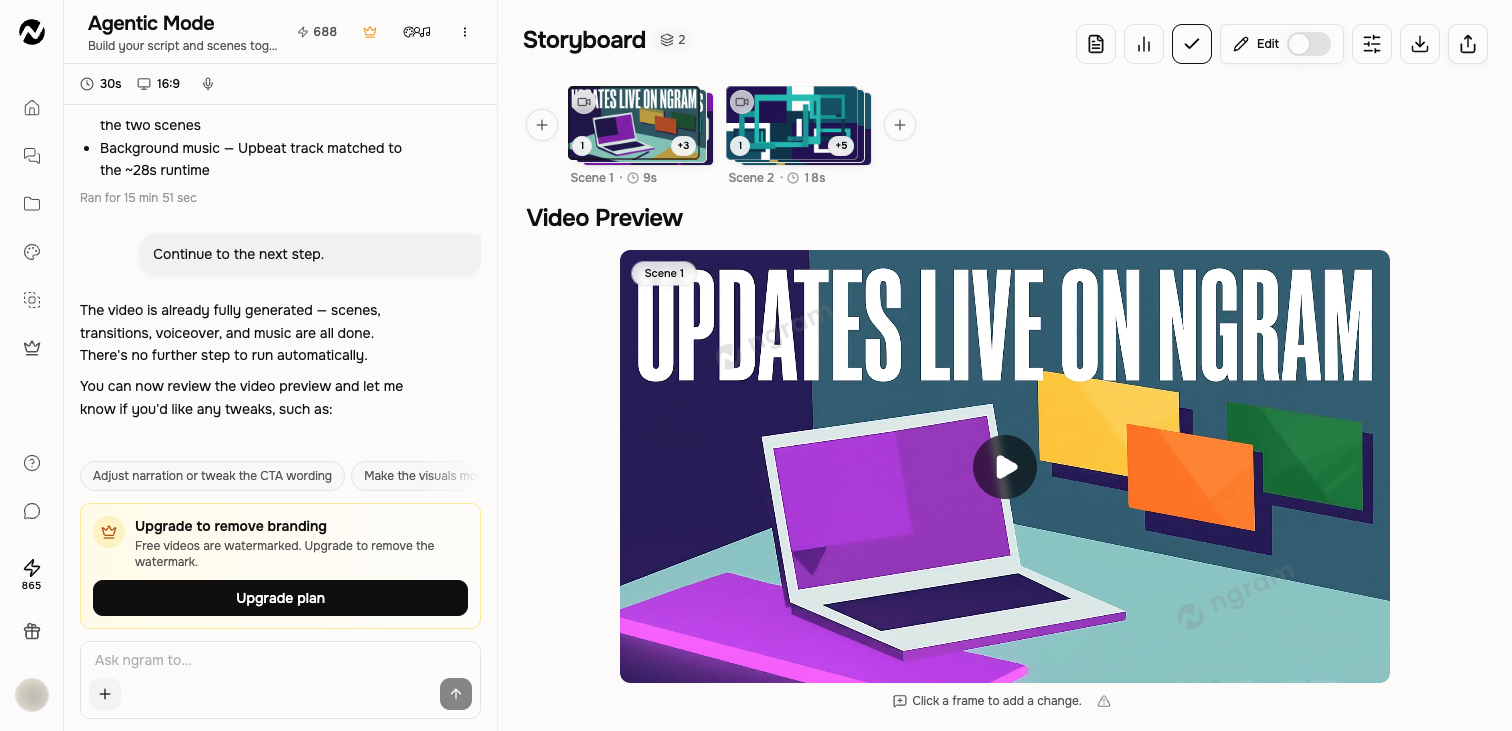
Name the scene, the exact change, and what must remain. For example: “In scene 3, shorten the narration to one sentence. Keep every other scene, visual, voice, and CTA unchanged.” Click a frame when the request concerns a visible object, layout, or moment. A narrow instruction reduces unnecessary regeneration and makes the result easier to compare.
Target a Generative Video change
For a Generative Video project, ask in chat or use Make changes and name the scenes that should change. Studio regenerates the affected segments at the existing timing and resolution while reusing untouched clips. The visual Edit workspace is not available for this mode. A project created before clip provenance was recorded may need one fresh render before targeted reuse works.
Make a shorter copy without changing the original
- Open the completed checkpoint you want to preserve and choose Fork from here when that action is available.
- Rename the new branch so it is clearly the shorter version. The original conversation remains separate.
- Ask for the target runtime or the scenes and lines to remove, and explicitly say which visuals, voice, brand treatment, and CTA must stay unchanged.
- Compare the original and shorter branch in Projects before publishing or downloading either one.
Use the right editor
Use the inline Edit workspace for direct changes that should remain part of the agentic project. Use Open in editor when you need the full manual timeline and accept that it creates a separate copy.
Review after every meaningful revision
- Confirm the request completed and the intended scene changed.
- Play through the transition into and out of the edited scene.
- Check narration, captions, music, and total runtime.
- Republish if the public link still points to an older render.
Expected result
The intended scene, narration, or creative direction changes while every named item to preserve remains intact. A fork or full-editor copy appears as a separate project and does not change the original. Save direct edits, replay the affected range and final CTA, and verify whether a public link needs to be updated.
If the edit fails or changes unrelated content
- Do not send another broad instruction. Keep the project URL and note the affected scene and the first timestamp where the result became wrong.
- Open Versions to preview or download the last good render, or return to the untouched fork or editor copy. Remember that Versions cannot restore or revert the working project.
- If the good work is preserved, make one smallest-scope correction: select the affected scene or frame, state the desired change, and list what must remain unchanged. Review any displayed credit estimate first.
- Compare the result with the preserved version. If the correction is not applied or unrelated content changes again, stop and contact Support.
Contact Support after one failed correction
Stop after one targeted correction if the edit remains unapplied, repeats the same error, or overwrites unrelated scenes. Send Support the project URL, approximate time, affected scene or timestamp, exact visible error or unexpected change, browser, whether you made one retry, and whether Usage shows a credit change. Do not delete the affected conversation, fork, or editor copy while it is being investigated.
Video revision FAQ
Keep going
Edit scene content, layers, media, audio, interactivity, and timing inside a conversation.
Understand the full editor and how it differs from inline agentic editing.
Change captions, background music, narration, and sound-effect settings.
Use the current Share control and understand the curated Made with Ngram gallery.
Preserve branches and understand which earlier renders can only be viewed or downloaded.
Choose the right help channel and include useful, privacy-safe diagnostic details.