Read before this
Read these direct prerequisites in order. Each guide lists any earlier context it assumes.
Before you start
- Know the audience and the action you want them to take.
- Collect any approved URLs, decks, PDFs, screenshots, images, audio, or recordings the video should use.
- Decide whether you want ngram to proceed automatically or pause for storyboard approval.
Choose a first goal during onboarding
A new account can be asked what it wants to do first: create from scratch, turn existing content into video, clean up media, add captions or translation, create an image or clip, or explore. The choice opens a relevant starting surface; it does not permanently limit what the account can create later.
Create the first version
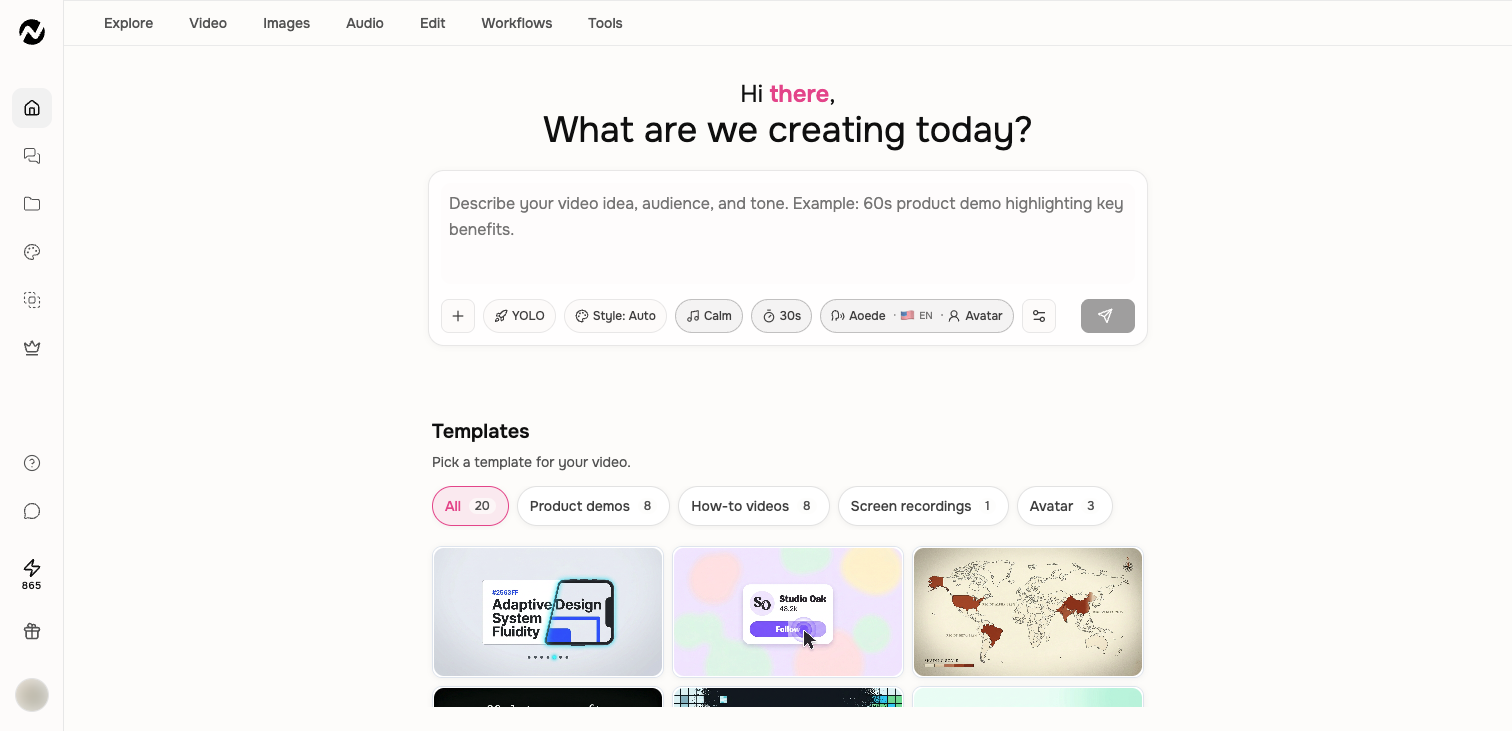
- Open Home and write a clear prompt with the subject, audience, tone, and desired outcome.
- Use the plus button to attach source files, or include a public source URL in the prompt.
- Choose YOLO or PRO, then set style, music, duration, voice or avatar, aspect ratio, and models only when you need specific control.
- Submit the prompt. When a script or storyboard review appears, read it carefully and use the visible revision controls before you approve generation.
- Leave the conversation open or return later from Recents or Projects; the run is saved to the conversation.
Review the result
The finished workspace keeps chat on the left and the storyboard/video workspace on the right. Play the preview, inspect each scene, open View script, and use the suggested actions or your own message to request changes.
Ask for one concrete change at a time when the change is local: name the scene, narration line, frame, color, transition, or CTA. Use a broader instruction only when you want the whole video reworked.
Finish and share
- Use Edit for scene-level manual changes inside the conversation.
- Use Edit video for captions, music, voiceover, sound controls, or a separate full-editor copy.
- Download the finished video, or open Share to publish a public link, copy an embed, or publish through a connected social account.
Keep going
Write prompts that produce stronger scripts, visuals, pacing, and revisions.
Choose the right approval mode for a video creation run.
Choose between chat revisions, frame-specific requests, inline editing, and a full-editor copy.
Use the current Share control and understand the curated Made with Ngram gallery.