Read before this
Read these direct prerequisites in order. Each guide lists any earlier context it assumes.
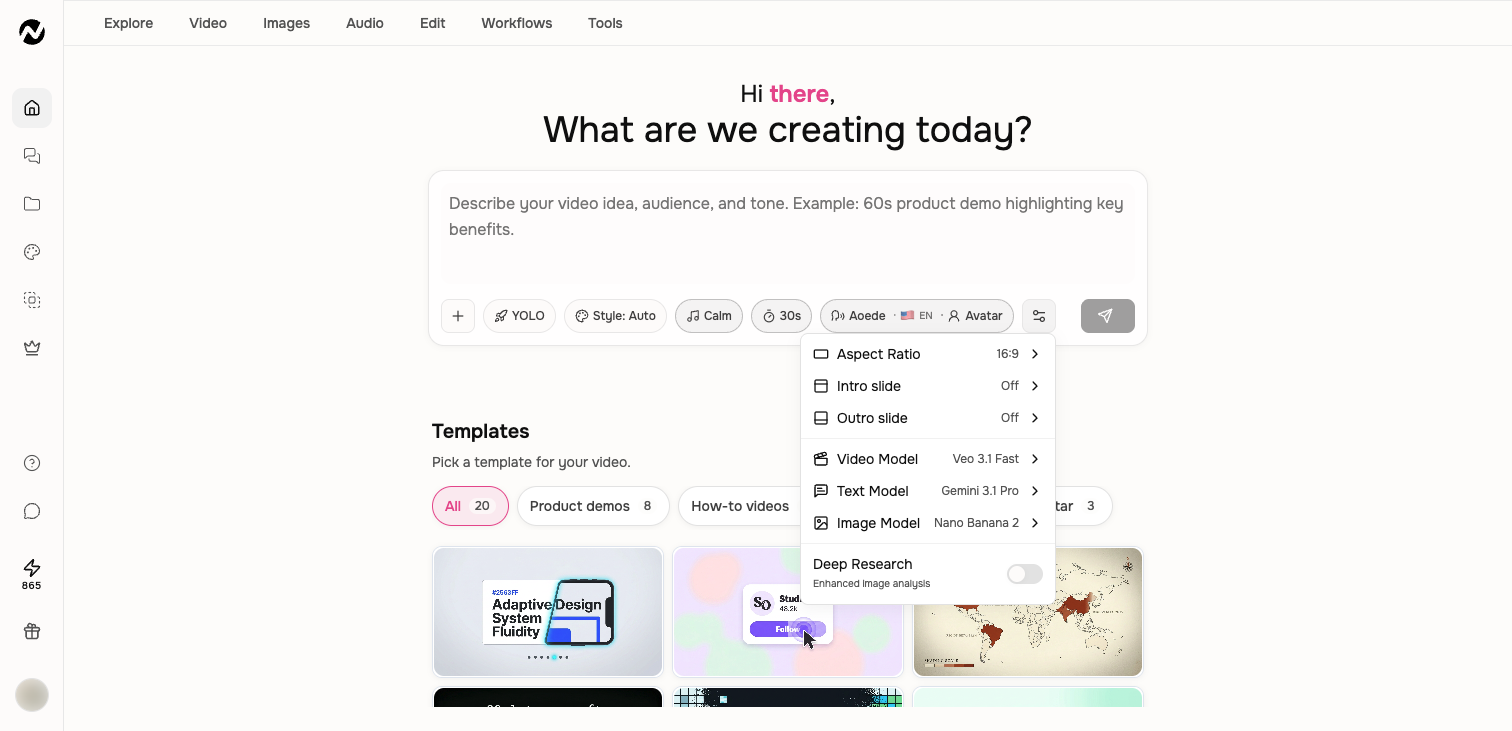
What each model controls
- Text model: research interpretation, planning, script, and reasoning quality.
- Image model: still visuals, keyframes, references, and image edits.
- Video model: motion generation, supported frame inputs, duration, speed, and video cost.
Use the live selector
Model availability and defaults change frequently. The current selector is the source of truth for your account. It also reflects whether a model accepts a prompt only, a first frame, first and last frames, or multiple references.
Do not assume the most expensive model is best for every scene. A faster model is often better for iteration; reserve premium generation for the shots where the quality difference matters.
A practical selection strategy
- Start with the default models for the first complete draft.
- Identify the specific scene or output that needs improvement.
- Change only the relevant model and review the displayed cost.
- Regenerate the smallest useful scope instead of rebuilding a good video.
Avoid frozen model lists
If a model name in a screenshot or older article is missing, choose a current model with the same job: planning, image generation, image editing, or motion. Help documentation is dated, while Studio's selector is live.
Before you finish
Before spending credits on another generation, check the script or storyboard, identify the smallest part that needs improvement, and change only the setting responsible for that result.
Keep going
Use Auto, style presets, templates, and Brand Kit without confusing their roles.
Understand credit estimates, reservations, charges, plan grants, top-ups, and auto top-up.
Use Clip Studio input modes, models, duration, aspect ratio, cost estimates, history, and downloads.