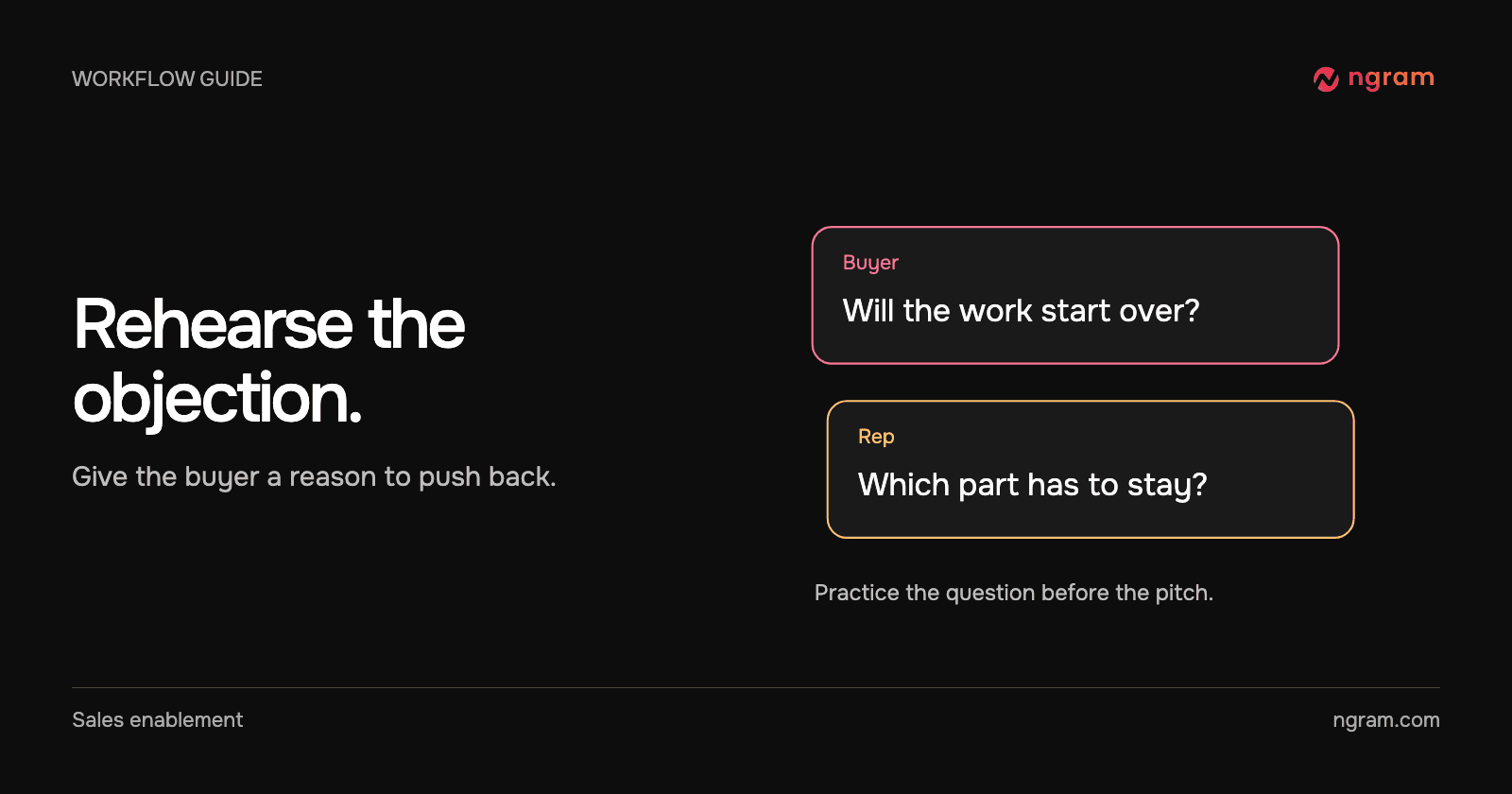

A buyer says, “We already have a library of recordings.” One rep hears an objection to price. Another hears concern about losing earlier work. The useful skill here is finding out which concern is real. A role-play video can model that question before the team practices answering it.
Choose a behavior you can observe
Write down what the rep should do on the next call. “Handle objections confidently” is difficult to coach. “Ask which existing recordings the buyer needs to preserve before offering a migration path” gives the manager something to listen for.
Use a recurring objection heard across calls. Remove identifying customer details. Separate the buyer’s words from your team’s interpretation, and check any claim about migration, supported files or pricing against an approved source. If the answer depends on the buyer’s contract, teach the rep how to find the right owner for that answer.
Write a buyer who has a real constraint
Try this brief: “Make a two-speaker training scene. A buyer wants to keep a library of approved tutorials. The rep asks which tutorials must remain unchanged and listens for the answer before suggesting a next step. End with an open question for the rep watching.” Start from Conversation style, name both roles and review the exchange in the plan.
A plausible second buyer line is “The compliance team signed off on the current narration.” That changes the next question. A rep who jumps straight to replacing narration has missed the concern; a rep who asks which parts are approved can continue the discussion.
Use the video to model turn-taking
The filmed example is a product Q&A about reusing a recording. Watch how the question gets a distinct voice and how the supporting visual appears during the answer. Borrow that structure for the objection, then supply the buyer’s constraint from your own calls. The example does not establish what a prospect has licensed or what your team can promise.
Put a new objection in front of the rep
Stop the practice video before giving the ideal reply. Ask the rep to write the next question and explain what its answer would change. In a live session, let another rep play the buyer. For a distributed team, collect the responses before showing the modeled answer. The sales enablement solution gives the broader context for training materials.
If your team needs a record of a specific prospect’s commitments after a call, create a sales demo follow-up from confirmed facts instead. The training scene is useful precisely because the team can test several possible answers without suggesting a real buyer said them.