
An engineer inherits a report-export ticket on Wednesday. The thread has forty comments, a proposed fix and a suggestion that the wrong rows were downloaded. A summary that calls the suggestion a confirmed bug will send the new owner down the wrong path.
Put four lines at the top of the ticket
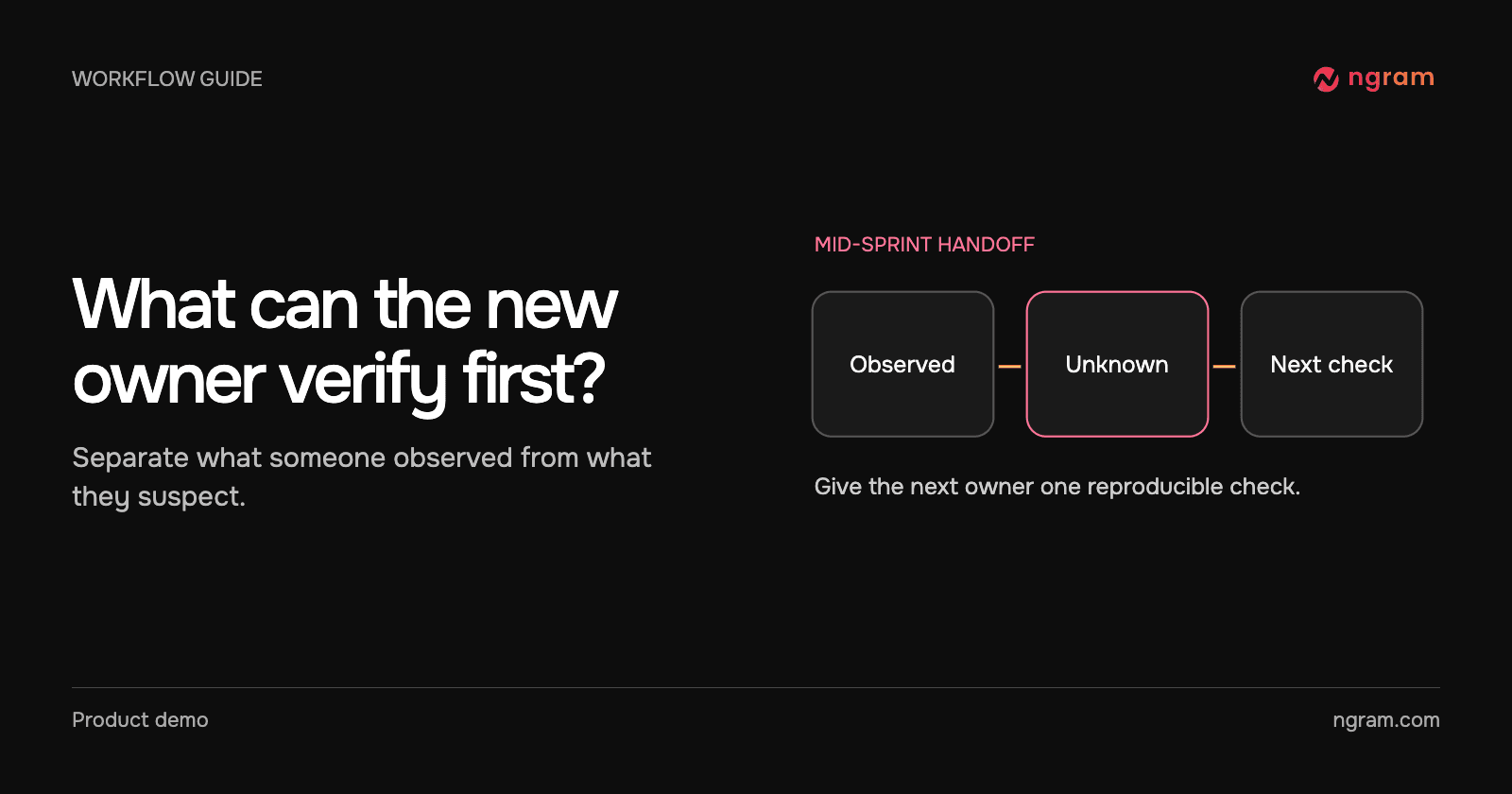
Write “Observed,” “Confirmed,” “Unknown” and “Next check.” As an illustrative handoff, Observed might say that a customer reported extra CSV rows. Confirmed might say that the release notes describe export of the currently filtered rows. Unknown might be whether the customer had the same filter when the file was created. Next check asks the new owner to reproduce with two sample rows and save the resulting file.
Keep timestamps, sample data and the source ticket linked in writing. Put the proposed cause under Unknown until someone verifies it. Give the new owner a person to contact for access or customer context.
Use video only for the part they need to see
The recording shows a real GitHub request about a reports-page change and a returned explainer. The release-note view describes the CSV behavior. Use it as a visual reference for the intended behavior. Reproduce the reported problem separately.
If the evidence lives on a PR, the GitHub integration can keep the request beside the changed code. For any issue tracker, link the source PR and the reviewed clip in the handoff. Preserve important error text and commands in the ticket so the next owner can copy them.
Define the first useful result
Tell the new owner what should settle the next question. For example: apply the saved filter, export once and compare the visible row IDs with the file. If they match, investigate where the reported file came from. If they differ, attach the artifact and record the exact conditions. Avoid assigning a broad “look into exports” task.
A team update is useful when several people need the decision. The individual ticket still needs one responsible owner and a next action.
Close the handoff without freezing the diagnosis
Ask the new owner to repeat the question, name the source they will check and specify where they will record the result. Acknowledge the handoff once those are clear. Use a product walkthrough when the visual sequence is hard to reconstruct from prose. Keep changing assumptions and next steps in the ticket rather than rerecording a video every time the diagnosis changes.