
fal and Yoroll reported real-time AI video generation speeds for two MiniMax H3 derivatives in the first week of September 2026. On September 1, fal said H3 Max could generate a five-second clip in about three seconds. Six days later, Yoroll said H3 Superfast could generate ten seconds of video in four seconds. Both are post-trained versions of the same open-weight MiniMax H3 base model.
That does not mean either system can already run an endless, coherent movie on demand. It means inference has crossed one useful boundary: the next clip can finish while the current clip is still playing. For developers, that turns video from a batch asset into something that can sit inside an interaction loop.
We covered the base model's native audio and multimodal design in our MiniMax H3 launch analysis. This follow-up is about latency: what the 1.67x and 2.5x playback-rate claims measure, why open weights made two derivatives possible in one week, and which bottlenecks remain outside the model.
What real-time AI video generation means here
Real-time AI video generation means a model finishes a clip in less time than that clip takes to play. A five-second clip rendered in three seconds runs at 1.67x playback speed. A ten-second clip rendered in four seconds runs at 2.5x. This is an inference benchmark, not a guarantee of instant viewer response.
The distinction matters. A viewer-facing system must also collect an action, interpret it, moderate it, schedule GPU work, encode the result, deliver the file, and begin playback. Vendor figures typically isolate generation or wall time around the model. End-to-end latency can be longer.
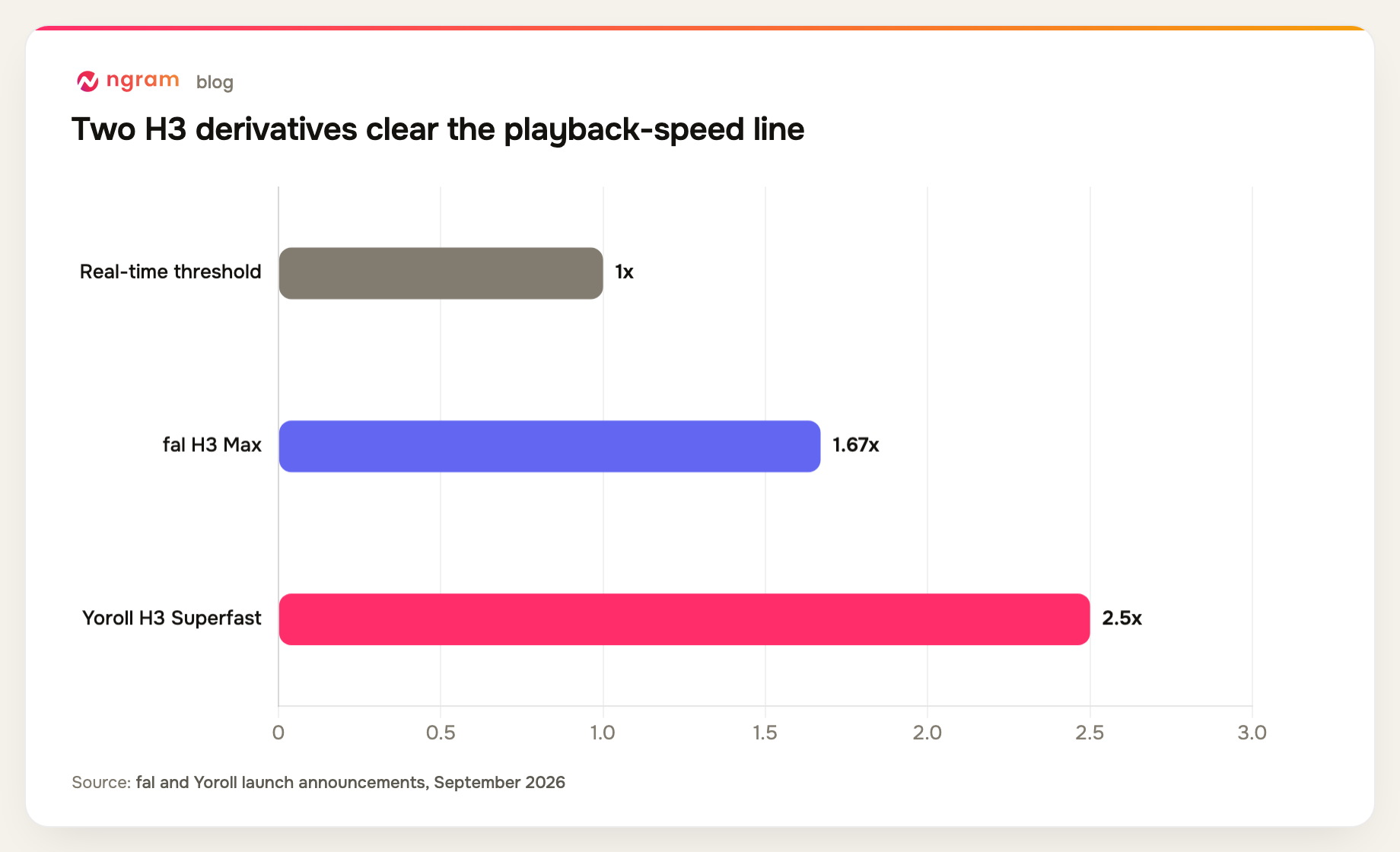
For real-time AI video generation, the margin above 1.0x is potential buffer. H3 Max's claim leaves about two seconds after generating a five-second clip. H3 Superfast's claim leaves about six seconds after generating a ten-second clip. A live product can spend some of that margin on the rest of the pipeline, but only if demand, queueing, and delivery stay controlled.
Two H3 derivatives crossed playback speed in one week
fal H3 Max: five seconds in about three
fal released H3 Max on September 1 as a post-trained MiniMax H3 derivative. Its launch announcement reported roughly three seconds of wall time for a five-second video, or 1.67x playback speed. fal also claimed about 35x the throughput of the official H3 endpoint and an average 15x speed advantage over models it considered comparable in quality. Those two throughput figures are vendor measurements, not independently reproduced results.
fal says it post-trained the base weights with new data and reinforcement learning, then co-designed the model and inference stack. That detail is more useful than the speed headline. Faster-than-real-time video came from training choices and serving work together, not one kernel optimization applied after the model was finished.
Yoroll H3 Superfast: ten seconds in four
On September 7, Yoroll announced H3 Superfast and YoLive. The Yoroll release says the model generates ten seconds of 768p, 24fps video with native audio in four seconds on eight NVIDIA B200 GPUs. That is 2.5x playback speed under the reported setup.
At 24 frames per second, the ten-second output contains 240 frames. Producing it in four seconds works out to 60 output frames per compute second. H3 Max's five-second example contains 120 frames and works out to 40 output frames per second. Both clear the 24fps playback line, although this derived comparison does not normalize model settings, hardware, prompt processing, or encoding.
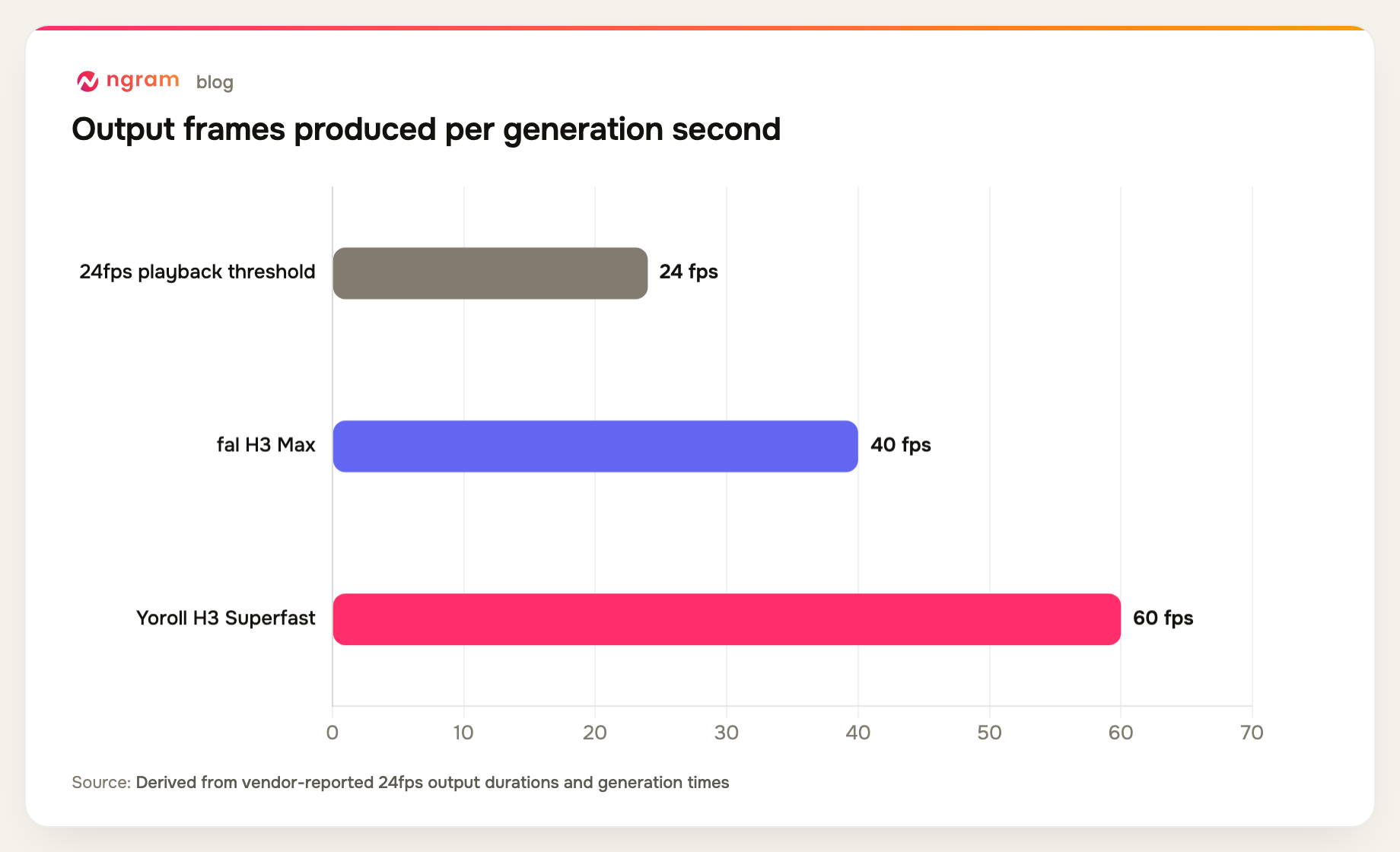
Yoroll disclosed the eight-B200 configuration. fal's September 1 release did not specify hardware for its three-second example. Treat the bars as claims about two served endpoints, not a clean model-vs-model lab test.
Why open weights turned one model into a speed race
MiniMax released H3's weights on August 3. The official open-weight release describes a 33-billion-parameter dense, single-stream transformer that produces 4-to-15-second clips at 24fps with 32kHz stereo audio. The base output uses a 768-pixel short edge, while a separate regeneration stage reaches 2K.
The reference interface is unusually broad. H3 accepts up to nine images, three video clips, and three audio clips, with a maximum of 12 files across the reference set. That gave post-training teams more than a text-to-video checkpoint. They inherited a model that already understood mixed visual and audio context.
AMD's day-zero deployment notes show what serving that model involves: a 50-layer diffusion transformer, separate video and audio VAEs, 50 default sampling steps, and eight-way sequence parallelism in AMD's example. This is a large systems problem even when the weights are available.
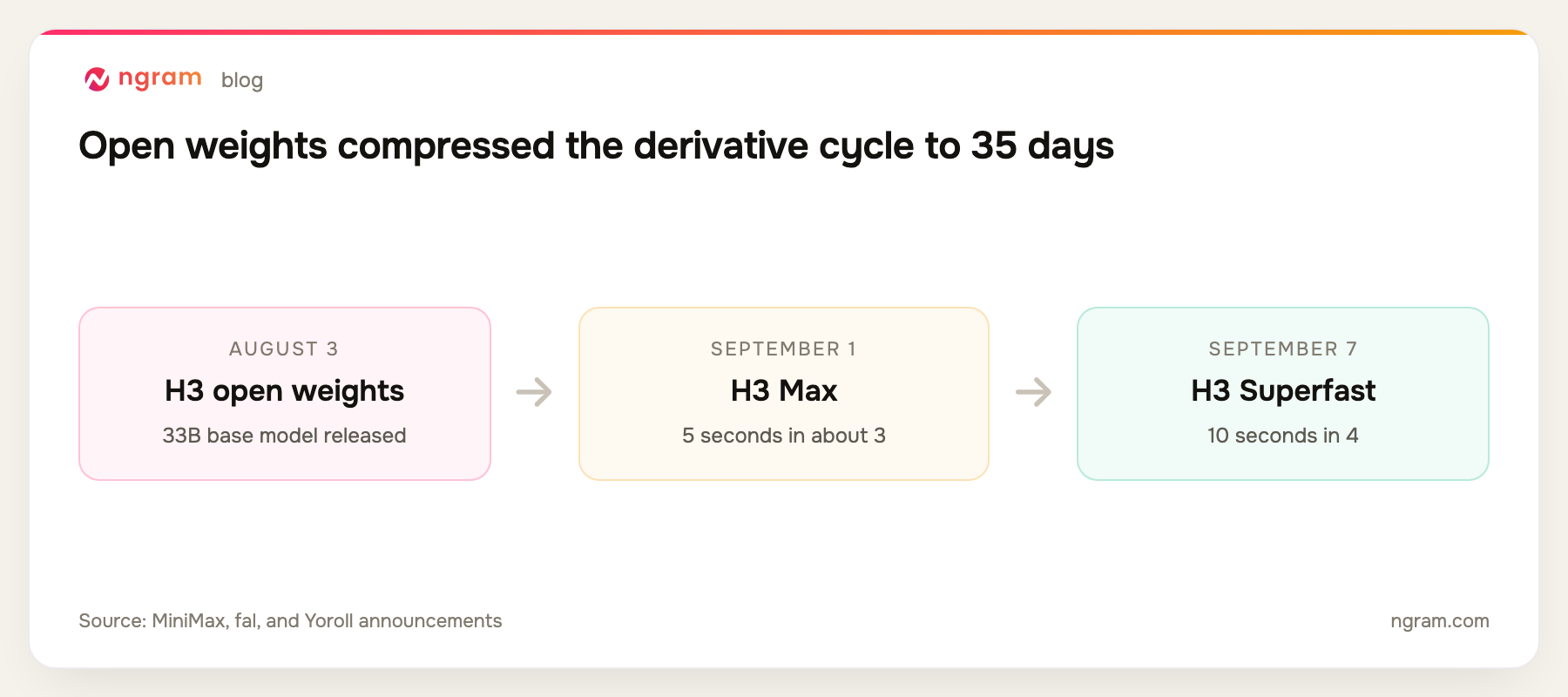
Open weights changed who could optimize real-time AI video generation. MiniMax supplied the expensive base training. fal and Yoroll could focus on narrower post-training data, preference optimization, quantization, parallelism, and serving. Two teams reached the same latency category with different products because they did not have to retrain a 33B model from zero.
Real-time AI video generation still has a quality and price curve
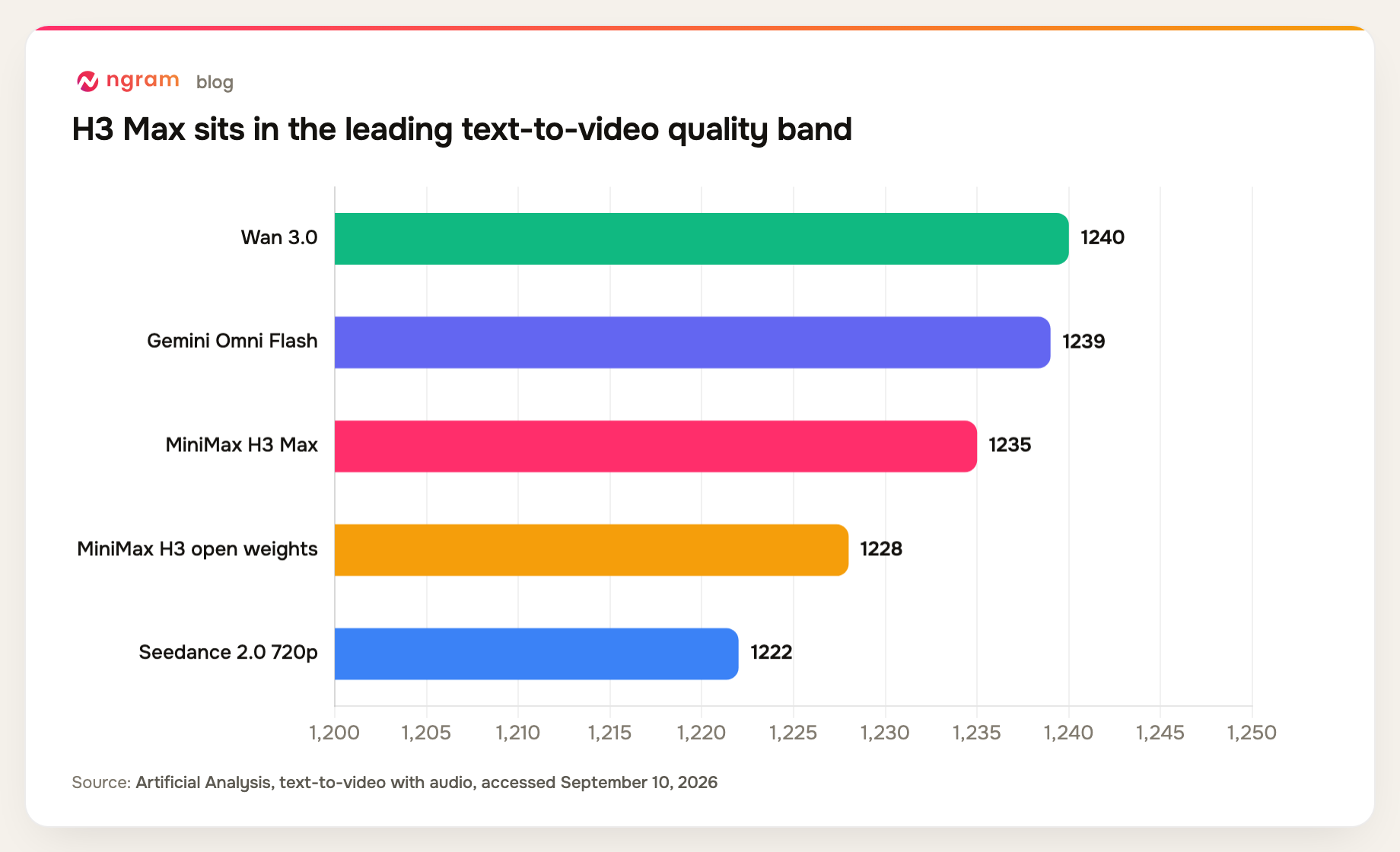
Latency did not replace quality as a constraint. It added a third axis beside preference and cost. The current Artificial Analysis text-to-video leaderboard with audio makes that visible.
As accessed on September 10, 2026, Artificial Analysis lists Wan 3.0 at Elo 1240, Gemini Omni Flash at 1239, H3 Max at 1235, MiniMax H3 open weights at 1228, and Dreamina Seedance 2.0 720p at 1222. H3 Max is close to the leaders, but the confidence intervals overlap. A three-to-five-point gap is not a decisive quality verdict.
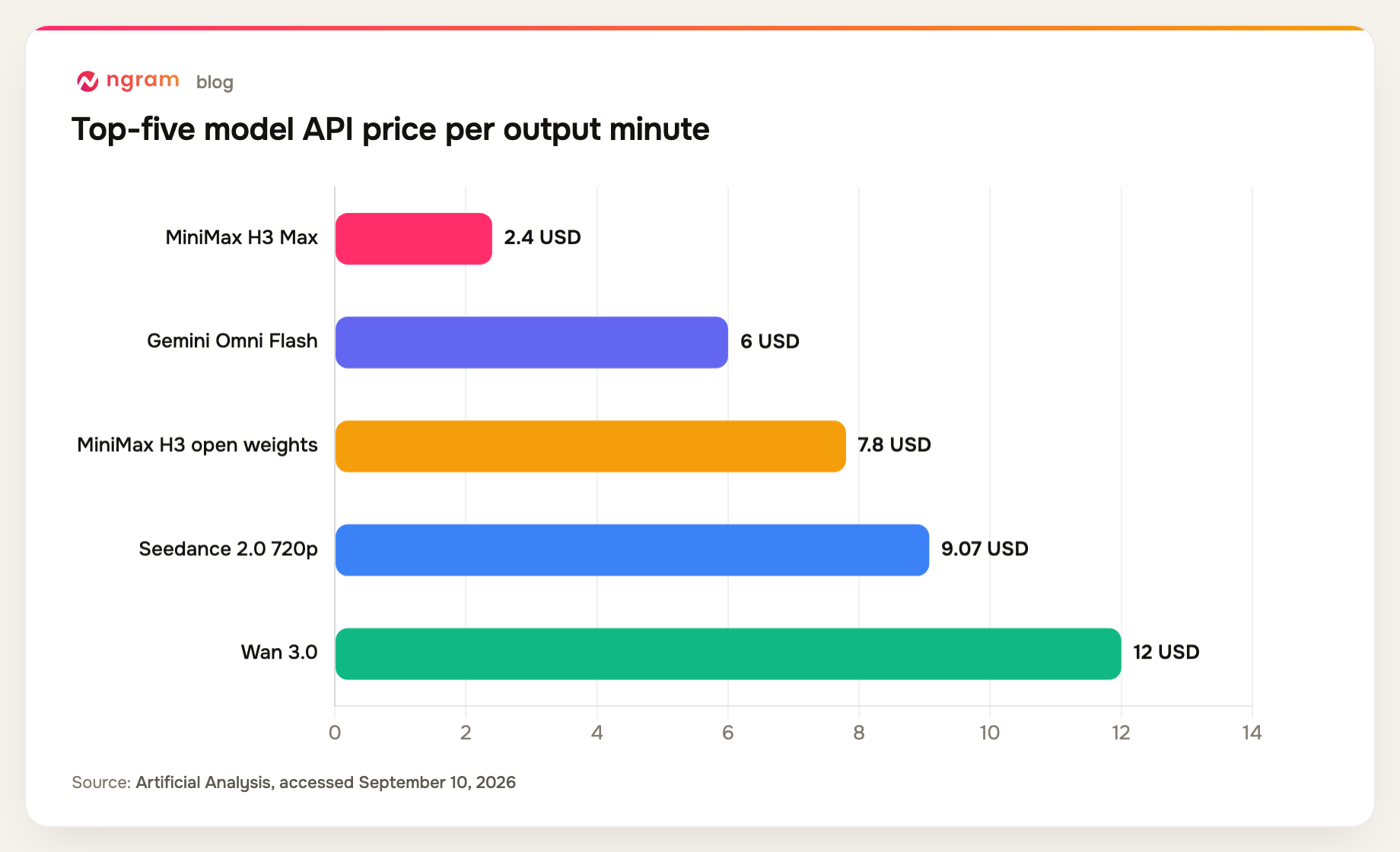
The price column is more separated. Artificial Analysis lists H3 Max at $2.40 per output minute, compared with $6.00 for Gemini Omni Flash, $7.80 for the base H3 endpoint, $9.07 for Seedance 2.0, and $12.00 for Wan 3.0. These are API prices reported by the leaderboard, not full application costs. Retries, moderation, orchestration, storage, and delivery sit outside the number.
Our broader 2026 generative AI video model report tracks the same pattern across the market: picture quality, audio, price, and openness move at different rates. The H3 derivatives are interesting because speed improved without dropping H3 Max out of the top quality band.
How generating ahead of the playhead changes the product
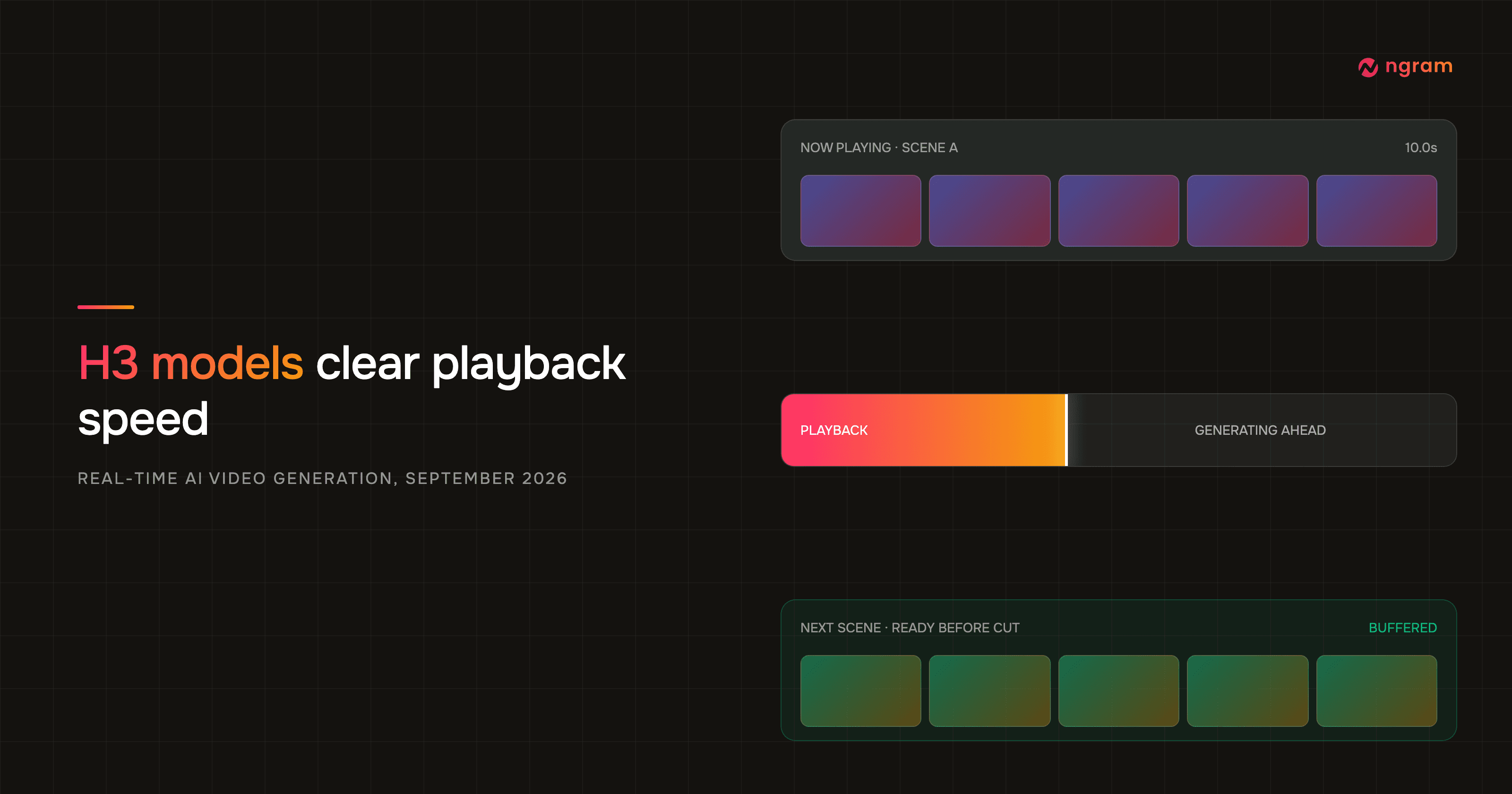
A conventional AI video generator waits for the entire job, then hands back a file. A real-time AI video generation loop can work differently. While scene A plays, the application gathers the next instruction and renders scene B. If scene B arrives before scene A ends, playback can continue without a generation pause.
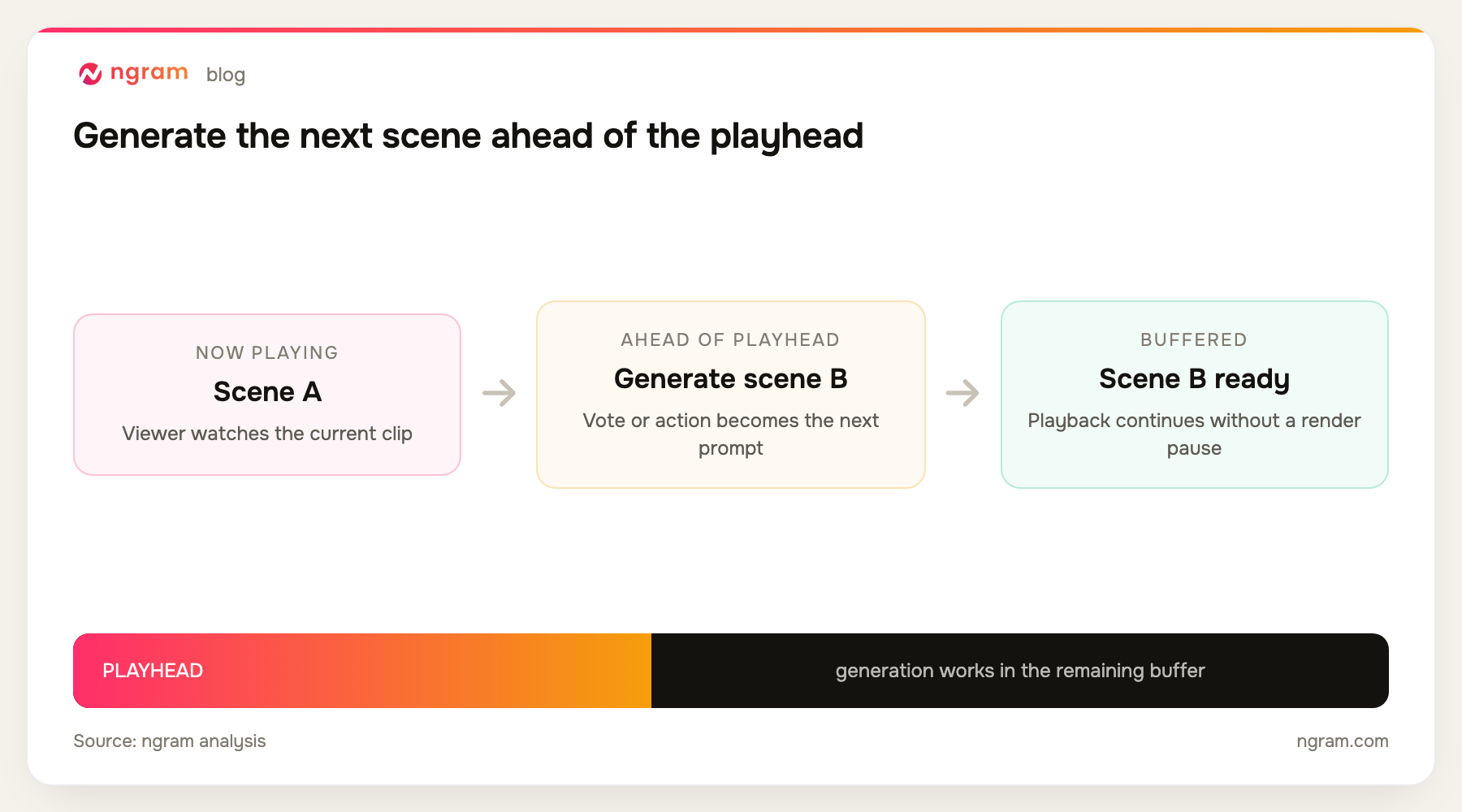
YoLive applies that pattern to shared storytelling. Viewers propose the next scene, vote, and the winning proposal guides generation. The interaction is asynchronous enough to hide some model work behind the clip already on screen. That is a different product shape from typing a prompt and waiting for a download.
The adjacent research is moving in the same direction. The H3-World paper turns the 33B H3 generator into an interactive world model using 8,000 gameplay samples, 10,000 LoRA optimization steps, and only 0.199% trainable parameters. Its focus is controllable character and camera action, not serving speed, but it shows how little adaptation can be needed to repurpose a general video model for interaction.
That combination is the bigger signal. Open weights let one group chase latency, another chase live audience input, and another chase action control. Real-time AI video generation becomes a platform property rather than a single model demo.
What still breaks before continuous interactive video works
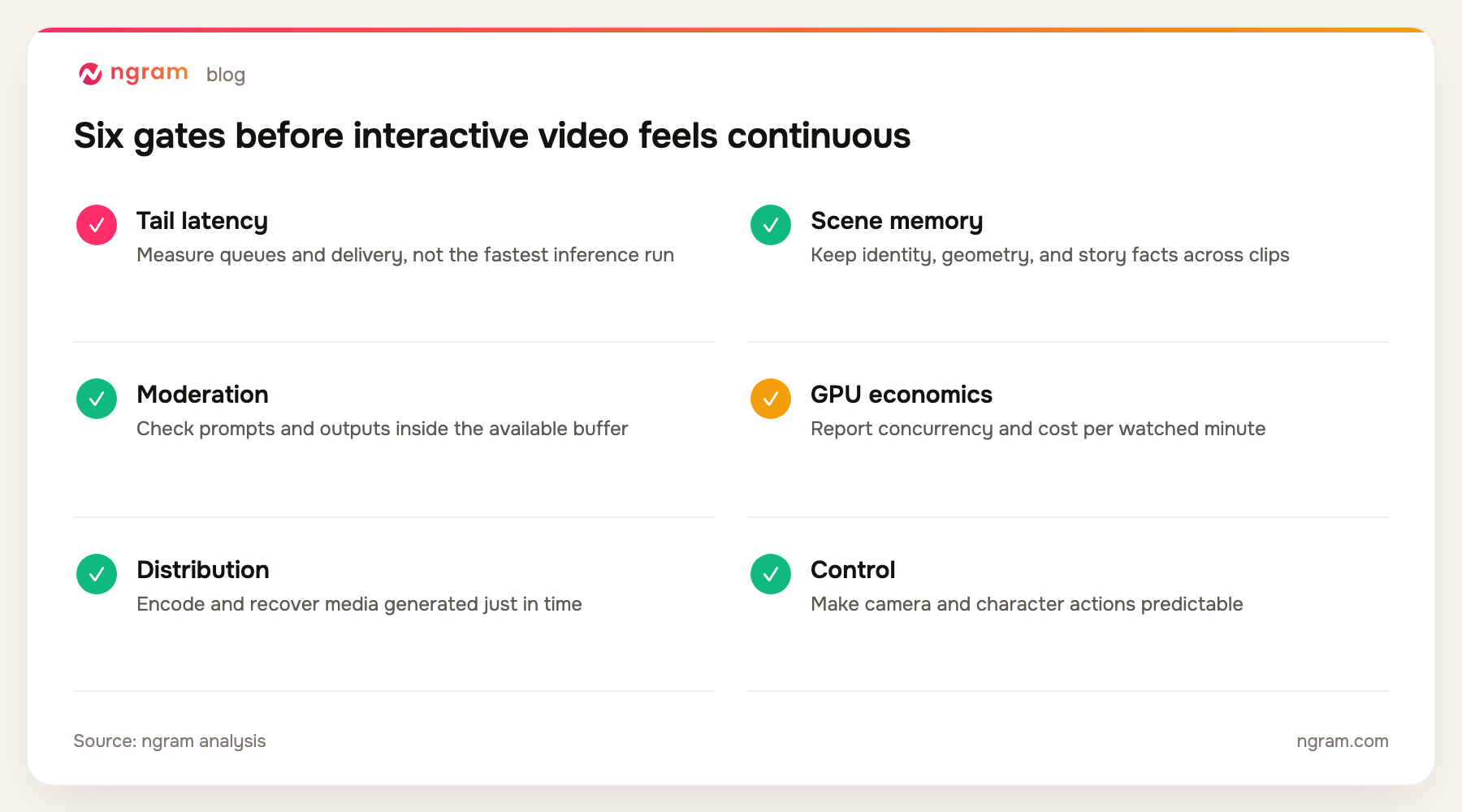
The real-time AI video generation number is necessary, but it is only one slice of the experience. A continuous system still has to solve six practical problems.
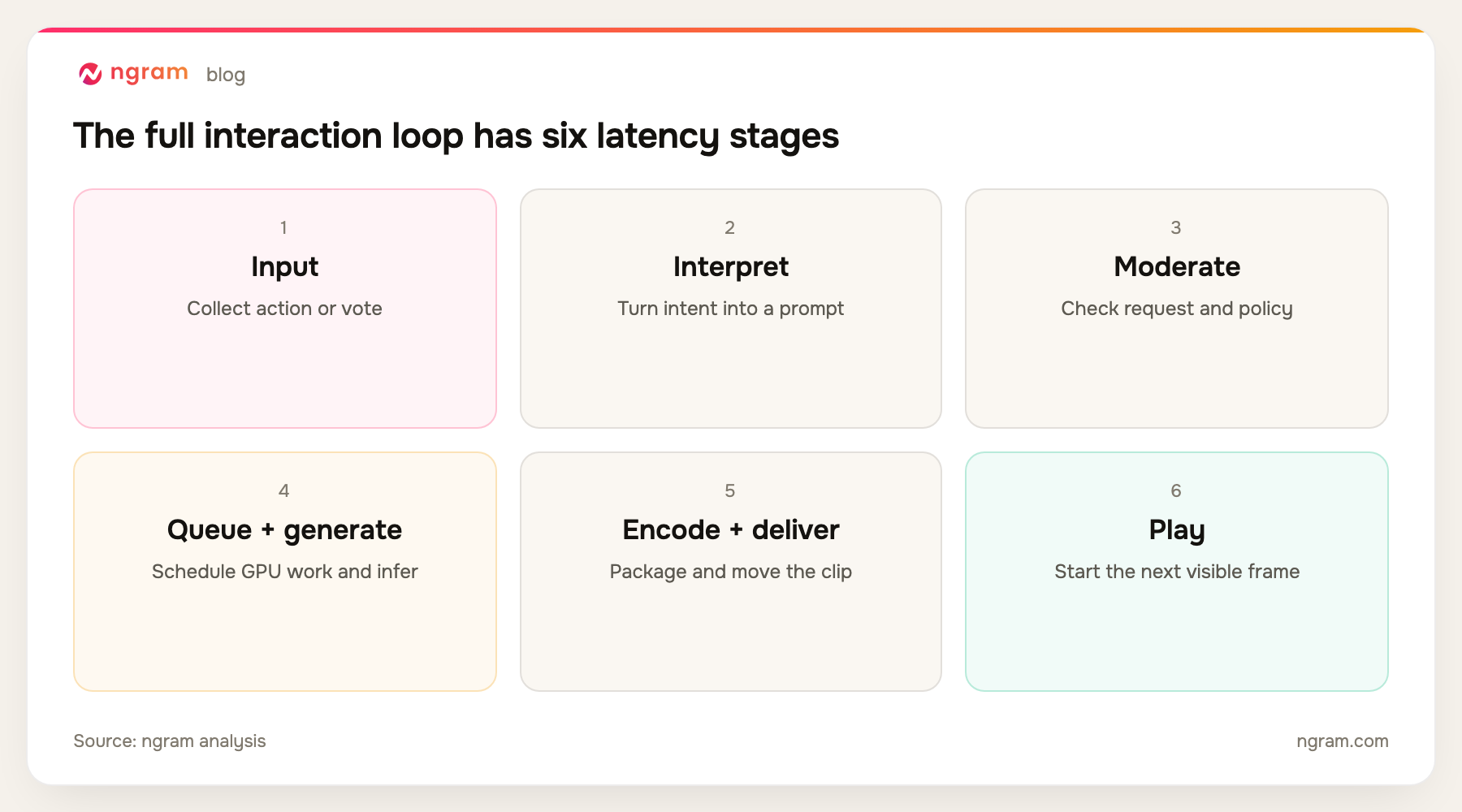
- End-to-end latency: input handling, prompt expansion, moderation, queueing, encoding, and network delivery can consume the buffer earned by fast inference.
- Long-horizon coherence: generating ten seconds quickly does not guarantee that identity, geometry, objects, or story facts survive scene after scene.
- Moderation under time pressure: a live system must reject unsafe prompts and unsafe outputs without turning each branch into a long pause.
- Hardware economics: Yoroll's reported run used eight B200 GPUs. Throughput per dollar and concurrency matter more than a single unloaded request.
- Distribution: encoding, segmenting, caching, and playback recovery must be designed for generated media that may not exist until seconds before it is watched.
- Control: users need predictable actions, not merely plausible images. Camera intent, character motion, and state need to persist across branches.
For business video creation, the same caution applies in a less theatrical way. Model latency is one input to a larger workflow. ngram's AI video generation platform plans scripts and storyboards, generates scene assets, and keeps editing separate from the underlying clip model. Faster inference shortens one stage, but it does not decide what the message should say or make every scene editable by itself.
What to watch after the playback threshold
The next real-time AI video generation benchmark should not be a shorter isolated render time. It should measure sustained operation: many consecutive clips, under concurrent load, with the queue, safety layer, encoding, and delivery included. Report the tail latency alongside the fastest run.
Coherence also needs a time horizon. A system that holds a character and environment for two minutes is more useful than one that generates ten unrelated clips at 3x playback speed. Control success, moderation delay, interruption recovery, and cost per watched minute deserve equal space beside Elo.
The H3 week matters because it makes those measurements urgent. The model no longer has to be the slowest component. Once inference gets ahead of the playhead, product design, state management, and distribution become the places where real-time AI video generation either works or stalls.
The useful threshold is not 'a fast video model.' It is a system that can choose, generate, check, deliver, and preserve the next scene before the current one ends.
If you want to test where current clip generation fits inside a planned business-video workflow, try ngram's AI video generator.
Frequently asked questions
What is real-time AI video generation?
It is video generation that finishes at or faster than playback. In this article, a system clears the line when generation time is shorter than output duration. The term does not automatically include queueing, moderation, encoding, or network delivery.
Is H3 Superfast really 2.5x faster than real time?
Yoroll reports ten seconds of 768p, 24fps video with native audio in four seconds on eight NVIDIA B200 GPUs. That equals 2.5x playback speed under those conditions. Independent, hardware-normalized replication was not published in the announcement.
How fast is fal H3 Max?
fal's September 1 launch reported about three seconds of wall time for a five-second video, or roughly 1.67x playback speed. The announcement did not disclose the hardware behind that example, so it should be treated as an endpoint claim rather than a portable model speed.
Does faster-than-real-time inference mean zero latency?
No. It means the model can finish a clip before that clip would finish playing. A viewer still waits on input processing, safety checks, queues, encoding, delivery, and player startup unless the application hides those steps behind an already-playing scene.
Why did two MiniMax H3 derivatives appear so quickly?
MiniMax released H3's weights on August 3. fal launched H3 Max 29 days later, and Yoroll launched H3 Superfast 35 days after the weight release. Open weights let both teams start from a trained 33B model and spend their effort on post-training and inference.
Is H3 Max still competitive on quality?
Artificial Analysis listed H3 Max at Elo 1235 on September 10, close to Wan 3.0 at 1240 and Gemini Omni Flash at 1239. The ranges overlap, and leaderboard scores change as more votes arrive, so the evidence supports 'same leading band' more strongly than 'best model.'
What is the biggest blocker for interactive AI video?
There is no single blocker. Long-horizon coherence, end-to-end tail latency, moderation, concurrent GPU cost, and delivery all determine whether a live experience feels continuous. Faster inference creates budget for those steps; it does not remove them.