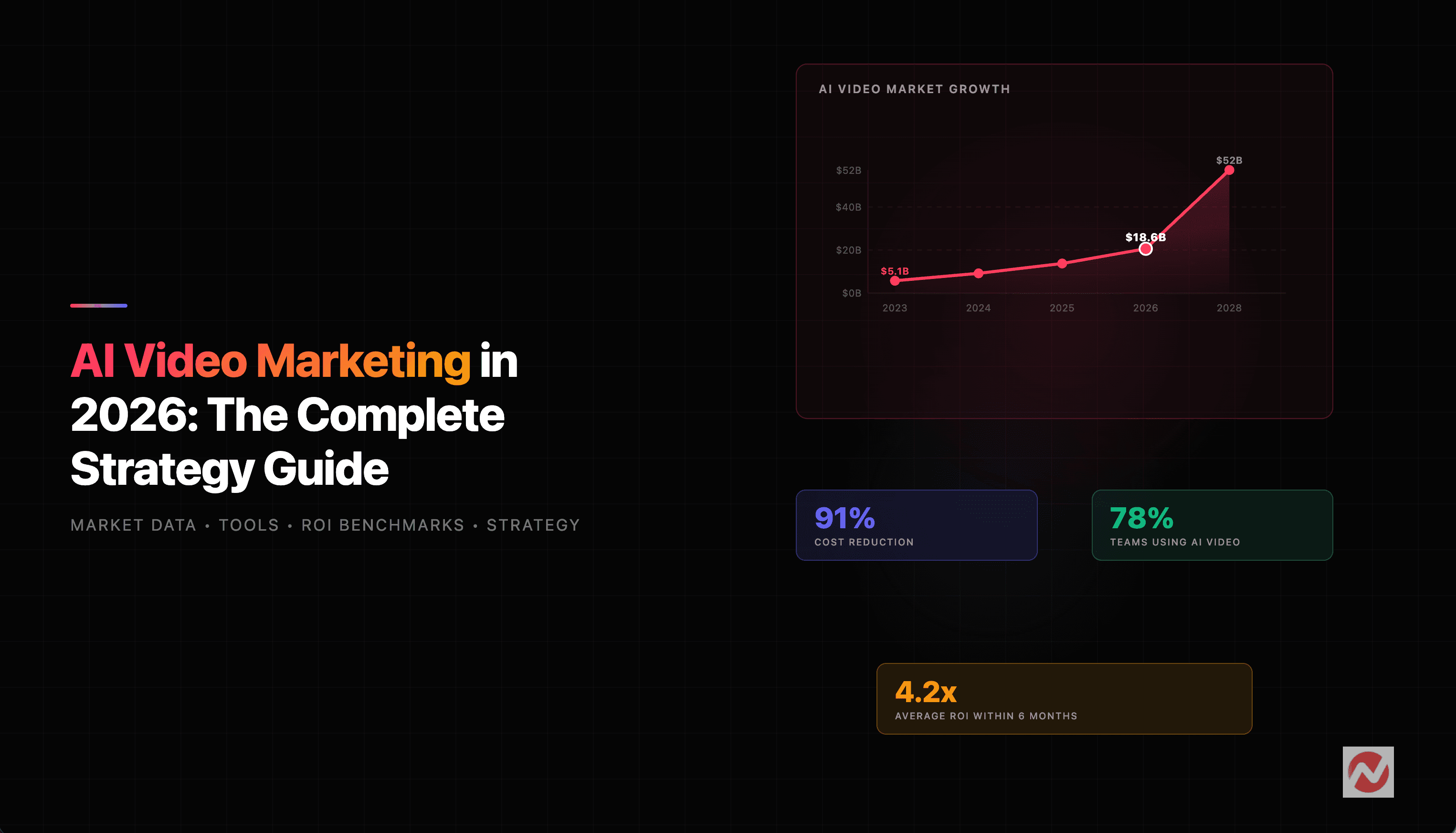


Every business team knows video works. According to Wyzowl's 2026 Video Marketing Report, 91% of businesses now use video as a marketing tool, and 93% of marketers consider it integral to their strategy.
But here's the gap: knowing video works and actually producing it are two very different problems. Traditional video production takes days, costs thousands per minute, and requires specialized skills most teams don't have.
That's where an AI video creator for business comes in. Whether you call it an AI video maker for business or an AI video generator for business, these tools let teams turn existing content - docs, slides, screen recordings, URLs - into polished, on-brand videos in minutes instead of weeks. And the market is growing fast.
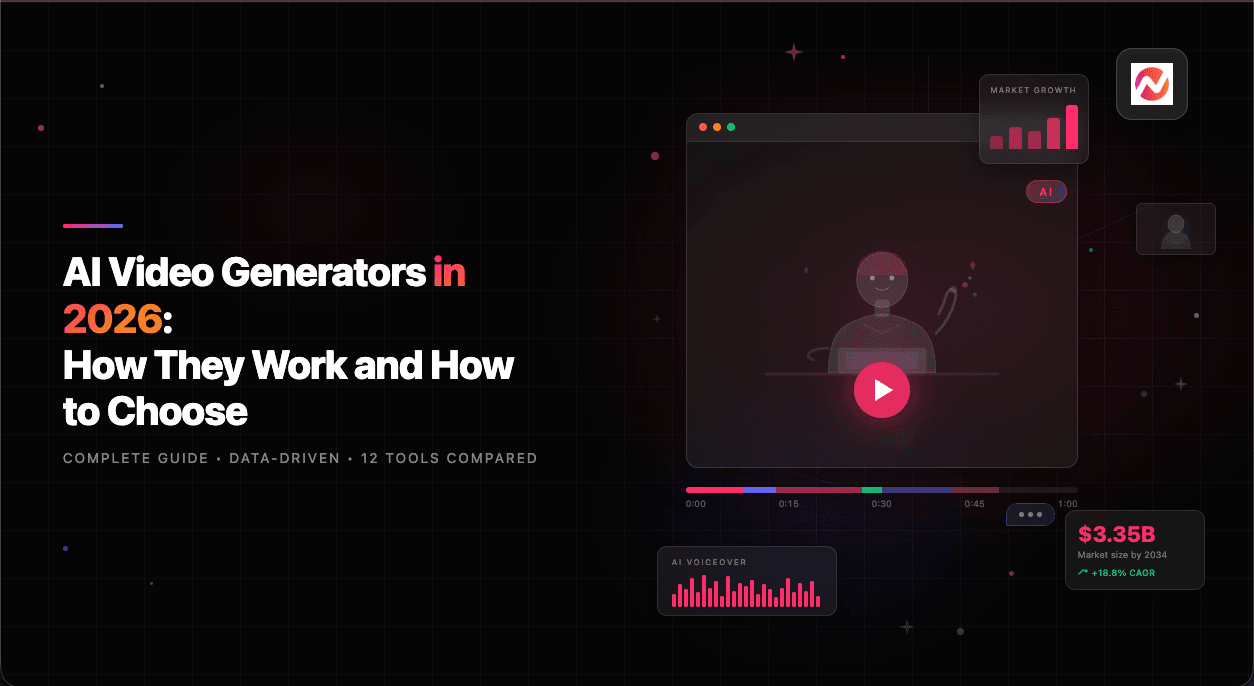
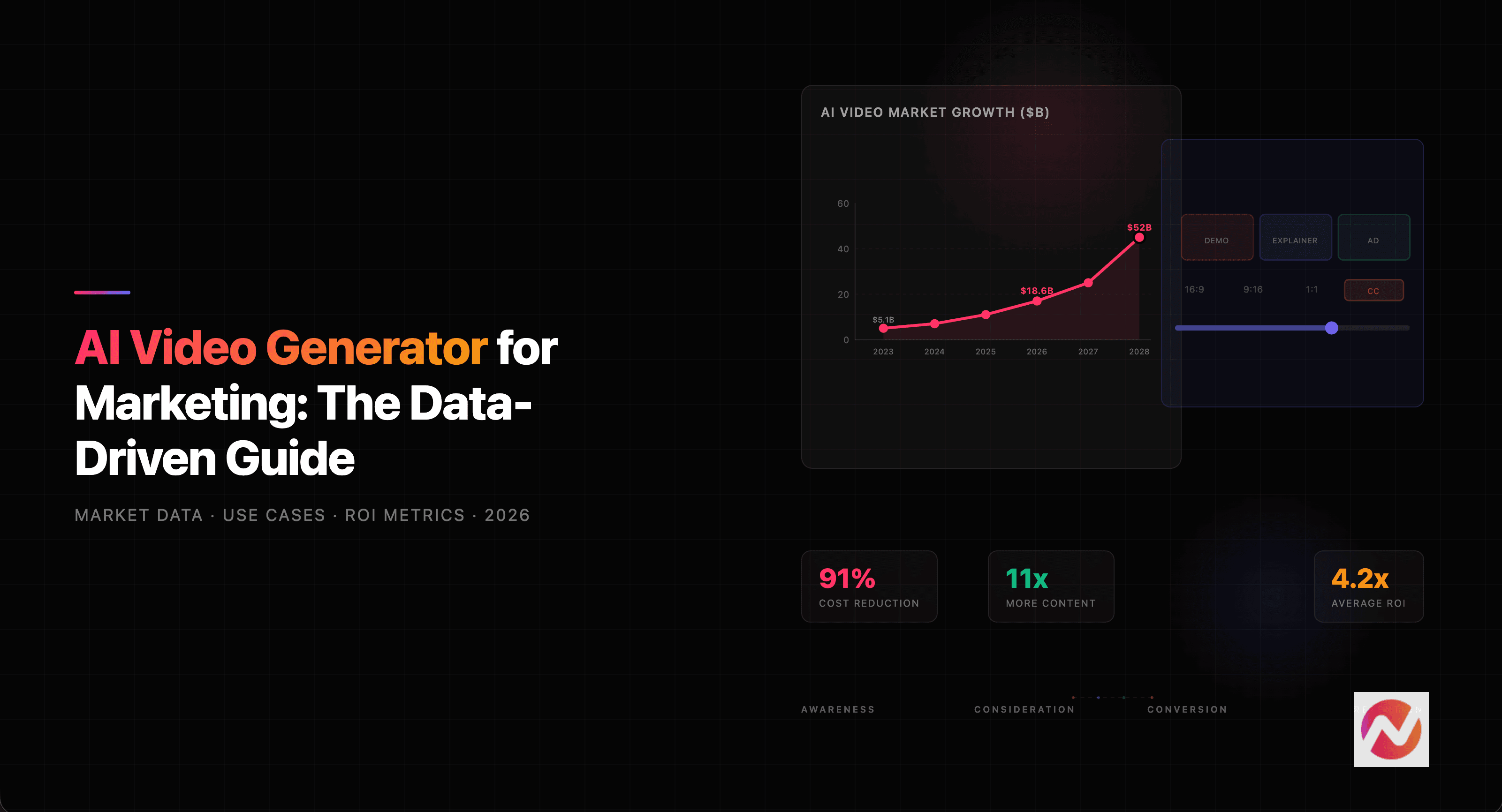
The AI video generation market is projected to reach $847 million in 2026, growing at an 18.8% CAGR through 2034, when it's expected to hit $3.56 billion (Fortune Business Insights).
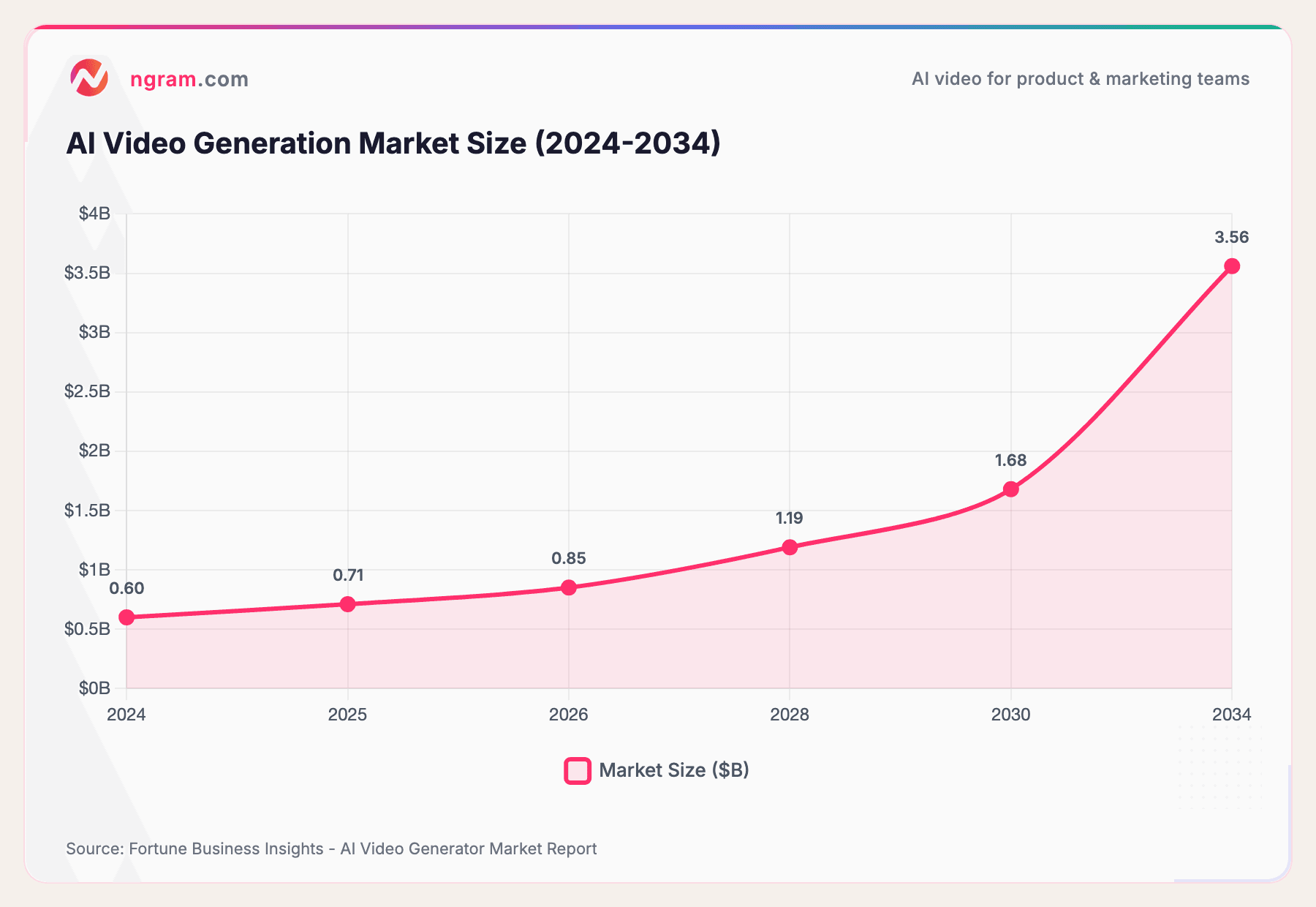
Source: Fortune Business Insights - AI Video Generator Market Report
The trajectory is clear: AI video creation is shifting from experimental to essential. In this guide, we break down the 10 most impactful business use cases for AI video creators, backed by real data on adoption, ROI, and results.
Why Businesses Are Switching to AI Video Creators
Before diving into use cases, it helps to understand why the shift is happening. The short answer: traditional video production doesn't scale.
A typical business video takes 13 days from concept to delivery using traditional production workflows, according to industry benchmarks. With AI video tools, that same video can be ready in under 30 minutes. That's not a marginal improvement - it's an entirely different operating model.
The cost difference is equally dramatic. Traditional production runs $4,000-$5,000 per finished minute. AI-powered tools bring that down to $300-$400, a reduction of over 90%, per recent industry data.
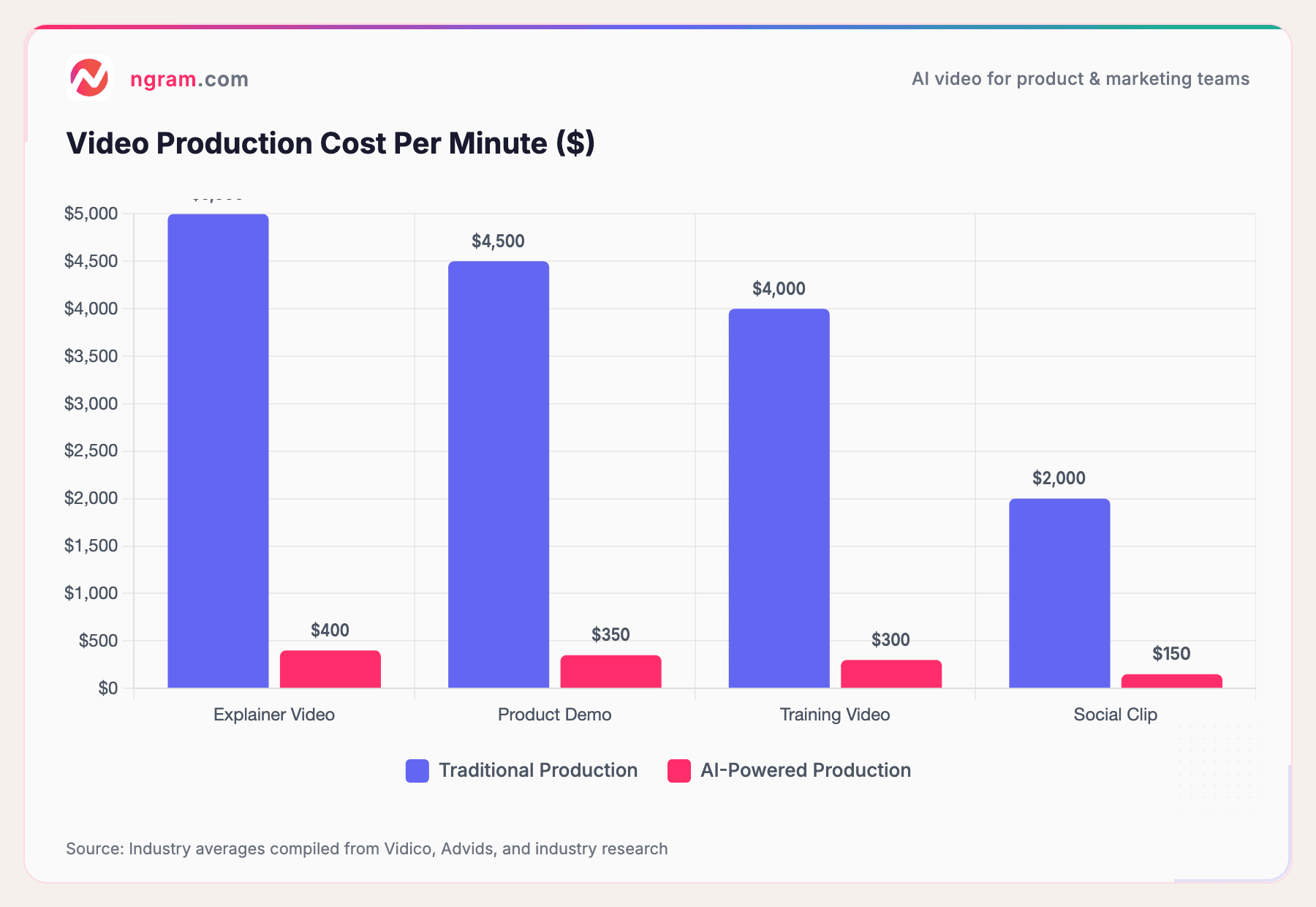
Source: Industry averages compiled from Vidico, Advids, and industry research
The numbers speak for themselves. A marketing team that produces 10 videos per quarter at traditional rates is looking at $40,000-$50,000 in production costs alone. With AI tools, that same output costs under $4,000.
Adoption reflects this math. According to industry data, 78% of marketing teams now use AI-generated video in their quarterly campaigns, and 73% of Fortune 500 companies have integrated AI video tools into their workflows, per recent industry data.
Now let's look at where these tools deliver the most value.
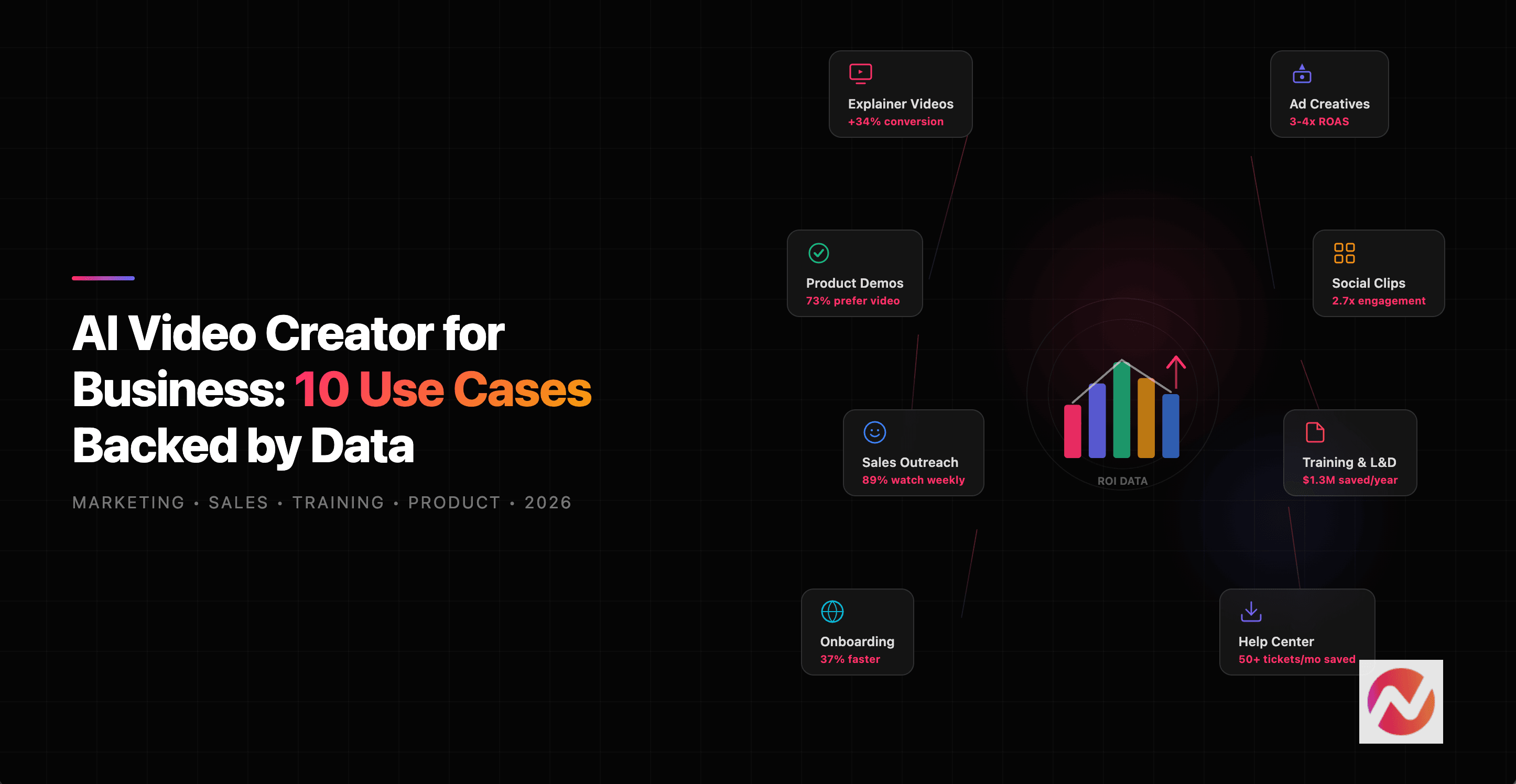
10 Business Use Cases for AI Video Creators
1. Marketing Explainer Videos
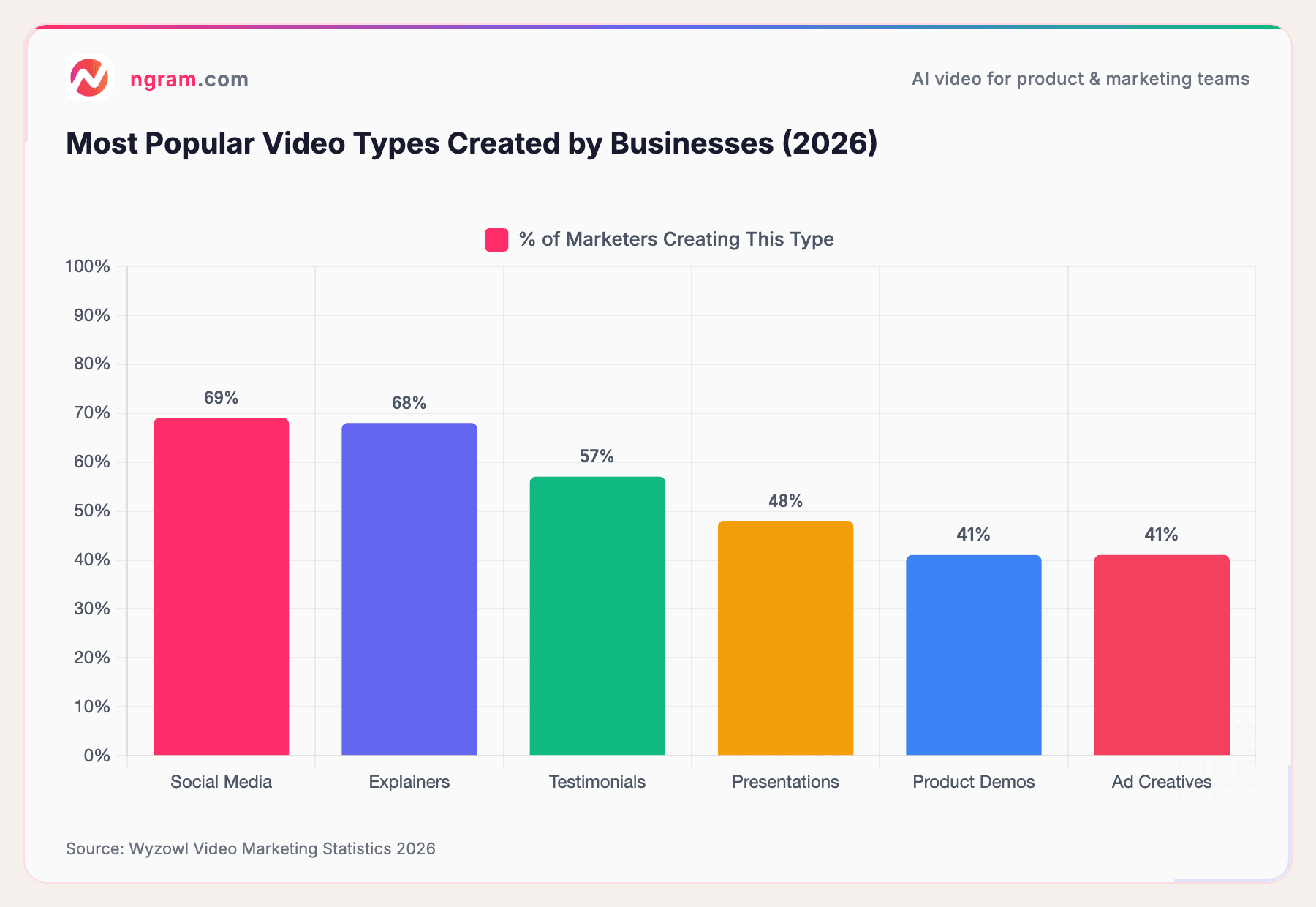
Explainer videos remain one of the most effective video formats for business. According to Wyzowl, 68% of video marketers create explainer videos, making it the second most popular format after social media clips.
The reason is straightforward: explainer videos convert. Landing pages with explainer videos see 34% higher conversion rates compared to pages without them, according to industry research.
With an AI video creator, your marketing team can go from product brief to polished explainer in a single session. Most tools let you input your product documentation, website URL, or a rough script, then generate a structured video with motion graphics, captions, and voiceover.
The best part: when the product changes, updating the video takes minutes, not another production cycle. For teams shipping frequently, this changes the economics of video entirely.
If you're looking to create AI explainer videos without starting from scratch, tools like ngram let you feed in your existing docs and URLs, then generate a script and storyboard before any rendering happens.
2. Ad Creatives at Scale
Modern paid media demands variety. You need multiple hooks, CTAs, formats, and audience-specific variants to find what converts. Traditional production can't keep up with that pace.
AI video creators solve this by generating multiple ad variants from a single brief. Change the hook, swap the CTA, adjust the tone for a different persona - all without reshooting anything.
The results back this up. AI-powered ad systems routinely deliver 3-4x ROAS compared to static campaigns (Spinta Digital), largely because teams can test more variants faster.
For growth teams running paid campaigns, this is the use case where AI video pays for itself fastest. Instead of producing 2-3 ad variants per campaign, you can test 10-15 and let the data decide. Explore how teams create AI ad creatives for faster iteration.
3. Social Media Clips
Social media video is the most popular video type created by businesses. Wyzowl reports that 69% of video marketers create social media videos, putting it at the top of the list.
The data on engagement is compelling: video posts generate 2.7x more engagement than static images and receive 3.4x more shares on social platforms, per industry data.
AI video creators make social video production repeatable. A single long-form video or blog post can be turned into a week's worth of platform-native clips - vertical for Reels and TikTok, square for LinkedIn and X, horizontal for YouTube. Multi-format export is now a standard feature in most AI video tools.
The volume game matters here. Teams that post video consistently outperform those that post sporadically, and AI video creation software makes consistency achievable without a dedicated video team.
4. Product Demo Videos
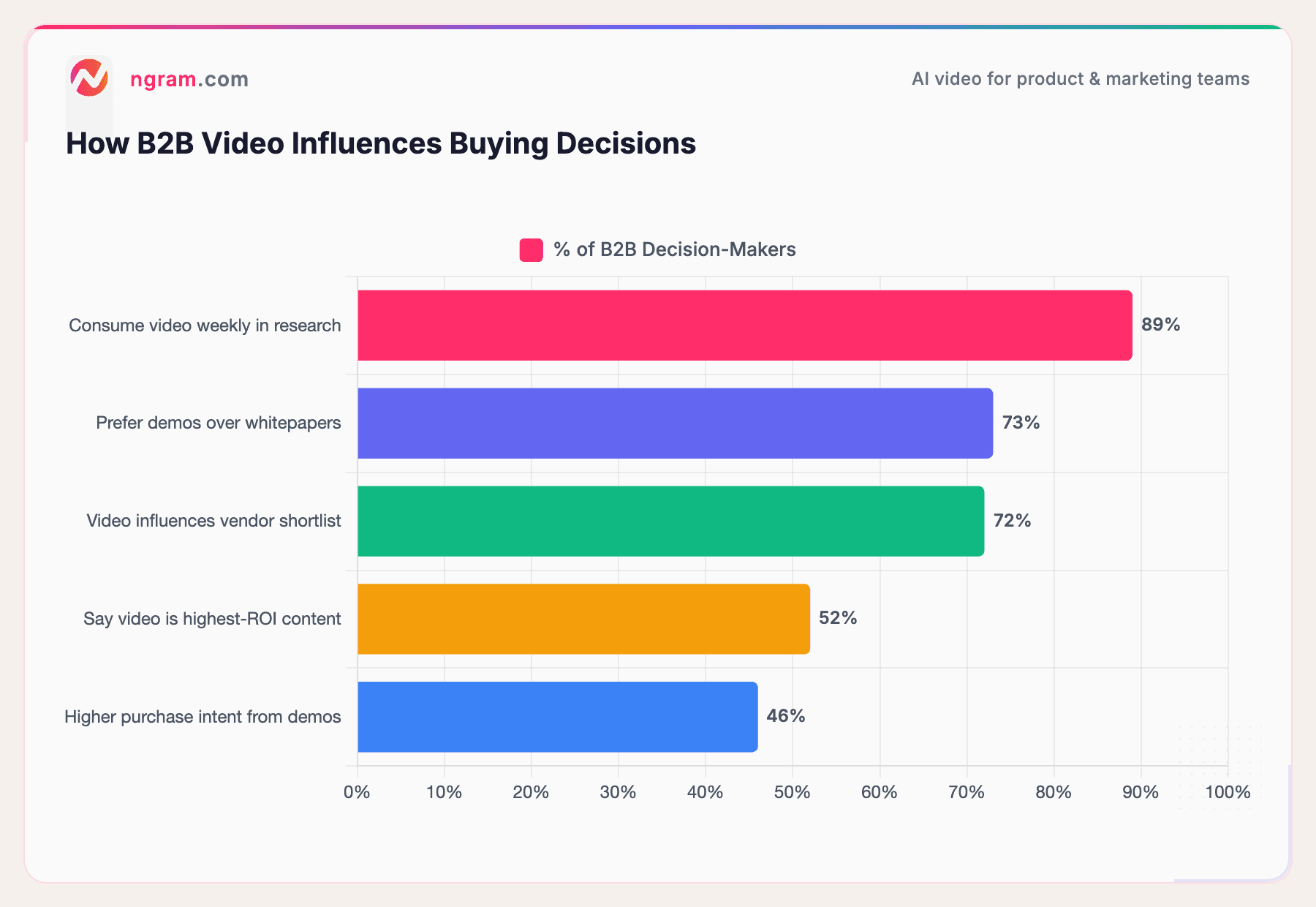
Product demos might be the highest-leverage use case for B2B companies. The research is overwhelming: 73% of B2B decision-makers prefer watching product demo videos over reading whitepapers or brochures, per recent B2B research.
The downstream impact is measurable too. Product demo videos lead to a 46% increase in purchase intent compared to non-video product pages. And 72% of B2B buyers say video content directly influences their vendor shortlist decisions (Vidico).
Sources: Vidico and industry research
For product teams, AI video creators are particularly useful because they can turn screen recordings into polished demos automatically. Record your screen, feed it to the tool, and get back a video with smart zoom, cursor emphasis, callouts, and step labels - no editing skills required.
Explore how teams build product demo videos from raw screen recordings in minutes.
5. Personalized Sales Outreach
Generic outreach gets ignored. Personalized video doesn't.
With 89% of B2B decision-makers consuming video content weekly during their buying research, per recent B2B research, sales teams that show up with video have a natural advantage. And 58% of B2B marketers have now integrated video into their account-based marketing strategies (Vidico).
AI video creators make personalized outreach scalable. Instead of recording individual videos for each prospect (which doesn't scale past a handful), teams can create templated video frameworks and customize key elements - the prospect's name, their company logo, relevant use cases - for each recipient.
This use case is still emerging, but early adopters report significantly higher response rates compared to text-only outreach. As one Reddit user in r/sales put it: personalized video outreach feels like a one-on-one conversation, not a mass blast. When a prospect sees their company name in a polished video walkthrough, the perceived effort signals genuine interest.
6. Employee Onboarding Videos
Onboarding is one of the areas where AI video delivers the most measurable ROI. Companies using video-based onboarding have reduced onboarding time from 8 weeks to 5 weeks, according to industry case studies - a 37% reduction that translates directly to faster productivity.
The cost savings are substantial. Organizations adopting AI for training save an average of $1.3 million annually (eLearning Industry), and companies like Bosch have reduced external video production costs by 70% while seeing 30% higher engagement rates with their training content.
For HR and L&D teams, AI video creators solve the "one and done" problem. Instead of recording onboarding sessions once and hoping they stay current, teams can update videos whenever processes change. New compliance requirements? Updated in an afternoon. New tool rollout? Video walkthrough ready before launch day.
The multilingual capability of modern AI video tools is particularly valuable here. A single onboarding video can be translated and lip-synced into dozens of languages, making consistent global onboarding achievable for the first time without massive production budgets.
7. Compliance and SOP Training Videos
Compliance training is one of those areas where "good enough" doesn't cut it - every employee needs to see the same information, delivered the same way. AI video creators make this repeatable.
L&D teams using AI video tools report 50-70% reductions in content creation time, per industry benchmarks, with training video production dropping from an average of 13 days to 5 days per video.
The use case is especially strong for regulated industries. Healthcare, finance, and manufacturing teams need to push policy updates quickly and track completion. AI video creators let compliance teams produce professional training videos that are consistent, traceable, and easy to update when regulations change.
8. Product Feature Announcements and Changelogs
Most product updates die in a changelog that nobody reads. Video changes that.
According to Wyzowl, 85% of video marketers say video has helped them increase brand awareness. For product teams, turning release notes into short video narratives means customers actually see what's new.
AI video creators are particularly well-suited for this use case because the source material already exists - release notes, PRDs, design mockups. You don't need to start from a blank page. Feed the tool your release notes and a screen recording of the new feature, and get back a polished announcement video ready for email, social, or your product blog.
This is one of those use cases where the speed of AI creation matters most. Feature announcements have a short window of relevance. If it takes two weeks to produce the video, the moment has passed.
9. Customer Success: Tutorials and Help Center Videos
Support teams drown in repetitive "how do I..." tickets. Video tutorials are one of the most effective ways to deflect them.
According to Wyzowl, 93% of video marketers report that video has increased brand awareness, and a significant portion credit tutorial content for reducing support volume. When customers can watch a 2-minute walkthrough instead of filing a ticket, everyone wins.
AI video creators let support teams build entire help center video libraries in weeks rather than months. Screen record the workflow, feed it to the tool, and get back a clean tutorial with annotations, zoom effects, and step-by-step captions.
The economics are compelling: every support ticket costs $15-25 to resolve. A single tutorial video that deflects 50 tickets per month saves $9,000-$15,000 annually. Multiply that across a full video library, and the ROI case writes itself.
10. Internal Communications and Company Updates
Remote and hybrid work has made internal video communication more important than ever. All-hands recaps, policy updates, quarterly reviews, team celebrations - these all work better as video than as another Slack message or email.
AI video creators lower the bar for internal video production enough that it becomes a routine communication channel rather than a special occasion. A CEO quarterly update doesn't need a production crew. A team lead announcing a new process doesn't need to coordinate calendars for a live recording.
Source: Wyzowl Video Marketing Statistics 2026
The chart above shows the video landscape: social clips and explainers lead, but every category is well-represented. The takeaway for business teams is that video isn't a single-use-case tool anymore - it's a communication layer that touches marketing, sales, product, support, and internal ops.
How to Choose the Right AI Video Creator for Your Business
With dozens of AI video tools on the market, choosing the right one comes down to matching the tool to your primary use case.
Here's a practical framework:
If your primary need is avatar-based videos (training, announcements, talking-head content): Look for tools with strong AI avatar libraries and multilingual voiceover. Synthesia and HeyGen lead this category.
If your primary need is turning existing content into video (docs, URLs, screen recordings): Look for tools that accept diverse inputs and generate scripts and storyboards from your source material. ngram was built for this exact workflow - you bring what you already have, and it handles the structure, visuals, and editing.
If your primary need is short-form social content (clips, ads, repurposed content): Look for tools with fast turnaround, MP4 export; prepare channel-specific cuts separately, and batch generation capabilities. InVideo and Pictory handle this well.
If your primary need is screen recording editing (demos, tutorials, walkthroughs): Look for tools with smart zoom, cursor tracking, and automatic cut detection. This is a specialized workflow that generic video tools often handle poorly.
If your primary need is cinematic AI-generated footage (brand films, creative campaigns): Look for generative video tools like Runway or Veo that create original footage from text prompts. These are best for creative teams with specific visual needs.
The honest advice: most business teams need more than one category. Start with the use case that has the highest volume or the biggest bottleneck, pick a tool that handles it well, and expand from there.
Want to see what AI video creation looks like in practice? ngram turns your existing docs, recordings, and assets into polished, on-brand videos in minutes. Try it free
What's Next for AI Video in Business
The market is moving fast. With 92% of marketers planning to spend the same or more on video in 2026 (Wyzowl), investment is only accelerating.
Three trends worth watching:
Personalization at scale. AI video tools are getting better at generating unique video content for individual recipients. Imagine product onboarding videos customized to each customer's specific plan and use case, or sales outreach videos that reference the prospect's exact tech stack.
Tighter workflow integrations. Expect AI video creators to plug directly into the tools teams already use - CRMs, help desks, marketing automation platforms, project management tools. The goal is video creation embedded in existing workflows, not a separate production process.
Real-time video generation. The speed gap between "prompt" and "finished video" is shrinking. What takes 5-10 minutes today will take seconds within the next year, opening up use cases like real-time personalized video responses in customer support.
The businesses that figure out how to make video a default communication channel - not a special project - will have a significant advantage in how they market, sell, train, and communicate.
Frequently Asked Questions
How do you create AI video for business?
Start with your existing content: product docs, slide decks, blog posts, or screen recordings. Choose an AI video creator that accepts your input type, set the audience and goal, and let the tool generate a script and storyboard. Review the plan, make adjustments, then generate the final video. Most tools produce a polished draft in under 30 minutes.
How can businesses use AI for creating compelling videos?
The most impactful use cases are marketing explainers, product demos, training and onboarding content, ad creatives, and social media clips. Each of these has strong data behind it - for example, landing pages with explainer videos see 34% higher conversion rates, and B2B buyers are 46% more likely to purchase after watching a product demo video.
What is the best AI video generator for business?
It depends on your primary use case. For avatar-based training videos, Synthesia and HeyGen lead the market. For turning existing content into video, ngram specializes in this workflow. For short-form social content, InVideo and Pictory work well. For creative AI footage, Runway is the top choice. Match the tool to your most common video need.
How much does AI video production cost for businesses?
AI video tools typically cost $20-$100 per month for individual plans, with enterprise pricing scaling based on volume. Per-video costs average $300-$400 per finished minute, compared to $4,000-$5,000 per minute for traditional production. Most businesses see a 90%+ reduction in per-video costs after switching to AI tools.
Can AI video replace professional video production entirely?
Not entirely - at least not yet. AI video excels at high-volume, fast-turnaround content like training modules, product updates, social clips, and sales outreach. For brand campaigns, TV commercials, and high-end creative work, professional production still delivers superior quality. The smart approach is using AI for 80% of your video volume (the repeatable stuff) and reserving traditional production for the 20% that demands premium polish.
Is AI-generated video suitable for enterprise companies?
73% of Fortune 500 companies have already integrated AI video tools. Enterprise adoption is driven by brand kit controls (consistent fonts, colors, logos), broad multilingual capabilities (create one video, then translate it into many languages), and team collaboration features. The key requirement for enterprise teams is a tool that maintains brand consistency across every video produced.