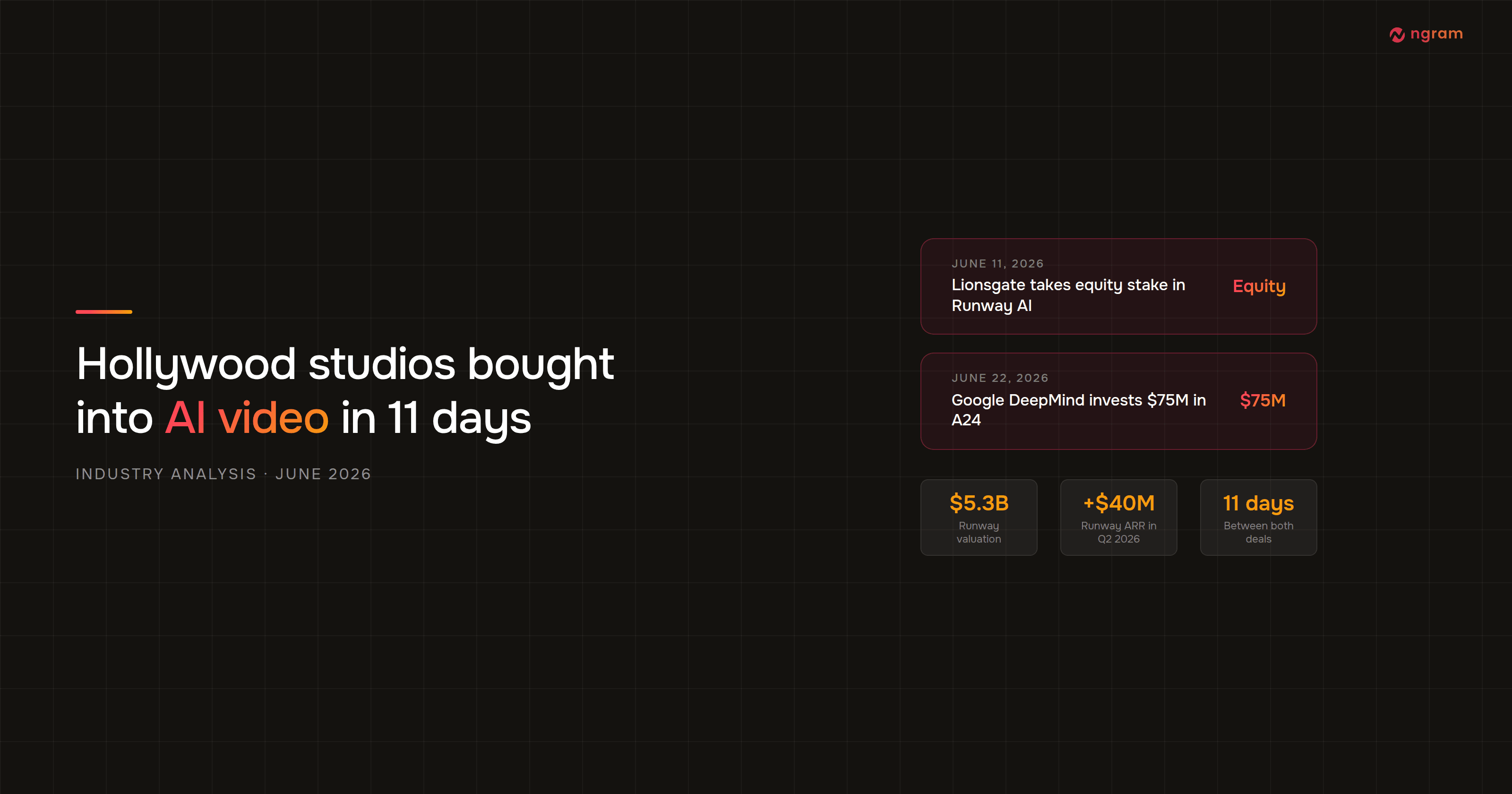

On June 11, 2026, Lionsgate took an equity stake in Runway AI. Eleven days later, on June 22, Google DeepMind put $75 million into A24, the first time Google took a financial position in a Hollywood film studio, according to TechCrunch and Variety.
Neither studio called it a cost-reduction exercise. Both framed it as a creative partnership. That framing, repeated independently by two different studios in the same two-week window, is the story.
Pilot programs expire. Vendor contracts get renegotiated. Equity is a permanent position. When a prestige indie and a franchise powerhouse each take equity in their AI video suppliers within 11 days, they are saying something different from "we are testing a tool."
The Two Deals, Side by Side
Lionsgate announced its equity stake in Runway on June 11, 2026, expanding a partnership that had started in September 2024. The deal is non-cash: Lionsgate takes an equity position rather than writing a check, per Variety. In exchange, Lionsgate gets access to Runway's generative AI video tools, a new development program for AI-produced content using the studio's IP catalog, and collaborative events with filmmakers. Michael Burns, Lionsgate's vice chairman, described Runway as a great creative partner that would "help our talent redefine and reshape the art of the possible."
The Google DeepMind and A24 deal came 11 days later. Google committed $75 million. In exchange, A24 Labs gets access to DeepMind's research infrastructure and researchers collaborate on new production workflows. The term that matters: Google gets no access to A24's content library or training data, per Variety. Demis Hassabis, DeepMind's CEO, said: "We believe the best way to develop tools that empower artists is to work directly with them." DeepMind VP Eli Collins added: "We believe breakthroughs happen when you get technology into the hands of the best minds in the field."
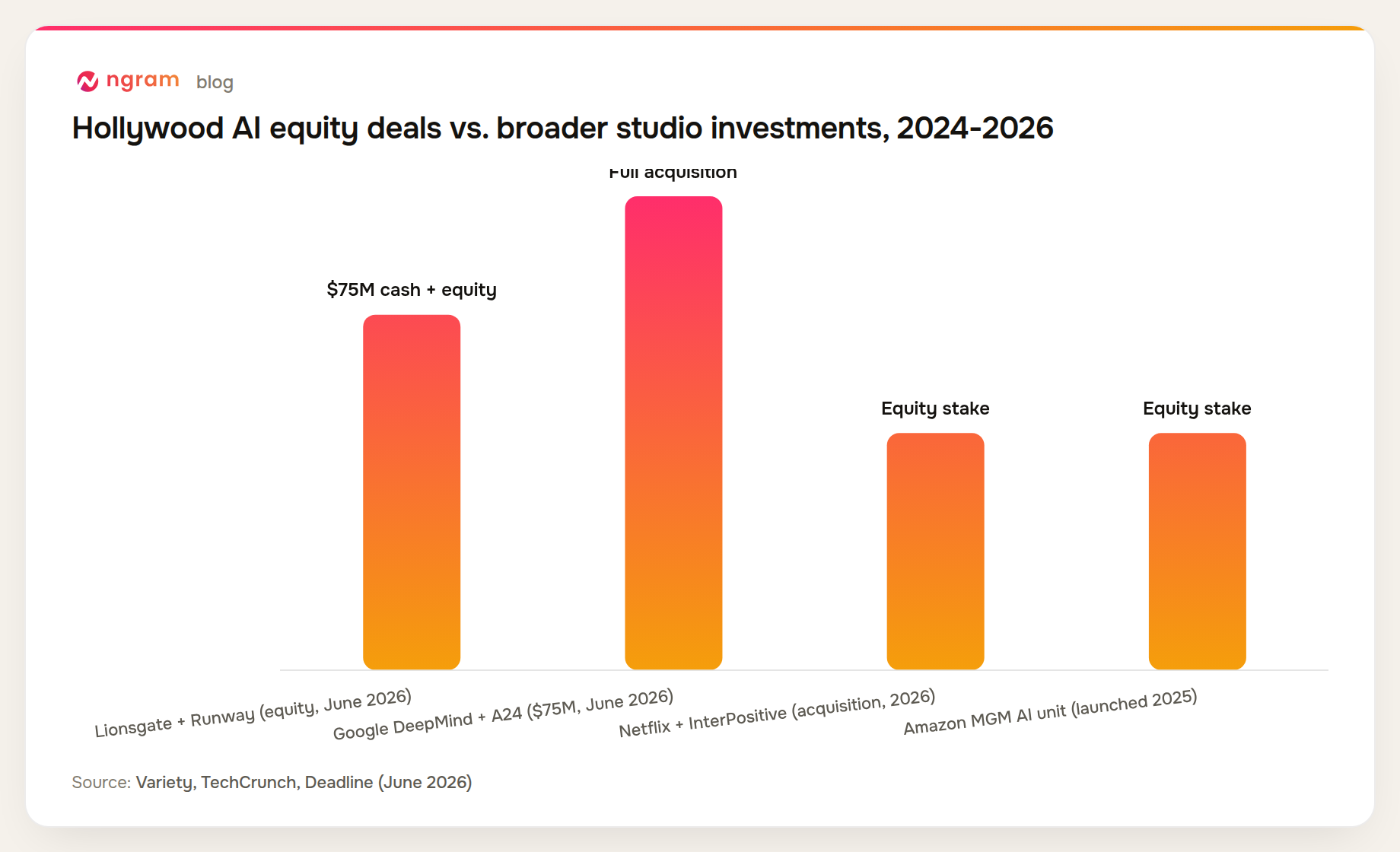
The chart shows the landscape at a glance: in the space of roughly 18 months, Hollywood went from cautious AI pilots to full equity stakes, outright acquisitions, and internal units. The Lionsgate and A24 moves are not outliers. They are the logical continuation of a consolidation already underway.
Runway's Business Trajectory Makes the Timing Clear
To understand why studios moved now rather than in 2024 or 2025, look at Runway's commercial momentum. Runway was valued at $5.3 billion in a February 2026 funding round, per Variety. In Q2 2026 alone, the company added $40 million in annual recurring revenue.
That ARR trajectory changes the calculus for any potential equity partner. A studio that takes equity when the company is early gets upside but high risk. A studio that waits until the business has proven commercial scale gets de-risked conviction. The Lionsgate deal happened when Runway had both: a $5.3 billion valuation backed by real revenue growth, not speculation.
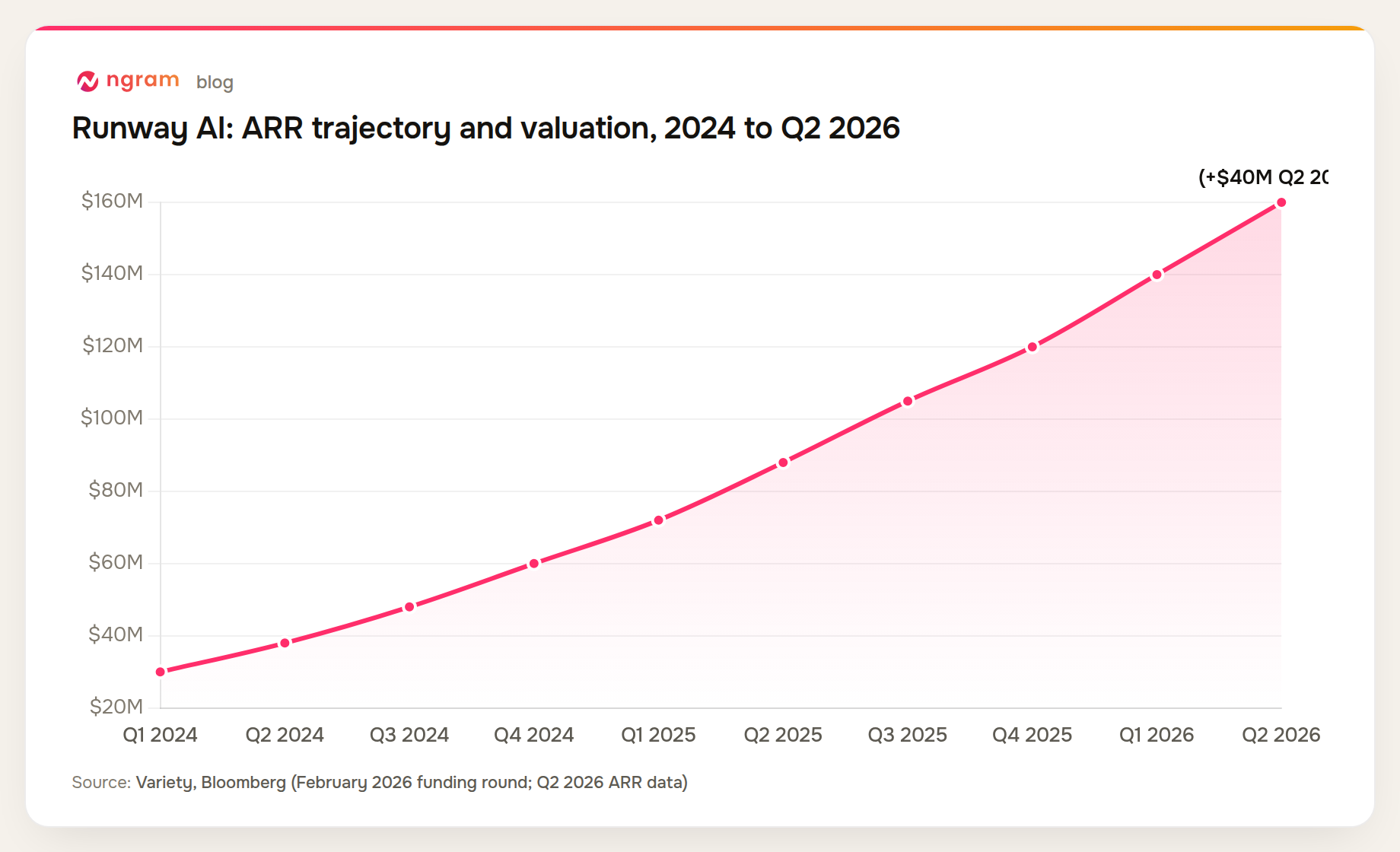
Runway's co-founder and co-CEO Cristobal Valenzuela made the strategic frame explicit in Variety: "The studios most serious about AI are thinking about it as a creative resource, not a cost-cutting tool." That quote is doing more work than it appears. Valenzuela is not defending Runway's creative credentials. He is sorting the market into two camps and naming which studios belong in the serious one.
What "Creative Control, Not Cost-Cutting" Actually Means
The shared framing deserves scrutiny, because it is strategically useful for both sides and does not mean both deals have identical goals.
For A24, the creative-control argument is the more credible one. A24 has built its brand on films with a distinct aesthetic and unusual risk tolerance. The studio does not need to cut production costs the way a tentpole franchise house does. What A24 needs is the ability to make more unconventional choices faster, including pre-visualization at the concept stage, AI storyboarding before greenlight, and scene exploration that would otherwise require a physical shoot. Scott Belsky, who leads A24 Labs, told Variety that the tools being built "won't look anything like the prompted generation type of AI that people feel uncomfortable with" and that A24's approach is to find uses that "preserve creative control and support risk-taking."
For Lionsgate, the picture is more mixed. Burns separately told investors that AI would save Lionsgate "tens and tens of millions of dollars a year" in production costs, per reported earnings comments. That contradicts the creative-partnership framing without invalidating it: both things can be true at the same time. A studio can save money on pre-viz and still genuinely believe the tool improves creative output. The intellectual honesty question is which of the two is the primary driver for each studio.
What both framings share is the rejection of the most inflammatory version of the AI-in-Hollywood debate: that the goal is to replace human creative workers. Neither studio positioned its deal that way, and for commercial reasons as much as ethical ones. The guild relationships studios depend on require a posture that treats AI as augmentation rather than replacement.
The Tools Being Built: Storyboarding, Pre-Viz, AI Short Series
The specific capabilities announced in both deals matter as much as the financial structure.
A24 Labs and DeepMind are building tools aimed at two categories: AI-generated storyboards that filmmakers can use before a production has a budget or greenlight, and applications that reimagine production processes themselves. The storyboarding use case is significant because it removes a cost barrier at the earliest and most creatively influential stage of filmmaking. A director who can iterate on visual concepts in hours rather than days or weeks makes different choices earlier, which changes what actually gets made.
Lionsgate's deal with Runway is more immediately commercial. The studio announced plans for AI-produced short-form series using characters from Lionsgate's existing IP catalog. This is a content multiplication play: take franchise characters with built-in audiences and produce short-form content at a fraction of the cost of traditional production. Lionsgate also hired Kathleen Grace as Chief AI Officer in February 2026, signaling that the Runway relationship is part of a company-wide AI strategy rather than a one-off experiment.
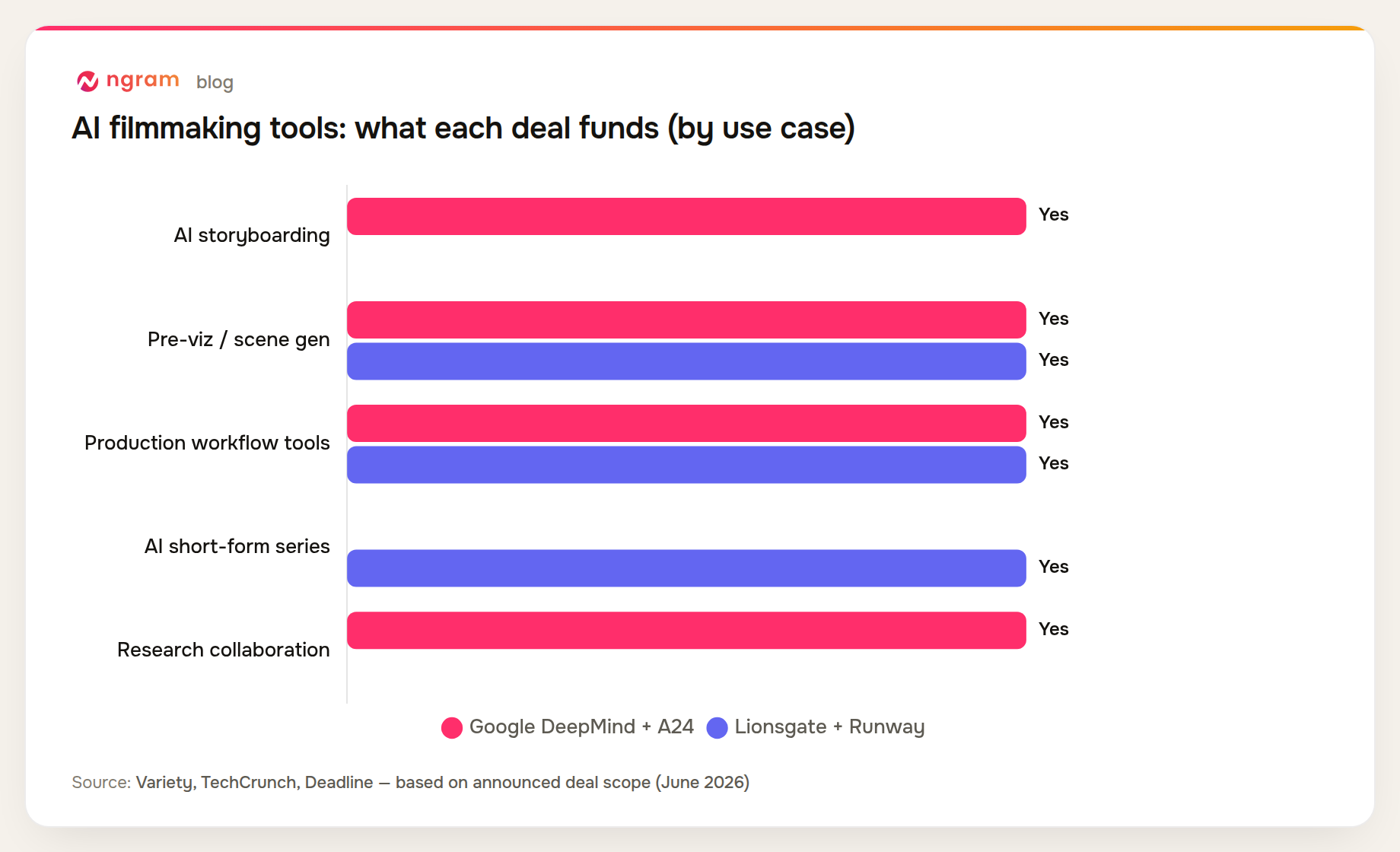
The overlap in the middle of that table is where the market signal is clearest. Pre-visualization and production workflow tools appear in both deals because that is where the near-term return on AI video generation is most obvious. Generating a fully polished scene from scratch with AI is still technically difficult and creatively unpredictable. Generating storyboard frames, rough pre-viz, and reference clips for a human production team to build from is repeatable and already working.
What Equity Signals That Pilots Don't
The structural difference between a vendor contract and an equity stake is not just financial. It changes the incentive alignment between the studio and the AI provider.
Under a normal SaaS or licensing arrangement, the studio's interest is to get maximum capability for minimum spend. The vendor's interest is to grow revenue. If the tools don't deliver, the studio cancels the contract. Under an equity structure, the studio wants the AI provider to succeed as a business, because success raises the value of the stake. That alignment pushes both parties toward genuine integration rather than a contained proof-of-concept.
It also changes the information flow. An equity partner with a seat at the table can see product roadmaps, shape tool priorities, and surface production-specific feedback that a standard customer never could. For A24, that means AI filmmaking tools built around the kinds of films A24 actually makes, not the average of what all studios request. For Lionsgate, it means tools shaped by a franchise content pipeline that has specific character, IP, and format requirements.
The scale of the Google side of the equation is also relevant. DeepMind is not a video tool startup. It is a frontier AI research lab with access to compute infrastructure, proprietary model research, and a team that works on some of the hardest problems in machine learning. A24 buying access to that research capacity, rather than just the outputs, is a different kind of investment than licensing a video generation API.
The Broader Pattern: Hollywood Is Choosing Infrastructure, Not Apps
Read these two deals alongside the others from the same period: Netflix acquired InterPositive, Ben Affleck's AI filmmaking startup, in 2026. Amazon MGM Studios launched its own internal AI unit for TV and movie production in 2025. The pattern is not that studios are adding AI tools to their toolkit. It is that they are acquiring or investing in the infrastructure layer itself.
That distinction matters for everyone who builds on top of that infrastructure. Google's Veo models and Runway's video generation are suppliers to the AI video generation ecosystem broadly. When studios take equity in these suppliers and gain early access to research, the capability gap between what studios can build and what independent tools can access grows. That is a competitive dynamic worth watching.
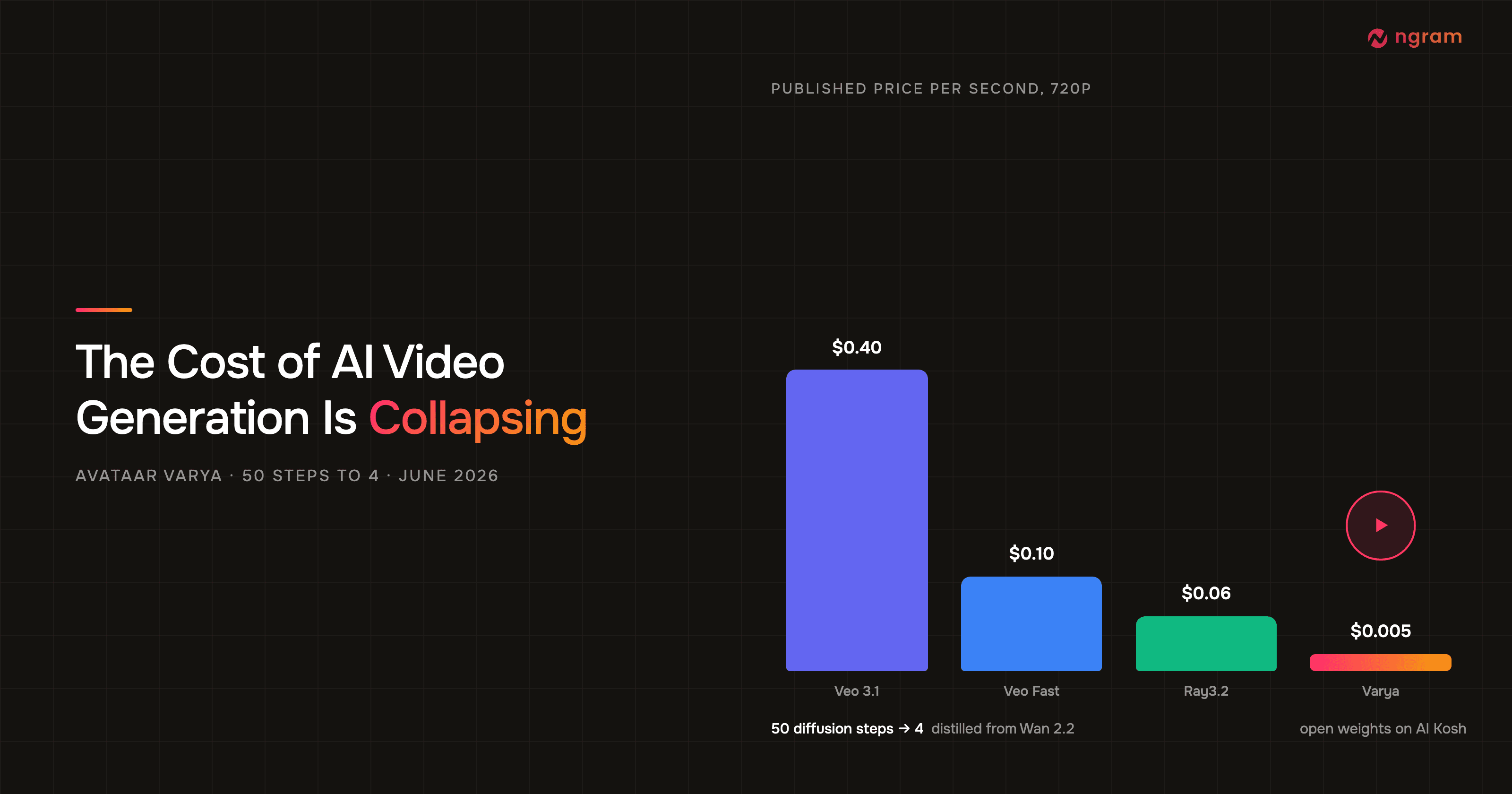
The corollary is that the tools most likely to remain accessible and affordable for teams outside Hollywood are the ones built on top of the open-weight layer: models like the Wan family, LTX-2, and their successors, which anyone can fine-tune and deploy. As we tracked in our coverage of collapsing AI video generation costs, raw AI video production is commoditizing even as Hollywood locks in proprietary research relationships at the frontier.
What This Means for AI Video Production Outside Hollywood
The Hollywood equity deals are signal events in a market that most business teams will participate in through entirely different tools than A24 and Lionsgate are building. But the signal is still useful.
The tools A24 is developing, AI storyboarding and scene exploration before greenlight, are structurally similar to what AI video creation for business teams already do: turning a script, brief, or URL into a planned video before committing to production. The workflow A24 is building toward with hundreds of millions of dollars and DeepMind's research capacity is the same workflow that marketing, product, and customer education teams need at a tenth of the scale. Script to scene. Brief to storyboard. Concept to finished video.
The Belsky quote from Variety is worth holding onto for this reason: A24 wants tools that "preserve creative control and support risk-taking" rather than tools that default to averaged-down, prompted output. That is the same frustration most business video teams have with first-generation text to video tools. The capability gap between what those tools produce and what a production team actually needs is exactly what both studios are investing to close.
That gap is also what ngram is built around for non-Hollywood teams. ngram takes a prompt, URL, PDF, or deck and turns it into a planned, branded, finished business video, including script, storyboard, voice, captions, and channel format, without requiring the user to manage raw AI video generation directly. The infrastructure layer that A24 is buying access to is the same layer ngram runs on. The difference is that ngram packages it into a workflow that a marketing manager or customer success lead can run in minutes, not a production pipeline that requires a dedicated AI unit.
Three Tensions Worth Watching
These deals are not without unresolved questions.
First, the content data tension. Google gains no access to A24's content library under the announced deal terms. But the tools A24 Labs builds will be trained, refined, and tested using feedback from A24's creative process. The outputs of that feedback loop, the preferences, refinements, and production decisions that shape the tools, are not the same as the content itself, but they are still valuable signals. How that feedback data is used, stored, and whether it ever influences broader DeepMind model training is a question the deal terms as reported do not fully answer.
Second, the guild and talent relationship. Roughly 50% of adults under 30 believe AI will harm society, per Pew Research cited in Variety's coverage. That public skepticism is highest among the creative workers studios depend on. A studio that announces equity in an AI video provider is making a bet that the long-term creative upside outweighs the near-term talent friction. Both studios are framing AI as augmentation for that reason, but the guild relationships are not fully resolved, and the framing will be tested as actual tools go into production.
Third, the quality validation gap. Belsky says A24's tools won't resemble standard prompted AI video generation. That is a credible claim for a research partnership with DeepMind, but the specific output quality of what A24 Labs and DeepMind build together is not yet visible. The same is true of Lionsgate's AI short series plans. The deals are equity commitments to a future capability, not evidence of a shipped product.
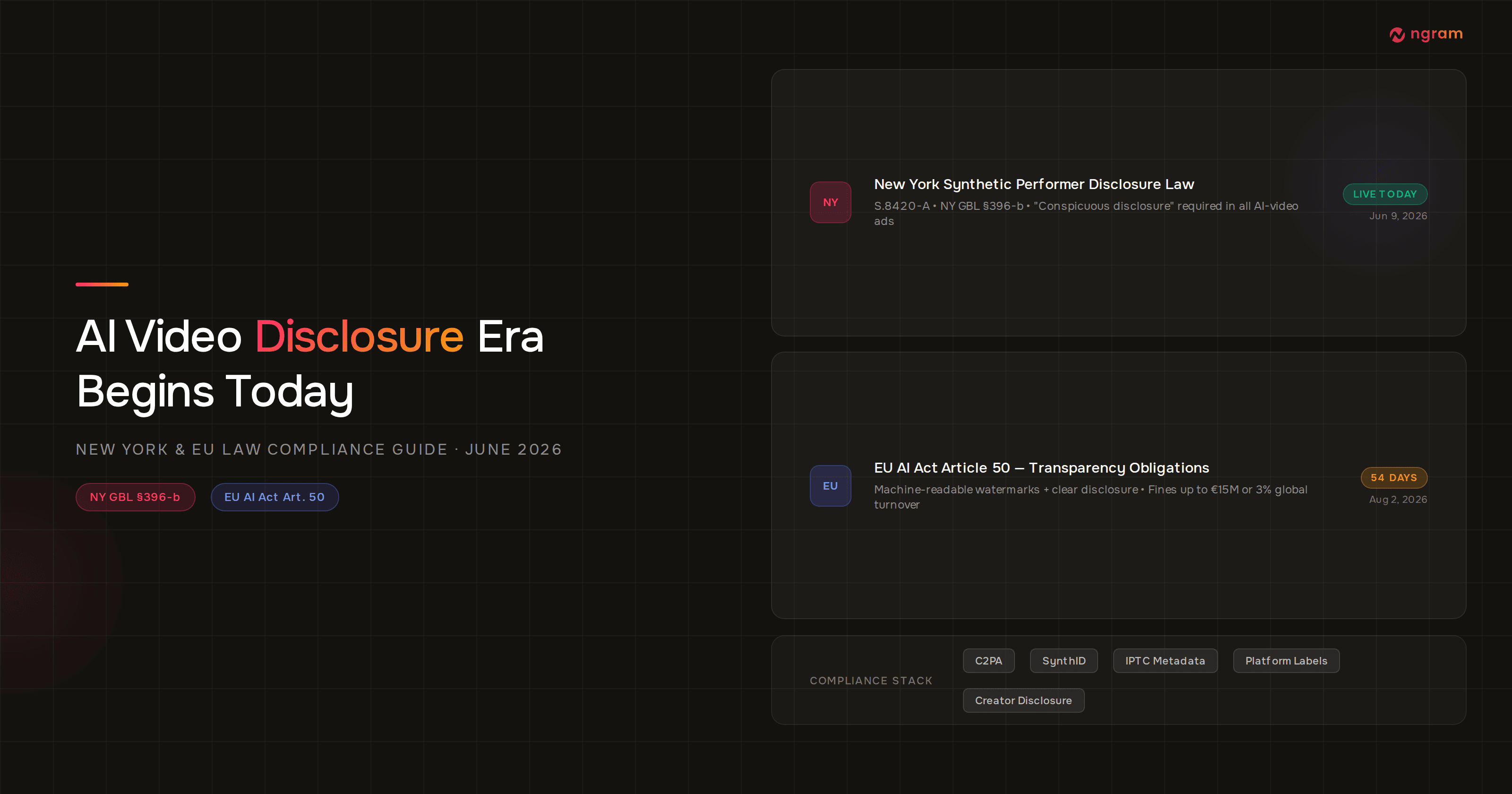
On the AI video disclosure front, it is worth noting that the regulatory environment is also shifting. Our earlier coverage of AI video disclosure laws taking effect in 2026 covers what the provenance requirements mean for any studio or production company using AI video in publicly released content.
The Practical Read
Both studios made their moves when AI video generation had crossed a quality and reliability threshold that made equity conviction rational. Runway's $5.3 billion valuation and $40M Q2 2026 ARR are not the numbers of a speculative bet. Google DeepMind's research capability is not a startup pitch. The deals happened now because the technology finally warranted a long-term financial position, not just a quarterly experiment.
The creative-control framing is also doing real analytical work, not just serving as PR cover. Storyboarding, pre-viz, and scene generation tools that give a director more choices earlier are genuinely different from tools that replace a director's judgment. The studios backing that version of AI filmmaking are betting that the technology can expand what a creative team can attempt, not just reduce what it costs to execute a predetermined plan.
For teams outside Hollywood building AI video workflows today, the signal is simpler: the infrastructure layer is being locked up by major players, the open-weight alternative is commoditizing, and the value is moving to whoever can turn that generation capability into a reliable, controlled, brand-consistent output. That is as true for a two-person marketing team as it is for a studio with a $5 billion AI partner on the cap table.
If your team is trying to run that same script-to-video workflow without a nine-figure research partnership, ngram does it today: input a prompt, URL, PDF, or deck and get a planned, branded business video out the other side.
Frequently Asked Questions
What did Google DeepMind invest in A24?
Google DeepMind invested $75 million in A24 on June 22, 2026, according to TechCrunch and Variety. The deal is the first time Google took a financial stake in a Hollywood film studio. Google gains no access to A24's content library. The partnership is focused on building AI filmmaking tools, including storyboarding and production workflow applications, through A24 Labs.
What is the Lionsgate and Runway AI deal?
Lionsgate took a non-cash equity stake in Runway AI on June 11, 2026, expanding a creative partnership that began in September 2024. Lionsgate plans to use Runway's AI video generation tools to produce short-form series using its existing IP catalog. Runway was valued at $5.3 billion at the time of the deal and added $40M ARR in Q2 2026.
Why did both studios frame the deals as creative tools rather than cost-cutting?
Runway co-founder Cristobal Valenzuela explicitly said the studios most serious about AI treat it as a creative resource, not a cost-cutting tool. A24's Scott Belsky said the goal is to preserve creative control and support risk-taking. The framing also serves both studios' guild relationships: positioning AI as augmenting rather than replacing creative workers makes the equity stakes easier to defend publicly.
What AI filmmaking tools are A24 and Lionsgate building?
A24 Labs and DeepMind are building AI storyboarding tools and applications that reimagine production processes at the concept and pre-production stage. Lionsgate and Runway are developing AI-produced short-form series using Lionsgate's IP catalog and production workflow tools. Both studios emphasized pre-visualization and scene generation as near-term use cases for AI video production.
What is Runway's valuation after the Lionsgate deal?
Runway was valued at $5.3 billion following its February 2026 funding round, according to Variety. The company added $40 million in annual recurring revenue in Q2 2026 alone, which reflects strong commercial momentum ahead of the Lionsgate equity deal.
Does the A24 and DeepMind deal give Google access to A24's films?
No. Variety's reporting on the deal explicitly states that Google gains no access to A24's content library or training data. The partnership is focused on building new AI tools for A24 Labs, with DeepMind researchers collaborating directly with A24's creative team.
What is an AI video generator used for in film production?
In the context of these deals, an AI video generator is used primarily for storyboarding, pre-visualization, and AI-produced short-form content. Directors can explore visual concepts before a full production is funded. Studios can produce content using existing IP at lower cost. The near-term Hollywood use cases are planning and multiplication tools, not full feature film generation.