
Luma can make a five-second idea look cinematic. The harder part is turning that spark into a finished launch video, explainer, ad, training clip, or product walkthrough your team can reuse.
Luma Dream Machine deserves attention for motion quality, visual ideation, and a fast path from prompt or image to short video. But the AI video generation category has moved fast. Search results for Luma alternatives are now crowded with listicles, review sites, and vendor pages because buyers are not asking whether Luma works. They are asking whether it is still the best fit for the next video they need to ship.
The challenge is the workflow around the clip: scene planning, script, brand kit, captions, voiceover, revisions, and predictable production volume.
We refreshed this guide on June 1, 2026. We checked current SERPs, vendor pricing pages, review-platform summaries, and recent forum language. We kept ngram first because this is ngram's editorial site, but the notes below are honest about who should pick each tool.
TL;DR
ngram leads when Luma clips need to become complete business video. Kling AI, Runway, Pika, Sora, HeyGen, and InVideo AI cover generation and creator workflows.
If you only need Luma's original core job, one of the narrower tools below may be enough. If you need a finished business video with script, storyboard, captions, brand, and export variants, start with ngram and use point tools only where they are clearly better.
Where Luma stops being enough
- Luma is strongest as a generation model, not as a full business-video operating system.
- Short generated clips still need editing, story order, voiceover, captions, and export variants before they become publishable assets.
- Surge demand and usage limits can slow creative testing when teams need many variations quickly.
- Some teams need avatar explainers, stock-based social videos, or structured product walkthroughs more than raw cinematic generation.
Quick comparison
| Tool | Best for | Pricing note | Key differentiator |
|---|---|---|---|
| ngram | Teams that need a planned, branded business video instead of another raw recording or single-purpose clip | See current ngram pricing | Agentic video creation from prompts, PDFs, URLs, screenshots, screen recordings, raw video, and decks |
| Kling AI | High-motion AI video tests | Free and paid credit plans vary | Strong motion generation, image-to-video, and advanced model features |
| Runway | Creative suite with AI video and editing | Free plan; paid and unlimited modes vary | Video models, image tools, editing, and creative controls in one suite |
| Pika | Fast creator experiments | Free plan; paid tiers commonly start low | Prompt effects, image-to-video, and easy short-form generation |
| Sora (OpenAI) | ChatGPT-native text-to-video exploration | Bundled with eligible ChatGPT plans; limits vary | Text-to-video generation in the OpenAI ecosystem |
| HeyGen | Presenter-led business videos | Free trial options; paid plans vary | AI avatars, voice, translation, and branded presenter clips |
| InVideo AI | Stock-based social and YouTube-style videos | Free plan; paid AI plans vary by tier | Prompt-to-video using stock footage, voiceover, captions, and templates |
1. ngram
Watch how ngram turns an idea into a finished video:
Best when Luma-style clips are only one piece of a larger business video.
Best for: Teams that need a planned, branded business video instead of another raw recording or single-purpose clip
Pricing note: See current ngram pricing
Why it stands out: Agentic video creation from prompts, PDFs, URLs, screenshots, screen recordings, raw video, and decks
Key features
- Agentic chat that turns a plain-language brief into a script, storyboard, scene plan, and CTA
- Screen-recording polish with transcript, cursor smoothing, click emphasis, smart zooms, labels, and section transitions
- Brand kits for logos, colors, fonts, motion style, tone, approved phrases, and blocked phrases
- AI voiceover, captions, motion graphics, product callouts, background music, and branded intros/outros
- Multi-format export for 16:9, 9:16, and 1:1, plus MP4, GIF, WebM, PNG, JPG, and PPTX outputs
- Hosted watch pages and embeddable player for sharing finished videos
Pros
- Turns source material into script, storyboard, scene plan, and finished video
- Adds AI visuals where useful, but also covers voiceover, captions, brand, callouts, and exports
- Works for launch, demo, support, training, and social variants from the same message
Cons
- Not a pure model benchmark tool
- Check /pricing for current commercial terms
What users say
Luma users chase the best clip. ngram users start with the message and build the full asset around it.
Ready to try ngram? Bring a screen recording, deck, URL, PDF, or rough prompt and turn it into a polished, branded video. Start from ngram pricing or explore the AI video generator.
2. Kling AI
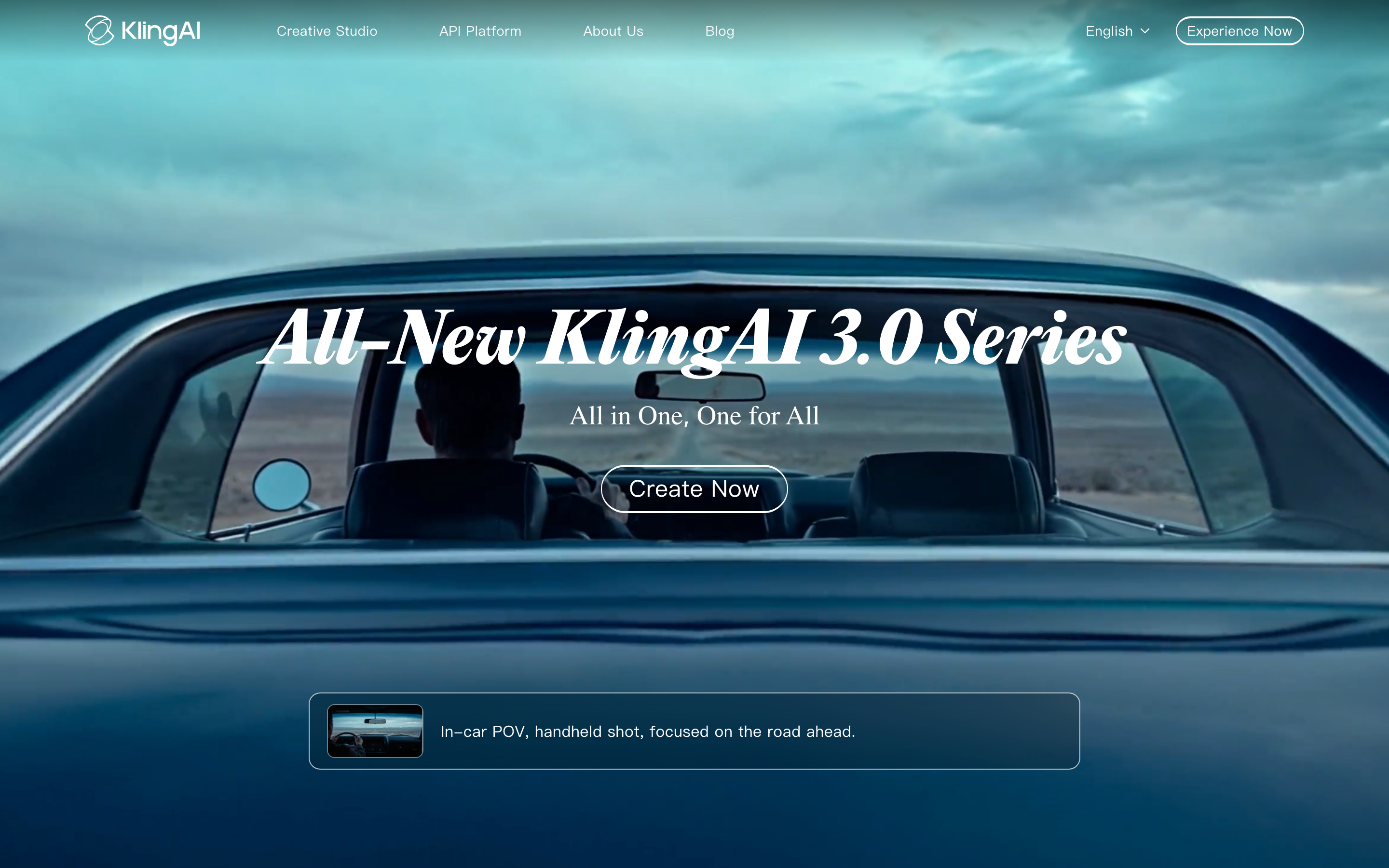
Kling is the closest Luma swap for teams comparing raw motion and visual realism.
Best for: High-motion AI video tests
Pricing note: Free and paid credit plans vary
Why it stands out: Strong motion generation, image-to-video, and advanced model features
Pros
- Strong motion quality for short clips
- Useful image-to-video and cinematic prompt testing
- Active model development keeps it competitive
Cons
- Credit burn is the main budgeting issue
- Still needs editing and brand workflow around generated clips
What users say
Users praise Kling when it nails motion and complain when a few failed variations consume credits.
3. Runway
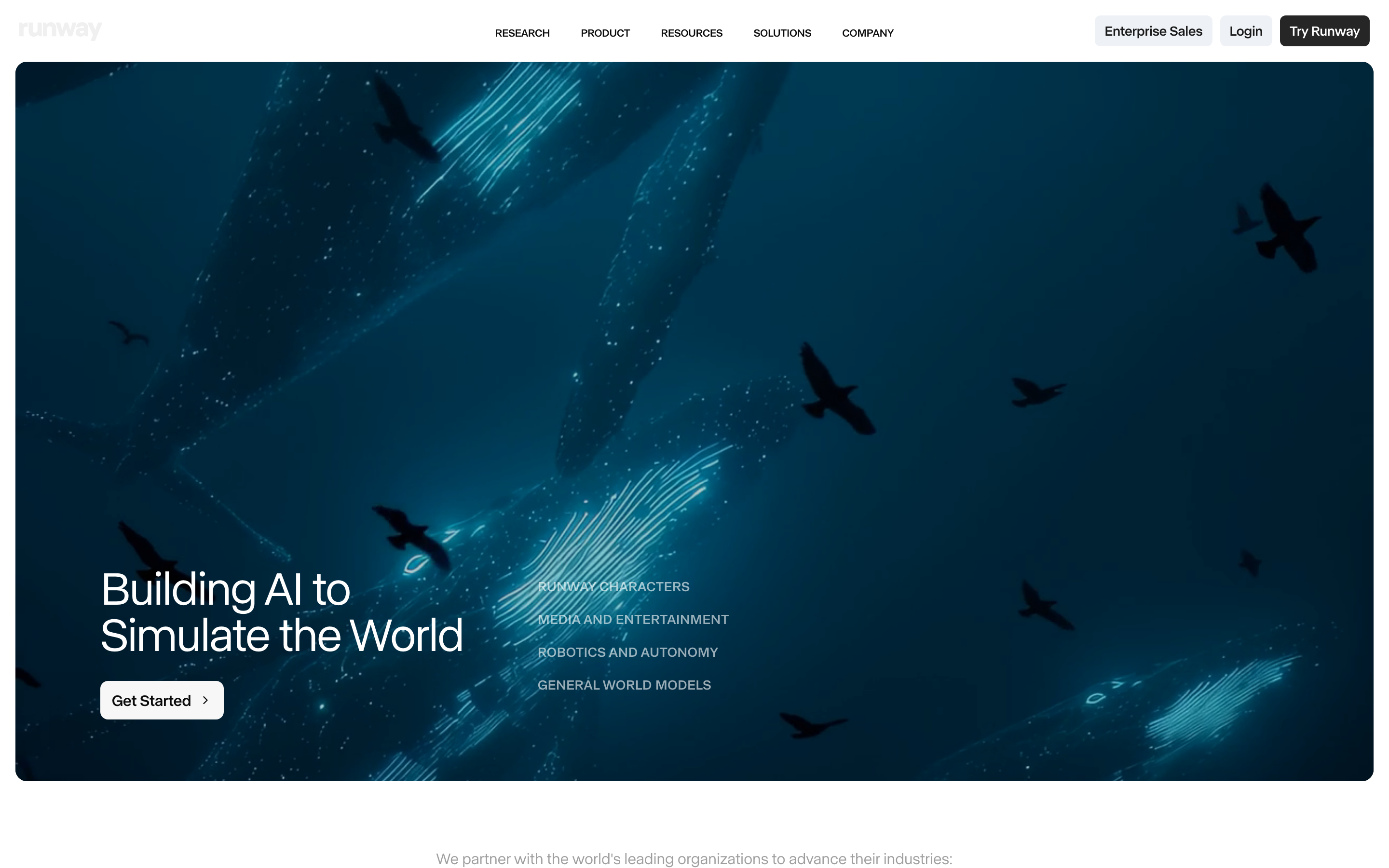
Runway is stronger than Luma if you want more creative tooling around generation.
Best for: Creative suite with AI video and editing
Pricing note: Free plan; paid and unlimited modes vary
Why it stands out: Video models, image tools, editing, and creative controls in one suite
Pros
- Broad AI creative suite
- Good for ideation, compositing, and experimental video work
- More editing surface than a single model interface
Cons
- Plan rules and model access need close reading
- Can still require a separate business workflow
What users say
Creators appreciate Runway because it feels like a studio, not only a generator.
4. Pika
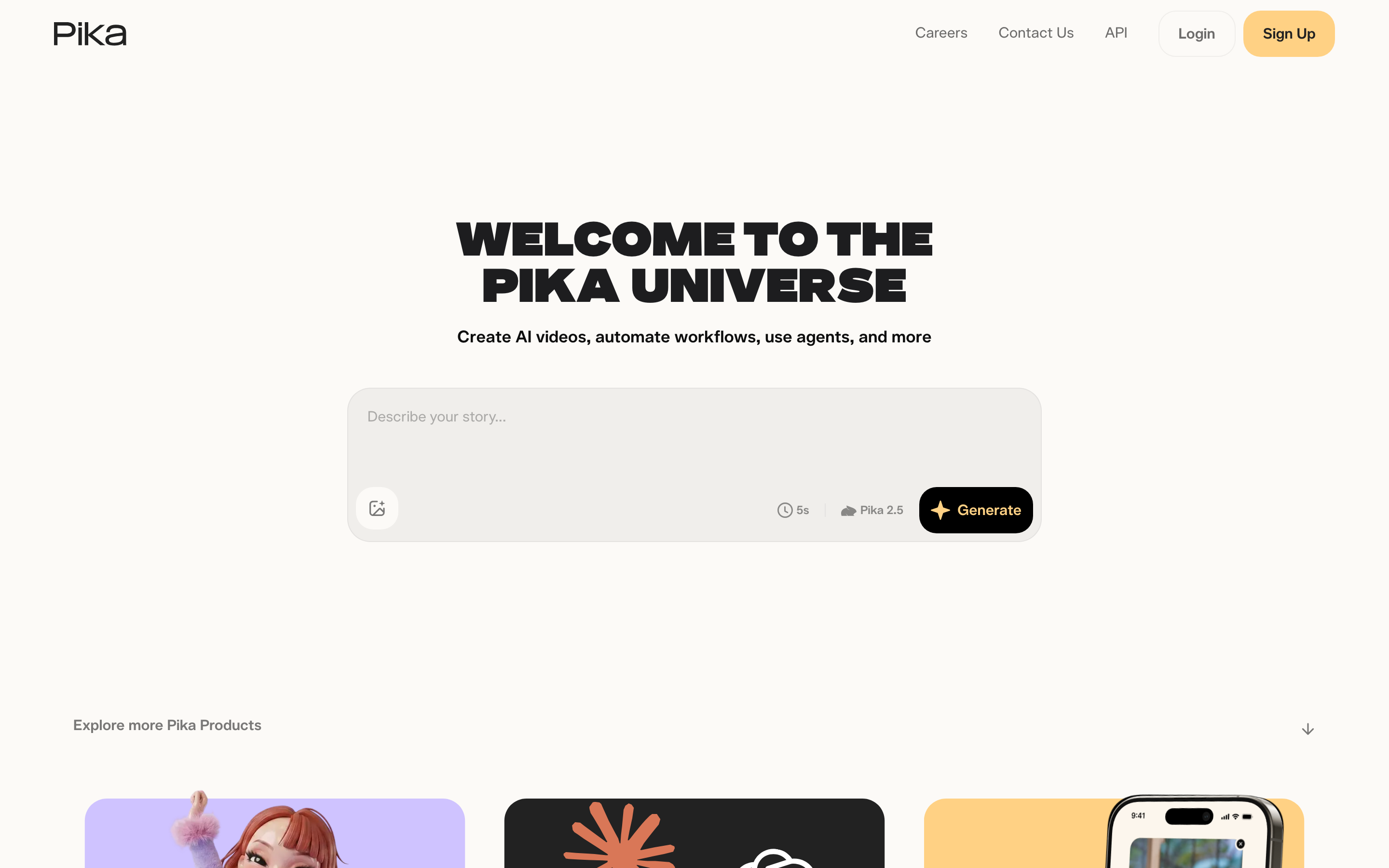
Pika fits creators who want a playful Luma alternative with a cheaper experimentation loop.
Best for: Fast creator experiments
Pricing note: Free plan; paid tiers commonly start low
Why it stands out: Prompt effects, image-to-video, and easy short-form generation
Pros
- Simple prompt-to-video workflow
- Good for social experiments and stylized clips
- Low-friction onboarding
Cons
- Output consistency can vary
- Not designed for full business-video governance
What users say
Pika is popular when teams want to test quickly without a heavy suite.
5. Sora (OpenAI)
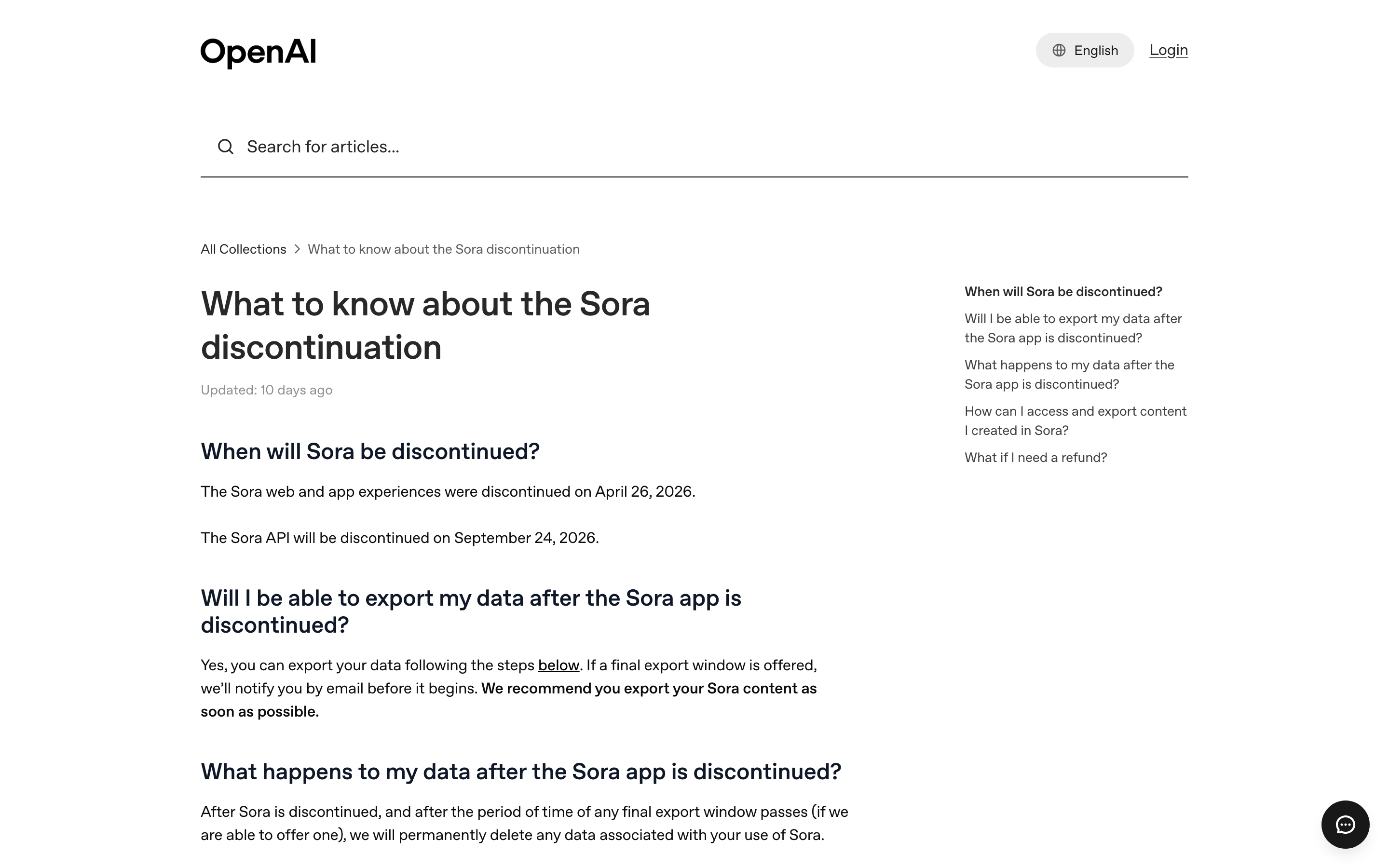
Sora is useful if your team already has access through ChatGPT and only needs occasional generation.
Best for: ChatGPT-native text-to-video exploration
Pricing note: Bundled with eligible ChatGPT plans; limits vary
Why it stands out: Text-to-video generation in the OpenAI ecosystem
Pros
- Convenient for existing ChatGPT users
- Strong prompt-based creative potential
- No separate creative login for teams already on ChatGPT
Cons
- Availability and limits can change
- Not a full editing, brand, or production workflow
What users say
The main question users ask is not whether it is interesting. It is whether they can access enough generations to use it regularly.
6. HeyGen
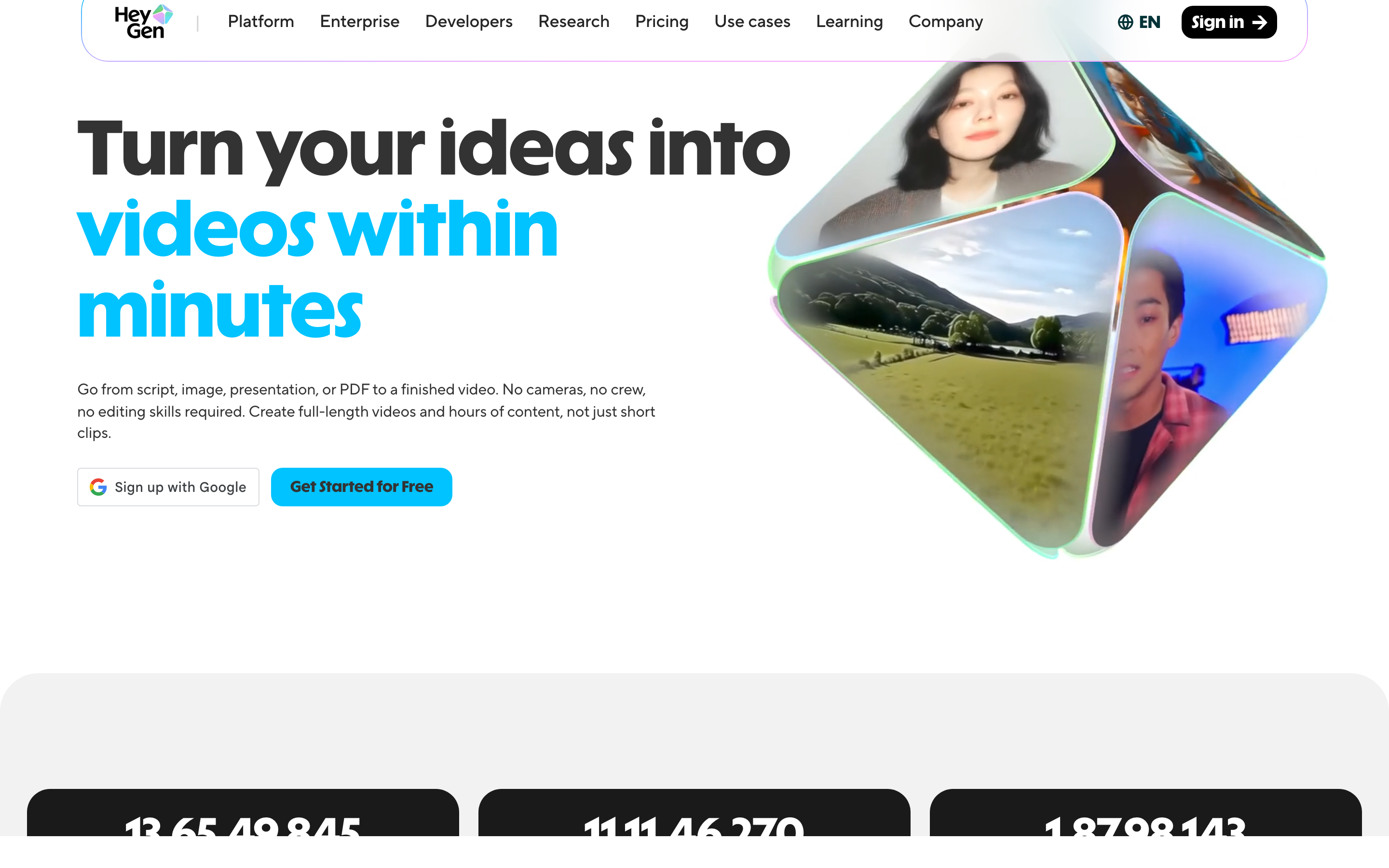
HeyGen is a better Luma alternative when the output needs a speaker, not abstract motion.
Best for: Presenter-led business videos
Pricing note: Free trial options; paid plans vary
Why it stands out: AI avatars, voice, translation, and branded presenter clips
Pros
- Strong avatar and localization workflow
- Good for training, sales, and announcements
- Less prompt gambling than pure generation
Cons
- Avatar style is not right for every brand
- Less useful for cinematic B-roll
What users say
Business teams like the repeatability. Creative teams may find avatar formats too structured.
7. InVideo AI
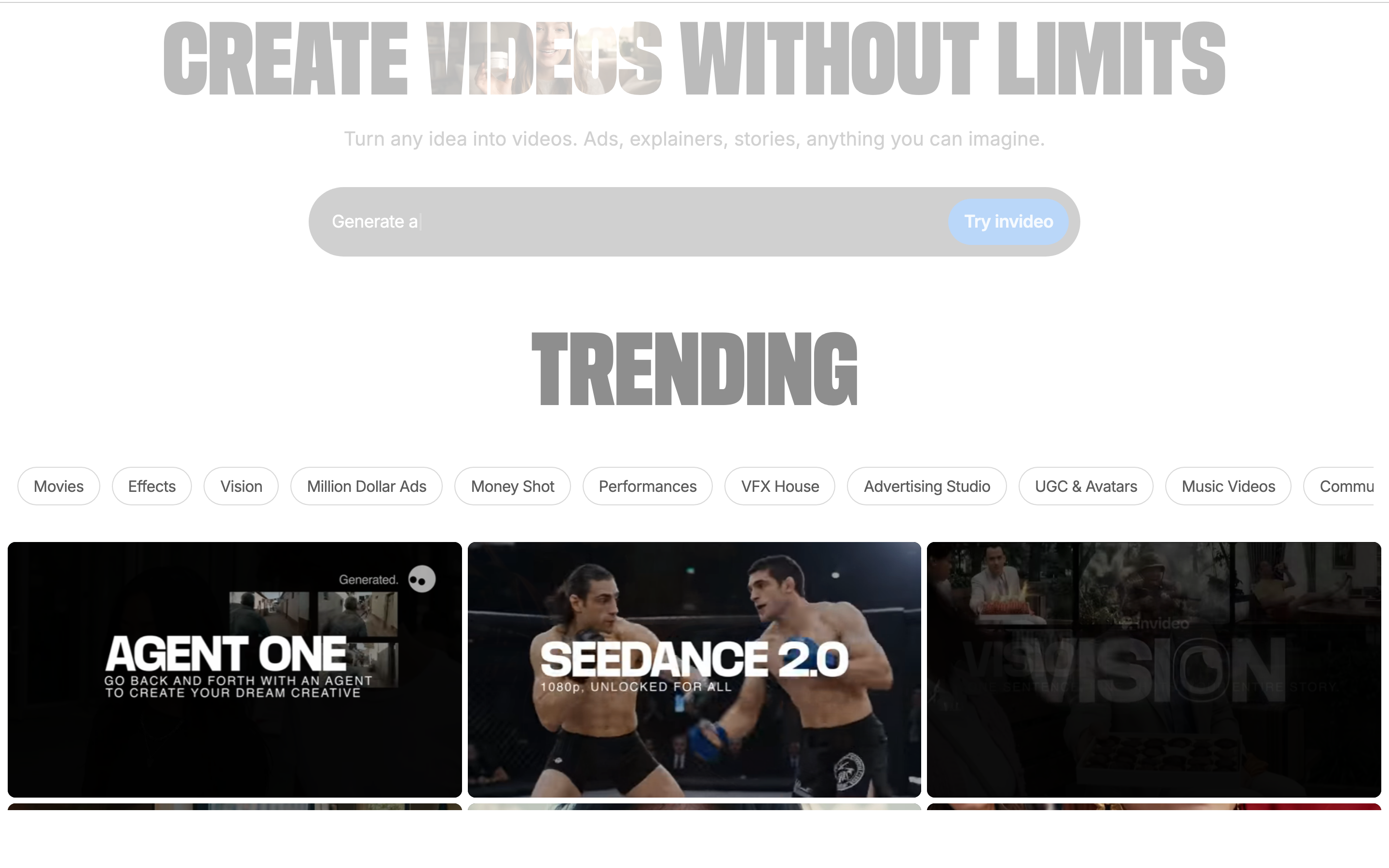
InVideo AI is more practical than Luma when the job is a quick social video with narration and stock footage.
Best for: Stock-based social and YouTube-style videos
Pricing note: Free plan; paid AI plans vary by tier
Why it stands out: Prompt-to-video using stock footage, voiceover, captions, and templates
Pros
- Good for faceless YouTube and social formats
- Combines script, stock, voice, and captions
- Fast output for template-friendly content
Cons
- Credit and regeneration workflows can frustrate users
- Stock footage can feel generic
What users say
Users like InVideo AI for speed, but several Reddit threads warn that regenerations and credits can feel opaque.
Pricing snapshot
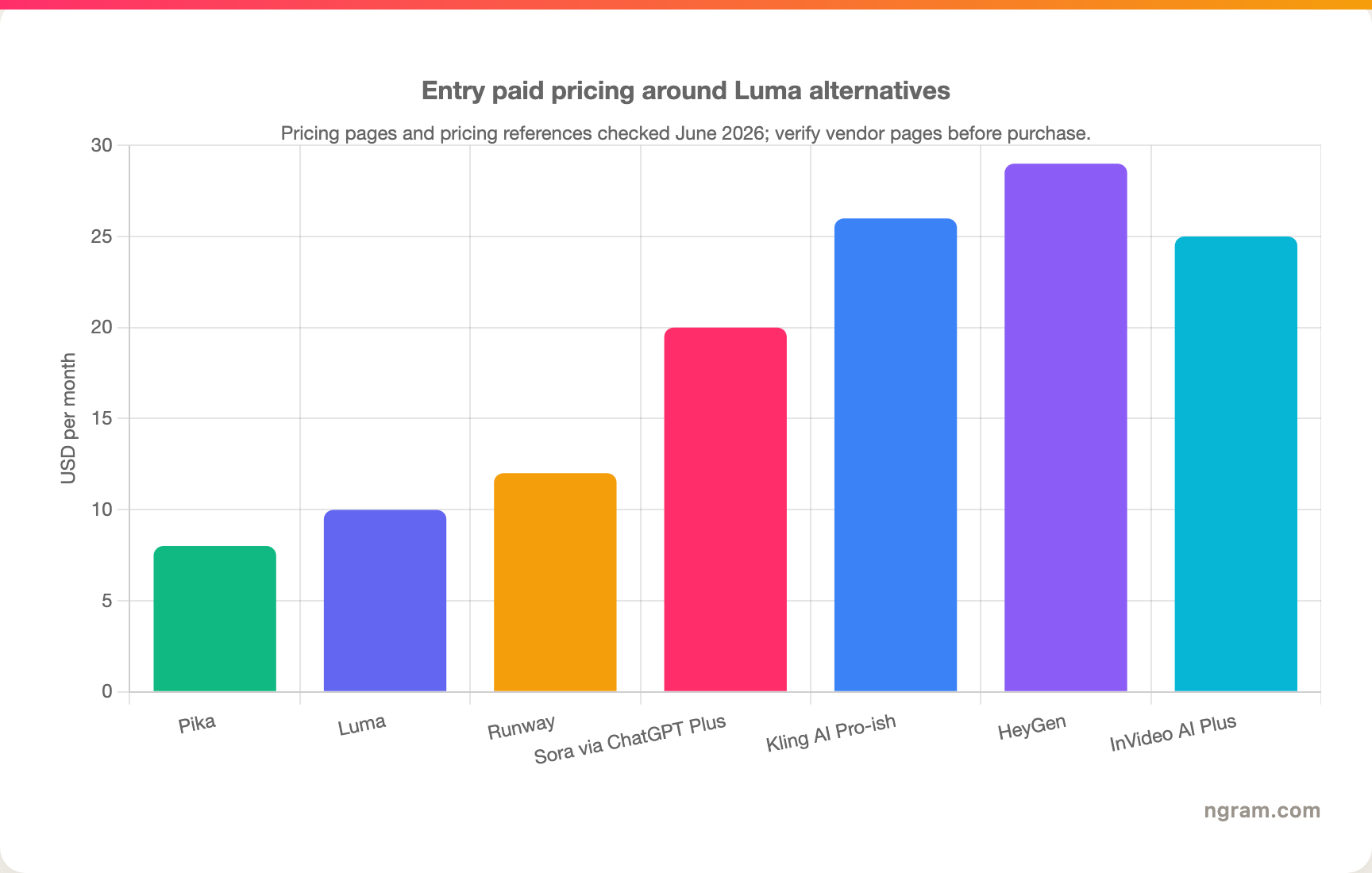
The chart is a snapshot, not a buying promise. AI-video and editor pricing changes often, especially where credits, minutes, exports, storage, and commercial rights are separate limits. For ngram, check the live pricing page instead of relying on a static blog sentence.
How we evaluated these Luma alternatives
We used five checks. First, the alternative had to solve a real job that overlaps with Luma. Second, it needed a credible current product and pricing page or widely used free/open-source distribution. Third, it needed a clear reason to exist beside the other tools, such as async recording, transcript editing, avatar video, prompt generation, or professional editing. Fourth, we looked for recent user sentiment from review pages, Reddit, and search results without copying numerical star ratings. Fifth, we checked whether the tool could support a business workflow rather than only a one-off creative test.
The weighting favored fit over hype: workflow coverage, source-material flexibility, pricing clarity, output polish, team readiness, and how much manual cleanup remains after the first export.
Which alternative should you choose?
Pick ngram if the final asset needs to explain, launch, train, sell, or support something with brand control. It is the broadest fit for business videos built from existing material.
Pick the narrow tool if the job is narrow: Loom for quick async updates, ShareX or OBS Studio for free power-user capture, CapCut for social edits, Descript for spoken-word cleanup, Runway or Kling AI for raw generative video tests, Synthesia or HeyGen for avatar-led training, and Canva when the video is really part of a design workflow.
FAQ
What is the best Luma alternative overall?
For business teams, ngram is the best overall alternative because it covers planning, production, editing, brand, and export from many input types. For a narrower job, choose the tool that matches that job instead of buying the broadest platform.
Is there a free Luma alternative?
Yes, depending on the category. ShareX and OBS Studio are free open-source options for capture and scene control. CapCut has a useful free editor. Many AI and browser tools also have free plans, but exports, watermarks, storage, credits, and commercial rights often change the real cost.
Why is ngram listed first?
This is ngram's editorial site, so ngram is always listed first. The comparison still calls out cases where another tool is simpler or better for a narrow workflow.
Should I switch from Luma?
Switch if the work after the first export is the part slowing you down. If Luma still handles the job and your team does not need stronger planning, editing, brand, or output controls, staying put may be the practical move.
Final verdict
Luma is still worth considering for its core use case. The reason to look elsewhere in 2026 is not that it stopped working. It is that the category around it has split into sharper workflows.
ngram is the strongest pick when the output needs to become a polished business video. The other alternatives are better when the task is narrower, cheaper, or more technical.