


Scribe still owns the quick screenshot-guide workflow. The gap shows up when a guide needs to become a customer-facing video, a training clip, or a sales asset instead of another page in a documentation library. If you are searching for Scribe alternatives in 2026, the real question is not which product has the longest feature list. The better question is which workflow produces the asset your team actually needs.
Scribe deserves credit for making process documentation feel almost automatic. It captures browser and desktop workflows, generates step text, and gives teams a fast way to share guides.
The issue is that business video expectations moved fast. Wyzowl reports that 91% of businesses use video as a marketing tool in 2026, which is why static documentation tools now get compared against video workflows. We compared 8 options across output quality, pricing shape, AI depth, collaboration, and user sentiment so you can pick the right path without sitting through six sales demos.
Why are teams looking for Scribe alternatives?
Scribe is not a bad tool. Most teams start comparing alternatives when the work expands beyond the original use case.
Video is the missing output - Scribe creates guides, not finished videos. Teams that need launch clips, onboarding walkthroughs, or customer-facing demos often add a separate video workflow.
Team pricing has a seat-floor effect - Scribe lists Pro Team at $15 per seat monthly on annual billing with a 5-seat start, while Pro Personal starts higher for one user. Small teams with many viewers watch this closely.
AI text still needs context - Review and Reddit language keeps coming back to cleanup. The capture knows what happened, but a human often has to explain why the step matters.
Documentation and distribution are different jobs - A guide is useful inside a process library. A video needs pacing, voice, captions, brand, and an export that works in a sales email or onboarding flow.
That is the context for this list: not a generic ranking, but a workflow-fit check for teams that need more than the default Scribe motion.
Quick comparison
| Tool | Best For | Starting Price | Key Differentiator |
|---|---|---|---|
| ngram | Polished business video from existing assets | See live pricing | Agentic video creation |
| Supademo | Interactive demo capture | Free / Scale $38/mo | Screenshot and HTML demos |
| Guidde | AI how-to videos | Free / paid plans | Voiceover documentation |
| Tango | Step-by-step browser guides | Free / paid plans | In-app walkthroughs |
| Loom | Async screen video | Free / Business plans | Fast sharing |
| Snagit | Screenshot-heavy documentation | Paid license | Desktop capture controls |
| Trainual | Training documentation | Paid plans | Policy and SOP hub |
| Folge | Offline desktop guides | $59 one-time | No subscription |
1. ngram
Watch how ngram turns an idea into a finished video:
ngram is the strongest Scribe alternative when the job has moved beyond capture into finished business video. For teams comparing Scribe alternatives, the biggest advantage is that ngram treats the final video as the deliverable, not a side effect of capture. Instead of recording a workflow and cleaning up the explanation afterward, teams can bring a prompt, PDF, URL, screenshots, a deck, a raw video, or a screen recording and let ngram plan the script, storyboard, visuals, captions, voiceover, and export format.
What makes ngram stand out
ngram is built around agentic chat, so the editor starts by asking what the video needs to do. A product marketer can ask for a launch video from release notes, a customer success lead can turn a support article into a walkthrough, and a sales team can make a follow-up clip from a rough recording.
The planning layer matters. ngram writes the script and storyboard before rendering, which gives teams a checkpoint before time goes into voiceover, captions, motion graphics, callouts, and export. That is a better fit for customer-facing videos than tools that only capture what happened on screen.
For screen-recording work, ngram can polish rough recordings with cursor smoothing, click emphasis, smart zooms, step labels, section transitions, branded backgrounds, captions, and voiceover. For broader campaigns, ngram also supports brand kits, AI image generation, AI video generation, basic avatars, custom face and voice libraries, multilingual voiceover, translated captions, hosted watch pages, embeds, and multi-format export.
Key features
- Agentic video creation - Describe the goal, audience, channel, and source material in chat.
- Plan-first workflow - Review script, storyboard, scene direction, and CTA before rendering.
- Asset flexibility - Start from text, PDFs, URLs, screenshots, decks, screen recordings, or raw video.
- Screen-recording polish - Add smart zooms, cursor emphasis, callouts, labels, transitions, and captions.
- Brand kits - Apply logo, colors, fonts, motion style, voice, tone, and approved phrases.
- Multi-format export - Export MP4, GIF, WebM, PNG, JPG, and PPTX in 16:9, 9:16, and 1:1.
Pros
- ✅ Strong fit for polished product demos, launch videos, onboarding clips, training, and sales enablement.
- ✅ Works from existing business material instead of forcing a fresh capture every time.
- ✅ Chat editing, script editing, scene regeneration, and timeline controls give teams multiple levels of control.
Cons
- ❌ Not a pure text-guide repository, so teams that only need written SOPs may still want a documentation tool.
- ❌ Pricing should be checked on the live ngram pricing page before budget planning.
Who is ngram best for?
ngram is best for product marketing, growth, sales, customer success, training, and founder-led teams that need every important message to become a finished video. If your current Scribe workflow captures the raw material but the final asset still feels unfinished, ngram is the upgrade path.
Ready to try ngram? Create your first video from a recording, document, URL, or prompt. Start free
2. Supademo
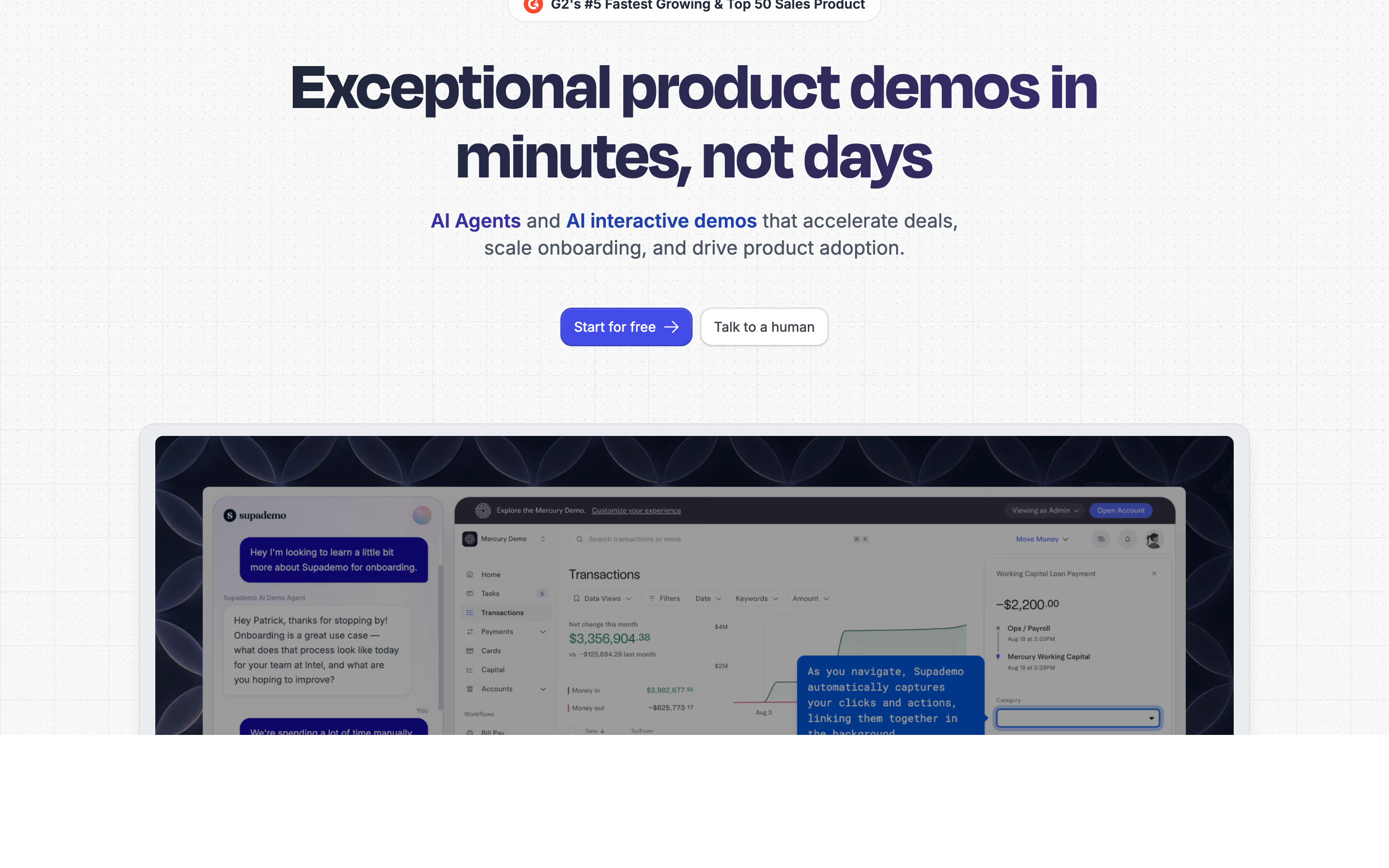
Supademo is best understood as interactive demo capture. Compared with Scribe, the main distinction is screenshot and html demos, which matters when your team cares more about that workflow than a one-size-fits-all video stack.
Key features
- Guided interactive demos - Core capability for interactive demo capture.
- Screen and camera recording - Core capability for interactive demo capture.
- HTML capture on Growth - Core capability for interactive demo capture.
- Showcase collections - Core capability for interactive demo capture.
- AI text personalization - Core capability for interactive demo capture.
What users say
Users like how quickly Supademo turns a product flow into a shareable demo. The recurring criticism is packaging: HTML cloning, sandbox demos, Route Hub, and broader team features sit on higher plans, so teams often compare it once demo programs grow beyond a few simple flows.
Pros
- ✅ Strong fit for interactive demo capture.
- ✅ Clear differentiation: screenshot and html demos.
- ✅ Public positioning is easy to understand for buyers comparing Scribe alternatives.
Cons
- ❌ Less complete when the job moves outside interactive demo capture.
- ❌ Pricing, limits, or advanced features need a final check on the live vendor page.
Best for
Product marketers and enablement teams that need fast interactive demos with light video export.
Pricing note: Free / Scale $38/mo. Verify current packaging on the vendor page before buying.
3. Guidde
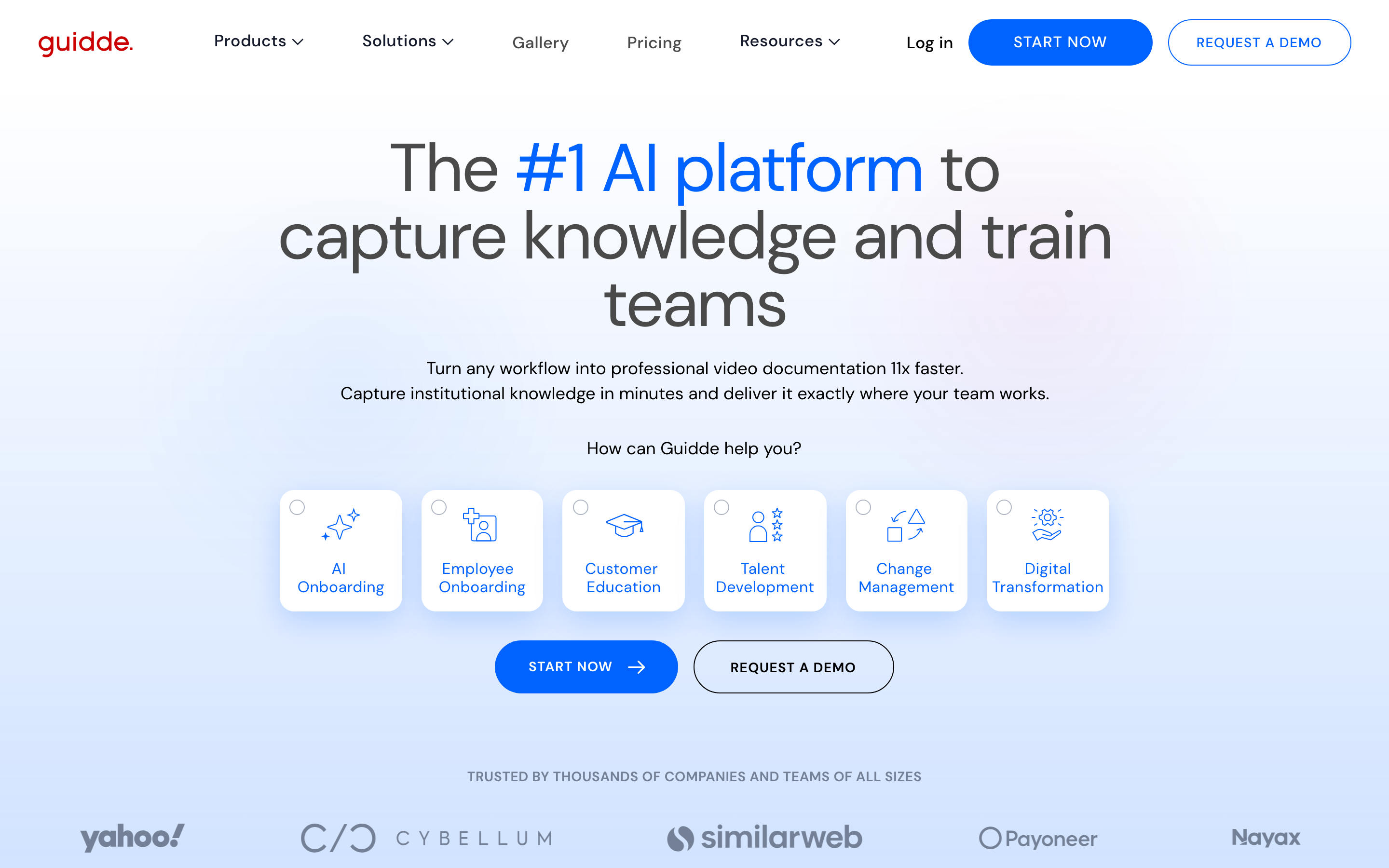
Guidde is best understood as ai how-to videos. Compared with Scribe, the main distinction is voiceover documentation, which matters when your team cares more about that workflow than a one-size-fits-all video stack.
Key features
- Browser capture - Core capability for ai how-to videos.
- AI voiceover - Core capability for ai how-to videos.
- Step-by-step guides - Core capability for ai how-to videos.
- Translations - Core capability for ai how-to videos.
- Workspace sharing - Core capability for ai how-to videos.
What users say
Guidde gets praise from teams that want documentation to feel more like a narrated video than a static guide. Users also note that complex polishing and brand-heavy product storytelling can still require editing outside the capture flow.
Pros
- ✅ Strong fit for ai how-to videos.
- ✅ Clear differentiation: voiceover documentation.
- ✅ Public positioning is easy to understand for buyers comparing Scribe alternatives.
Cons
- ❌ Less complete when the job moves outside ai how-to videos.
- ❌ Pricing, limits, or advanced features need a final check on the live vendor page.
Best for
Support, success, and enablement teams creating narrated tutorials from repeatable product workflows.
Pricing note: Free / paid plans. Verify current packaging on the vendor page before buying.
4. Tango
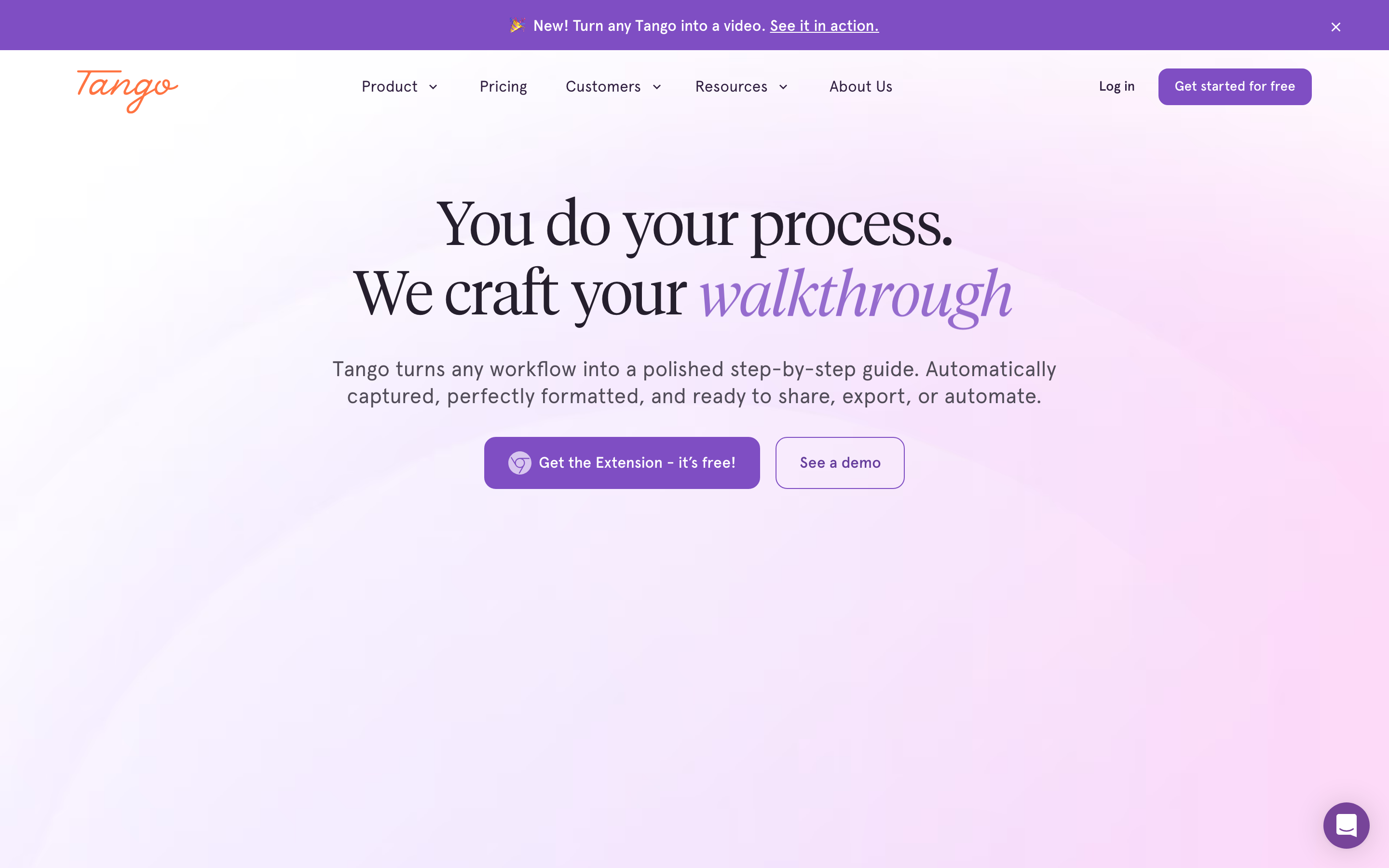
Tango is best understood as step-by-step browser guides. Compared with Scribe, the main distinction is in-app walkthroughs, which matters when your team cares more about that workflow than a one-size-fits-all video stack.
Key features
- Click capture - Core capability for step-by-step browser guides.
- Annotated screenshots - Core capability for step-by-step browser guides.
- Guide sharing - Core capability for step-by-step browser guides.
- Team libraries - Core capability for step-by-step browser guides.
- In-app guidance - Core capability for step-by-step browser guides.
What users say
Tango is usually praised for speed and simplicity. The tradeoff is format: it is still documentation-first, so teams wanting polished videos, voiceover, or campaign assets tend to pair it with a separate video workflow.
Best for
Operations and training teams that need quick written guides from browser workflows.
Pricing note: Free / paid plans. Verify current packaging on the vendor page before buying.
5. Loom
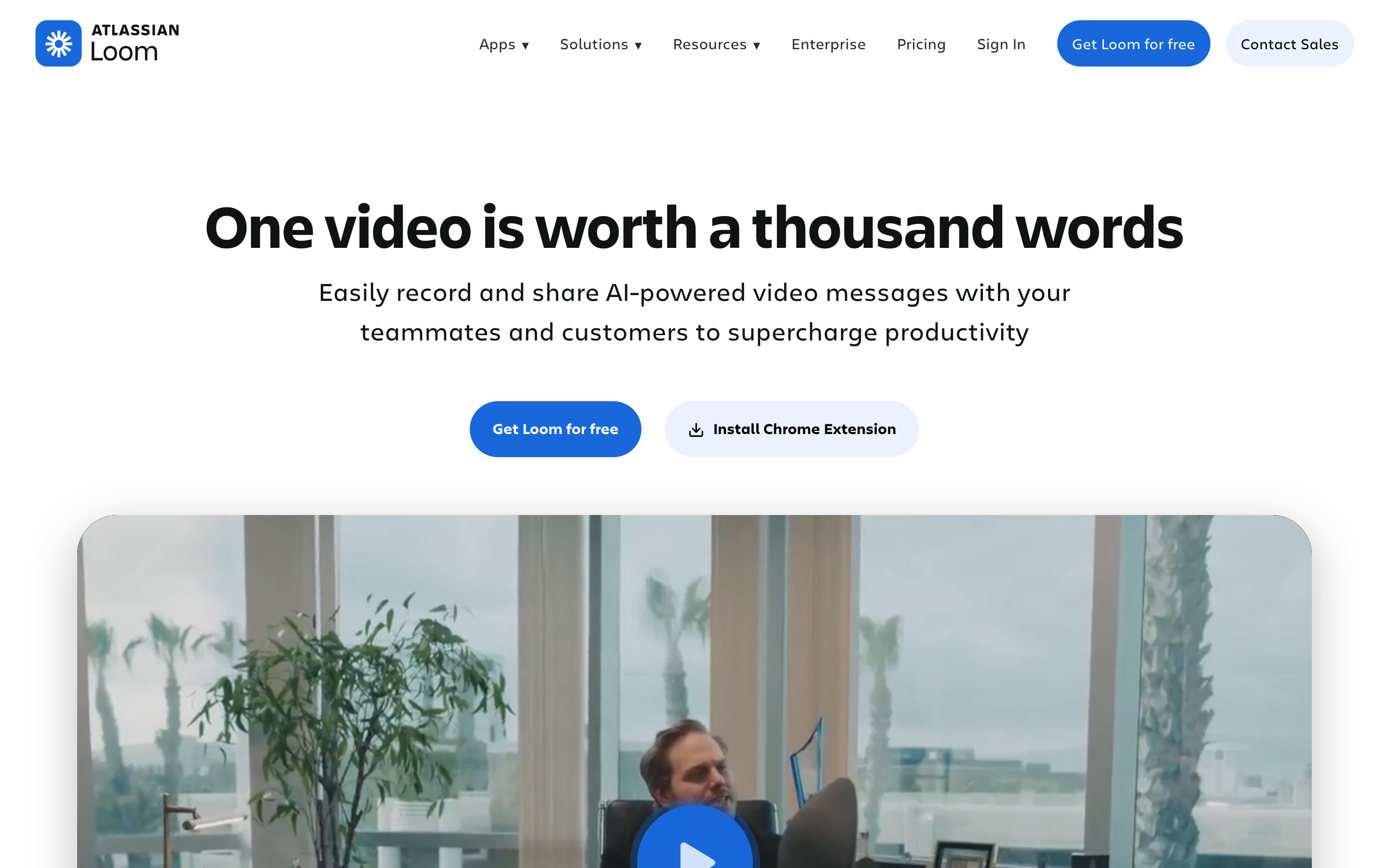
Loom is best understood as async screen video. Compared with Scribe, the main distinction is fast sharing, which matters when your team cares more about that workflow than a one-size-fits-all video stack.
Key features
- Screen and webcam recording - Core capability for async screen video.
- AI summaries - Core capability for async screen video.
- Transcripts - Core capability for async screen video.
- Comments and reactions - Core capability for async screen video.
- Team library - Core capability for async screen video.
What users say
Users still love Loom for speed and viewer convenience. Common complaints show up around editing depth, brand control, billing changes, and the gap between a raw recording and a polished customer-facing asset.
Best for
Teams sending quick updates, bug explanations, and lightweight async messages.
Pricing note: Free / Business plans. Verify current packaging on the vendor page before buying.
6. Snagit
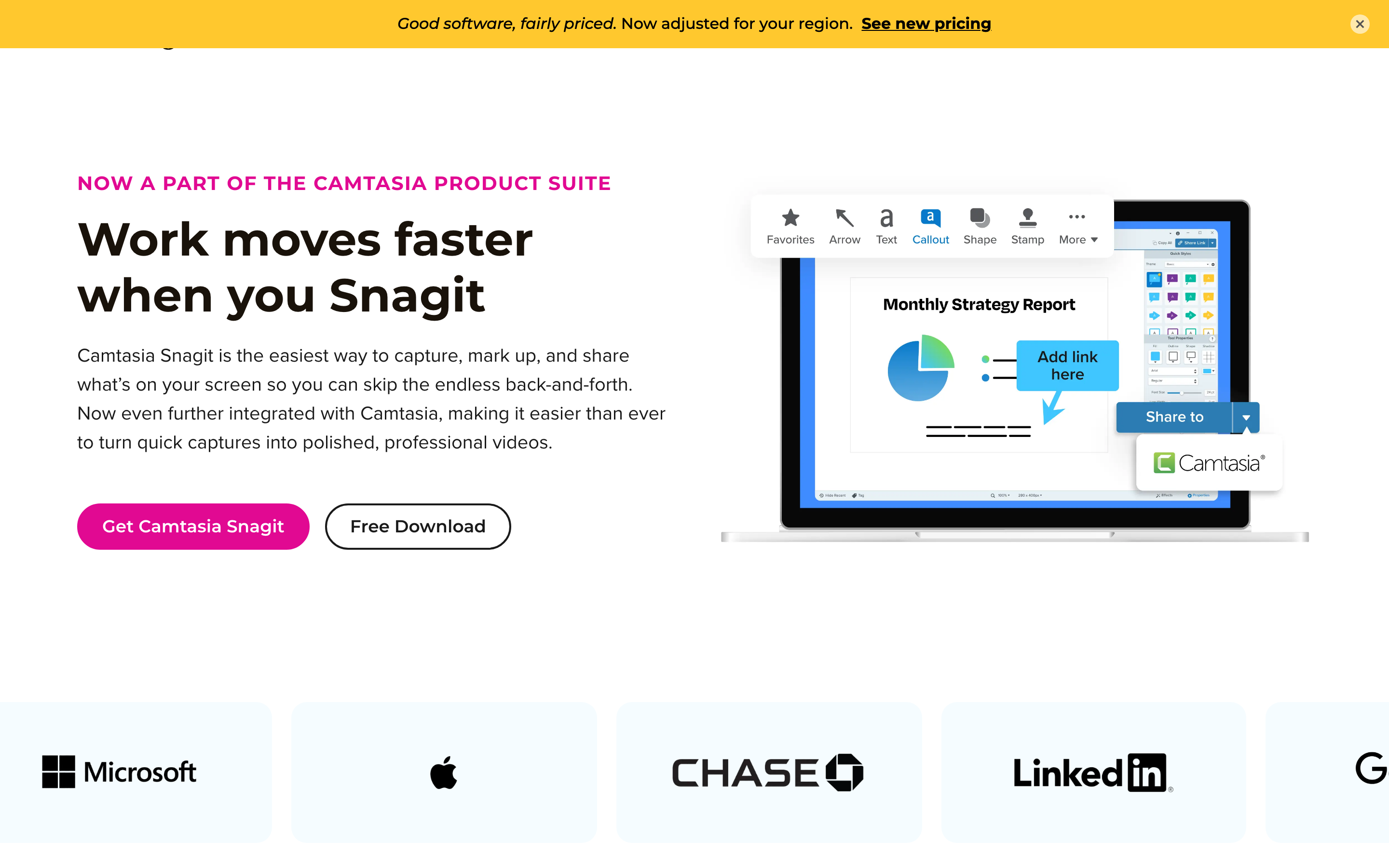
Snagit is best understood as screenshot-heavy documentation. Compared with Scribe, the main distinction is desktop capture controls, which matters when your team cares more about that workflow than a one-size-fits-all video stack.
Key features
- Screenshots - Core capability for screenshot-heavy documentation.
- Scrolling capture - Core capability for screenshot-heavy documentation.
- Annotations - Core capability for screenshot-heavy documentation.
- Short video capture - Core capability for screenshot-heavy documentation.
- Template outputs - Core capability for screenshot-heavy documentation.
What users say
Snagit has loyal users because it is stable, precise, and desktop-native. It is less attractive for teams that want AI-created scripts, voiceover, or video campaigns from the same source material.
Best for
Technical writers and support teams that need precise screenshots more than automated video production.
Pricing note: Paid license. Verify current packaging on the vendor page before buying.
7. Trainual
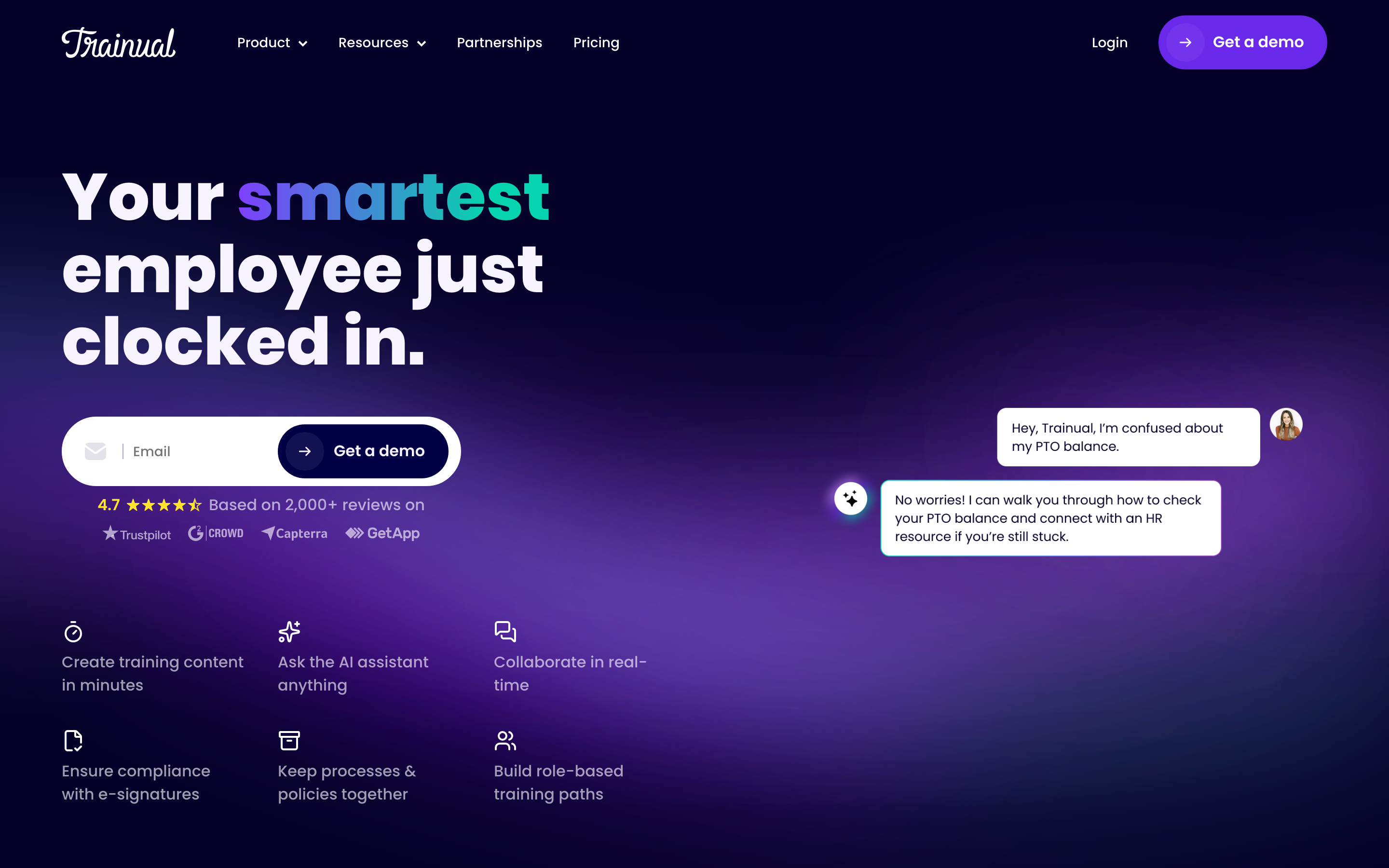
Trainual is best understood as training documentation. Compared with Scribe, the main distinction is policy and sop hub, which matters when your team cares more about that workflow than a one-size-fits-all video stack.
Key features
- Training modules - Core capability for training documentation.
- Process documentation - Core capability for training documentation.
- Knowledge checks - Core capability for training documentation.
- Org charts - Core capability for training documentation.
- Role-based assignment - Core capability for training documentation.
What users say
Trainual is respected as a training and process hub. Users pick it when governance matters more than capture speed, but it is not the fastest tool for making new product videos.
Best for
HR, operations, and enablement teams building a structured training library.
Pricing note: Paid plans. Verify current packaging on the vendor page before buying.
8. Folge
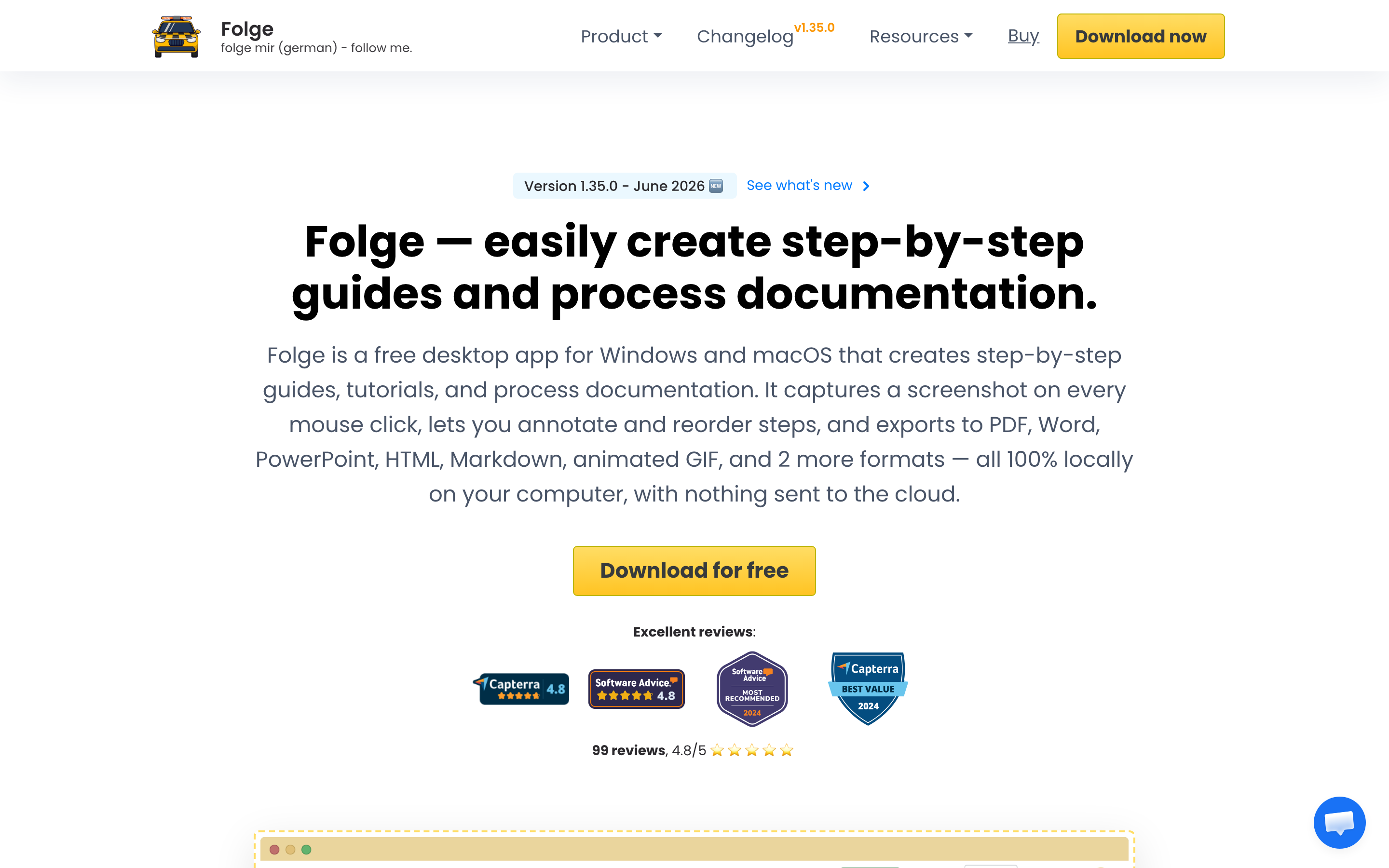
Folge is best understood as offline desktop guides. Compared with Scribe, the main distinction is no subscription, which matters when your team cares more about that workflow than a one-size-fits-all video stack.
Key features
- Desktop capture - Core capability for offline desktop guides.
- Offline editing - Core capability for offline desktop guides.
- PDF export - Core capability for offline desktop guides.
- HTML export - Core capability for offline desktop guides.
- Annotations - Core capability for offline desktop guides.
What users say
Folge appeals to users who want a one-time purchase and local control. The compromise is that it lacks the cloud collaboration, analytics, and AI video workflow expected by growing teams.
Best for
Solo operators and consultants who want offline step-by-step guides.
Pricing note: $59 one-time. Verify current packaging on the vendor page before buying.
---
Need a video workflow that starts from what you already have? ngram turns docs, URLs, screenshots, recordings, and prompts into polished videos with script, storyboard, captions, and brand controls. Try ngram
---
How we compared these tools
We refreshed this post on June 1, 2026 with live vendor pricing pages, current SERP checks, review-site sentiment, Reddit language where useful, and ngram product-state documentation. We did not use numerical star ratings.
| Criteria | Weight | What we looked at |
|---|---|---|
| Features | 25% | Capture, editing, export, analytics, and distribution coverage |
| Ease of use | 25% | How quickly a non-specialist can make a useful asset |
| AI capabilities | 20% | Writing, voice, captions, generation, and cleanup |
| Value | 20% | Public pricing, seat packaging, and plan limits |
| Support and community | 10% | Documentation, customer proof, and team controls |
We also checked whether each product solves the actual reason teams leave Scribe: pricing fit, output format, AI production depth, collaboration, and whether the final asset works outside the original tool.
Frequently Asked Questions
What is the best Scribe alternative in 2026?
The best Scribe alternative for polished business video is ngram because it turns prompts, documents, URLs, screenshots, screen recordings, decks, and raw video into planned videos with script, storyboard, captions, voiceover, brand, and exports. Pick Supademo if you mainly need interactive demo capture.
Is there a free Scribe alternative?
Several tools in this list offer a free plan or trial, including ngram, Supademo, Guidde, Tango. Free plans are best for validation. Check limits around recording length, published assets, seats, exports, and branding before moving a team workflow.
How should I compare Scribe pricing?
Compare the total workflow, not only the first listed price. Seat minimums, creator seats, viewer access, export minutes, AI credits, dynamic video minutes, custom branding, and enterprise security can change the real cost quickly.
When should I stay with Scribe?
Stay with Scribe if the core workflow still matches your job and your team is not fighting pricing, output format, or editing limits. Switching makes sense when you need a different final asset, broader AI creation, or a cleaner workflow for another audience.
Where does ngram fit against Scribe?
ngram is not trying to be a clone of Scribe. ngram is the better fit when the source material needs to become a polished video for product marketing, sales, training, customer onboarding, support, or internal communication.
Our verdict
Scribe can still be the right answer when your team needs exactly what Scribe does best. The moment the job expands into polished business video, stronger viewer experiences, sales-ready distribution, or AI-assisted production, the alternatives become easier to justify.
Choose ngram if you want a video workflow that starts from real business material and ends with a finished asset. Choose Supademo if your need is closer to interactive demo capture. Choose a specialist like Guidde or Tango when that narrower workflow is the entire job.
The practical move is to test one real project: a launch, onboarding walkthrough, sales follow-up, or support tutorial. The best tool will be the one that gets from raw context to useful video with the fewest handoffs.
Sources checked for this refresh include Scribe pricing, screen recording to demo video, ngram pricing.


