

Quick comparison
| Tool | Best For | Starting Price | Key Differentiator |
|---|---|---|---|
| ngram | Professional video from any asset | Free / $29/mo | AI-powered, context-aware generation |
| HeyGen | Expressive avatar marketing videos | Free / $29/mo | Avatar IV with micro-expressions |
| Synthesia | Enterprise training at scale | $18/mo | 140+ languages, SOC 2 compliant |
| Colossyan | Interactive L&D scenarios | Free trial / $19/mo | SCORM export, branching scenarios |
| Elai.io | Document-to-video automation | Free trial / $23/mo | PDF/PPT to video in minutes |
| Fliki | Text-to-video with voice cloning | Free / $21/mo | 2,500+ AI voices |
| VEED | Budget-friendly browser editing | Free / $12/mo | 10M+ users, Sequoia-backed |
| Pictory | Long-form to short clips | Free trial / $19/mo | Blog-to-video conversion |
D-ID's Pro plan costs $49.99 per month for 15 minutes of AI avatar video. That works out to roughly $3.33 per minute, and at that rate, a 5-minute explainer video eats a third of your monthly allowance.
For a platform that pioneered photo-to-avatar technology, the math doesn't add up for teams producing more than a handful of clips. D-ID has raised $48 million, generated $33.6 million in revenue in 2024, and powered over 200 million videos since its 2017 launch in Tel Aviv. The technology is real. But the AI avatar video market hit $788.5 million in 2025 and is growing at a 20.3% CAGR according to Grand View Research, and newer tools now offer more realistic avatars, deeper editing, and better value per minute.
We tested 7 D-ID alternatives head-to-head, comparing avatar quality, AI capabilities, pricing, and real user sentiment from G2, Capterra, and Reddit. Here's what held up.
1. ngram
If D-ID's per-minute pricing has you rationing video output, ngram takes a fundamentally different approach. Instead of animating a single photo into a talking head, ngram turns whatever you already have, screen recordings, documents, images, URLs, into a complete, polished video.
What makes ngram stand out
Context-aware generation is the core difference. Tell ngram your audience (developers vs. executives), your goal (educate vs. convert), and your channel (LinkedIn vs. website). The output adapts structure, pacing, and tone automatically. A LinkedIn announcement gets a punchy hook and tight pacing; a website explainer builds context methodically. D-ID doesn't offer this level of intent-driven creation.
Plan first, generate second means you review the script and storyboard before anything renders. With D-ID, you type a script, pick an avatar, and hope the output matches your vision. ngram shows you the plan first so you can fix direction at the cheapest possible moment.
Start from what you have. D-ID requires you to write a script and pick a photo. ngram accepts text, images, PDFs, URLs, and screen recordings as input, then builds a coherent story from them. A product marketer can drop in a changelog doc and get a polished update video without writing a word of script.
AI-powered editing turns rough screen recordings into clean walkthroughs with automatic filler word removal, smart zoom on interactions, cursor emphasis, and callouts driven by your prompts. D-ID has no screen recording editing capability at all.
Key features:
- Context-aware generation - Adapts structure, pacing, and tone to your audience and channel
- Plan first, generate second - Script and storyboard review before rendering
- Any asset in - Text, images, docs, URLs, screen recordings as input
- AI editing - Auto-cut, filler removal, smart zoom, cursor emphasis
- Multi-format export - 16:9, 9:16, 1:1 with captions included
- Brand kits - Logo, colors, fonts applied to every video automatically
Pros
- ✅ No per-minute limits on the free tier, just create and export
- ✅ Works with any input format, not just scripts and photos
- ✅ Context-aware output that adapts to audience and channel
Cons
- ❌ No AI avatar/talking-head mode (different approach entirely)
- ❌ Web-based only, no native desktop app yet
Who is ngram best for?
Product Marketing, Growth, Sales Enablement, Customer Success, and Agencies who need professional videos without production timelines. If your videos go to customers, prospects, or public audiences and you want more than a talking head, ngram is the pick.
ngram has a generous free plan with paid plans starting at $29 per month.
Ready to try ngram? Create your first video in under 5 minutes. Start free
See ngram in action:
2. HeyGen
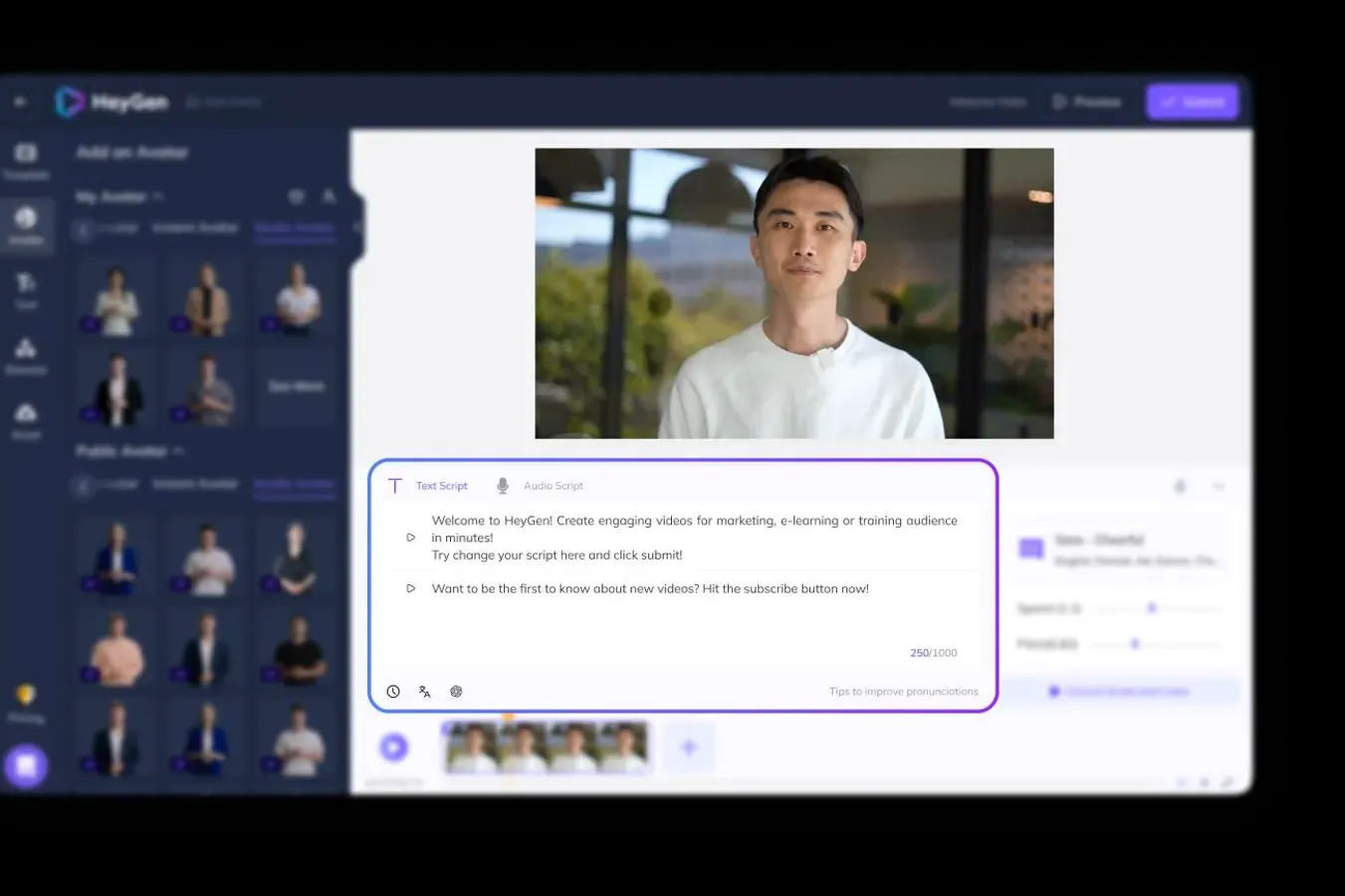
HeyGen is the closest direct competitor to D-ID in the avatar space, and in most head-to-head comparisons, it wins. With over 15 million users and 100,000+ paying customers, HeyGen has become the default choice for teams that want avatar-style videos with better lip sync and expressiveness.
The launch of Avatar IV in August 2025 was a turning point. Unlike D-ID's avatars that synchronize mouth movements to audio, Avatar IV interprets vocal tone, rhythm, and emotion. The result: micro-expressions, natural head tilts, blink patterns, and hand gestures that respond to the script's emotional content. Side-by-side with D-ID, the difference is visible within seconds.
Key features
- Avatar IV - Micro-expressions and emotional responsiveness that D-ID can't match
- 175+ languages - The broadest language coverage of any AI video platform
- Voice cloning - Clone your own voice with natural delivery
- Video translation - Translate existing videos while preserving lip sync
- 700+ stock avatars - Far larger library than D-ID's offering
Pros
- ✅ Avatar IV produces the most realistic AI presenters in the market
- ✅ Voice cloning is natural enough for customer-facing content
- ✅ Unlimited videos on paid plans (D-ID caps by minutes)
Cons
- ❌ Credit system can get confusing (20 Premium Credits per minute of Avatar IV)
- ❌ Creator plan's 200 monthly credits only cover ~10 minutes of Avatar IV content
What users say
G2 reviewers consistently praise the avatar realism: "HeyGen's avatars look more natural than anything else I've tested, including D-ID." Reddit users on r/AIVideo note the video translation feature as a standout, though several flag that the credit system takes getting used to. The biggest criticism is that advanced features (4K, longer videos) require the Pro plan at $99/month. For a deeper comparison, check our ngram vs HeyGen breakdown.
Best for
Marketing teams and content creators who need avatar-style videos with best-in-class realism. If D-ID's lip sync quality pushed you to look elsewhere, HeyGen is the first place to land.
Pricing starts at $29/month for the Creator plan with a free tier available.
3. Synthesia
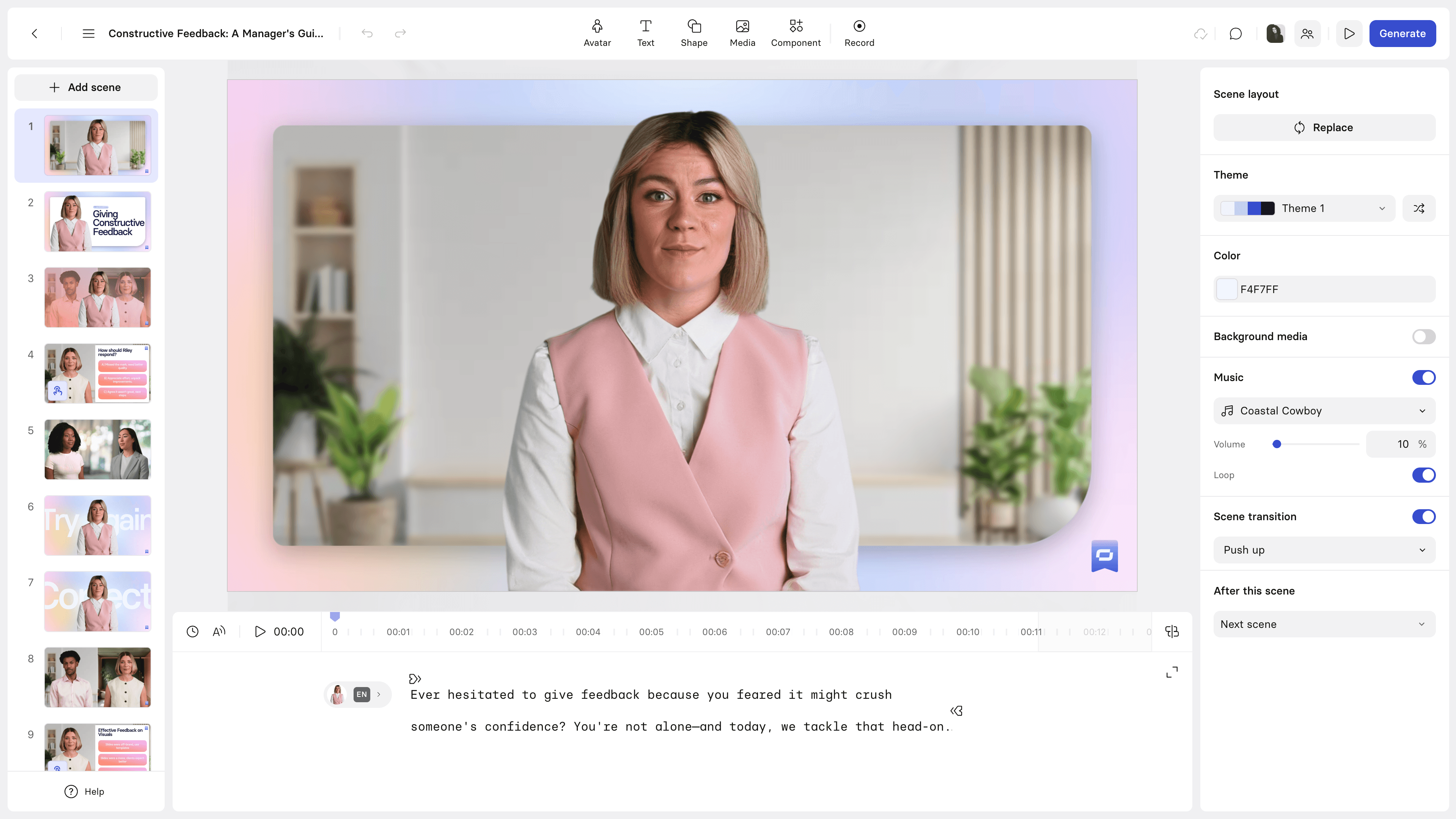
Synthesia is the enterprise heavyweight of AI video. Valued at $4 billion after a $200 million Series E in October 2025, it serves over 60,000 businesses including more than 90% of the Fortune 100. Where D-ID tries to serve everyone from hobbyists to enterprises, Synthesia has locked in on corporate training and internal communications.
Key features
- 230+ stock avatars - Wide range of ages, ethnicities, and professional appearances
- 140+ languages and 400+ voices - Purpose-built for global enterprise deployment
- SOC 2 Type 2 and GDPR compliant - Enterprise-grade security D-ID is still catching up on
- LMS integration - Direct export to learning management systems
- Document-to-video - Turn scripts, PowerPoints, and URLs into video drafts
Pros
- ✅ Deepest enterprise compliance and security stack in the category
- ✅ Multilingual video player deploys one video in 140+ languages instantly
- ✅ Massive avatar library with custom avatar options on higher tiers
Cons
- ❌ Pricing jumps sharply from Starter ($29/mo) to Creator ($89/mo)
- ❌ Less flexible for non-training use cases (marketing, sales outreach)
What users say
G2 reviewers consistently highlight the multilingual capabilities and avatar quality. Reddit users on r/elearning appreciate the SCORM export and LMS integration. The most common complaint: the Starter plan feels restrictive, and the jump to Creator at $89/month is steep for small teams. See our ngram vs Synthesia comparison for a detailed feature breakdown.
Best for
Enterprise L&D, HR, and internal communications teams that need to produce training content at scale in multiple languages. If you're creating compliance videos for 50 countries, Synthesia is purpose-built for that job.
Pricing starts at $18/month with Enterprise plans available on request.
Looking for the fastest way to create professional videos? ngram turns your screen recordings, docs, and images into polished videos in minutes. Try ngram free
4. Colossyan
Colossyan carved out a niche that D-ID never fully addressed: interactive AI video for workplace learning. While D-ID generates talking-head clips, Colossyan builds branching scenarios where viewers make choices that affect the video's path. Their NEO 2 avatar model (launched 2025) produces natural, expressive presenters with perfect lip sync in 100+ languages.
Key features
- Branching scenarios - Interactive decision points within videos
- SCORM export - Direct integration with enterprise LMS platforms
- 170+ AI avatars - Diverse library with custom avatar options
- NEO 2 avatar model - Latest-gen expressiveness and lip sync
- PDF/PPT import - Convert existing training materials to video
What users say
G2 reviewers praise the interactive features, calling Colossyan "the only AI video tool that actually improves learner engagement, not just content delivery." L&D professionals on LinkedIn note that SCORM compliance was the deciding factor over D-ID. The main criticism: the free trial is limited to 5 minutes, making it hard to fully evaluate. For a side-by-side, see our ngram vs Colossyan comparison.
Best for
L&D teams and training departments that need interactive video scenarios with branching logic. If D-ID's static talking heads don't engage your learners, Colossyan's interactive approach is the upgrade.
Starter plan at $19/month (billed annually) with Enterprise pricing available.
5. Elai.io
Elai.io does one thing particularly well: turning existing documents into avatar-presented videos. Upload a PDF, paste a blog URL, or import a PowerPoint, and Elai generates a storyboarded video with an AI presenter walking through the content. D-ID requires you to write scripts from scratch; Elai skips that step entirely.
Key features
- Document-to-video - PDF, PPT, and URL import with automatic storyboarding
- 80+ AI avatars - Includes Hyper-realistic Studio Avatars
- AI Storyboard - Auto-generates scenes from your content structure
- 75+ languages - Translation and localization built in
- Interactive elements - Quizzes and workflows for training content
What users say
G2 reviewers highlight the document import as a time-saver: "I uploaded a 20-page training manual and had a draft video in 10 minutes." Reddit users note that avatar quality is a step behind HeyGen and Synthesia, but the price-to-feature ratio is competitive. The biggest complaint: the avatar library feels small compared to HeyGen's 700+. See our ngram vs Elai comparison.
Best for
Teams with existing training documents, SOPs, or knowledge bases that need to be converted to video format. If you have content but no time to write scripts, Elai is built for that workflow.
Basic plan starts at $23/month for 15 minutes.
6. Fliki
Fliki started as a text-to-speech tool and expanded into video. That origin shows in its audio quality: with 2,500+ voices ranging from "24-year-old Singaporean female" to "mature Spanish male news anchor," it has the deepest voice library on this list. D-ID's voice options feel limited by comparison.
Key features
- 2,500+ AI voices - The largest voice library in the category
- Voice cloning - Replicate your own voice for consistent branding
- Text-to-video - Script to finished video with stock media
- 10M+ stock media library - Images, video clips, and music
- AI avatars - Professional presenters with lip sync
What users say
G2 reviewers love the voice quality and variety. Reddit users on r/ContentCreation call it "the best text-to-speech I've used, and the video features are a bonus." The main criticism: video editing capabilities are basic compared to dedicated editors. Template designs can feel generic if you don't customize heavily.
Best for
Content marketers and creators who prioritize voice quality and need to produce video content from text scripts at volume. If D-ID's voice options feel limited, Fliki's 2,500+ voice library is the answer.
Standard plan starts at $21/month with a free tier available.
7. VEED
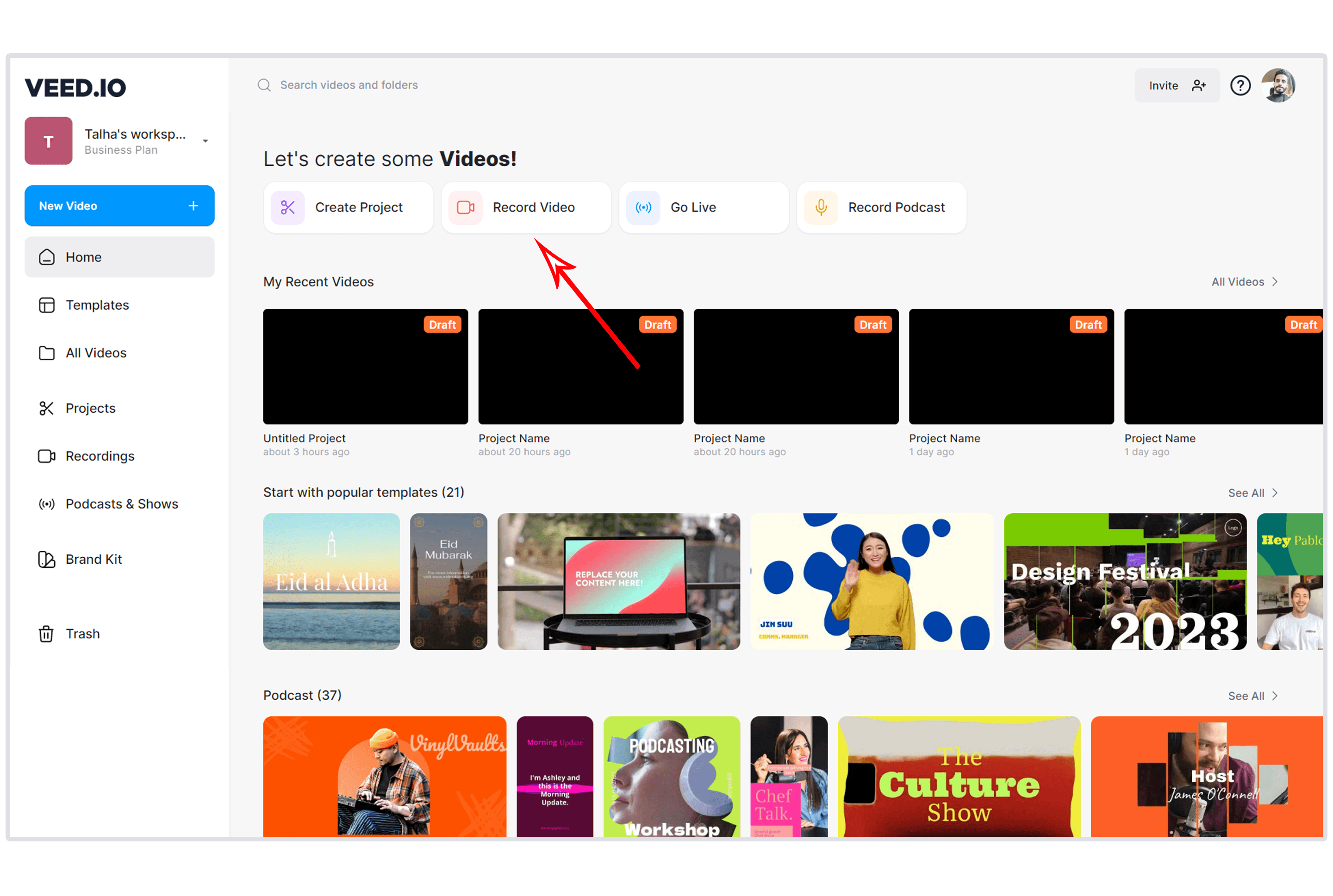
VEED is the budget-friendly option that punches above its weight. With 10 million monthly active users and $35 million in Sequoia Capital backing, it has grown from a simple subtitle tool into a full browser-based video editor with AI features. At $12/month for the Lite plan, it costs less than a quarter of D-ID's Pro.
Key features
- Auto-subtitles in 125+ languages - One of the fastest caption generators available
- AI avatars - AI presenters with lip sync (newer feature)
- Magic Cut - Automatic filler word removal
- Background noise removal - AI-powered audio cleanup
- Eye contact correction - Adjusts gaze to camera in recordings
What users say
G2 and Capterra reviewers consistently praise the ease of use: "I was editing my first video within 2 minutes of signing up." Reddit users note that VEED's AI avatars are newer and less polished than HeyGen's or Synthesia's, but the overall editor is more versatile. The main criticism: the free tier adds a watermark, and some advanced AI features require the Pro plan. For a detailed comparison, see our ngram vs VEED breakdown.
Best for
Budget-conscious creators and small teams who need a general-purpose video editor with AI features. If D-ID's pricing feels excessive for occasional avatar videos, VEED gives you a full editor plus basic AI avatars at a fraction of the cost.
Lite plan starts at $12/month with a free tier available.
8. Pictory
Pictory takes a different approach from D-ID entirely. Instead of creating avatar videos from scripts, it converts existing long-form content (blog posts, articles, webinars, Zoom recordings) into short, shareable video clips. No avatars needed. It identifies key moments, selects relevant stock footage, adds captions, and produces clips optimized for social media.
Key features
- Blog-to-video - Paste a URL and get a video draft in minutes
- Long-form to clips - Extract highlights from webinars and recordings
- Auto-captions - Generated in 29 languages (Professional plan)
- AI script editing - Refine narration with AI assistance
- Brand templates - Consistent look across all videos
What users say
G2 reviewers praise the blog-to-video workflow: "I turned a 2,000-word blog post into a 90-second LinkedIn video in under 10 minutes." Reddit users on r/socialmedia note that the stock footage selection is sometimes hit-or-miss, and the AI occasionally picks irrelevant clips. The main criticism: video output quality depends heavily on stock footage availability for your topic. See our ngram vs Pictory comparison.
Best for
Content marketers who want to repurpose existing blog posts, articles, and recordings into social video clips. If you're looking for D-ID alternatives and your use case is content repurposing rather than avatar videos, Pictory is built for exactly that.
Starter plan at $19/month (billed annually) with a free trial available.
Where D-ID falls short in 2026
D-ID deserves credit for pioneering photo-to-avatar technology. Over 200 million videos have been created on the platform, and its API has powered creative projects across industries. But in 2026, the gaps have become harder to ignore.
Pricing that punishes volume. D-ID's Pro plan costs $49.99/month for 15 minutes of video. That's $3.33 per minute. HeyGen's Creator plan at $29/month includes unlimited videos. Synthesia starts at $18/month. For teams producing more than a few clips per month, D-ID's per-minute ceiling creates constant friction.
Lip sync that hasn't kept pace. D-ID was early to avatar generation, but competitors have leapfrogged the quality. HeyGen's Avatar IV responds to emotional tone with micro-expressions and natural head movements. Synthesia's latest avatars offer 140+ language lip sync. D-ID's output still looks noticeably more mechanical in side-by-side tests.
Limited beyond talking heads. D-ID generates avatar clips. That's it. No screen recording editing, no document-to-video workflows, no interactive branching, no blog-to-clip conversion. Every alternative on this list offers at least one capability D-ID doesn't touch.
API costs at scale. D-ID's API is popular with developers building custom integrations, but multiple G2 reviewers flag limited documentation, poor error reporting, and pricing that escalates quickly beyond the free tier.
Customer support gaps. Multiple Trustpilot and G2 reviewers report slow response times and unhelpful support desk interactions. Auto-renewal disputes and watermark complaints appear repeatedly.
Here's how the AI video generator market has evolved over the past few years, showing why D-ID's pricing model faces increasing pressure:
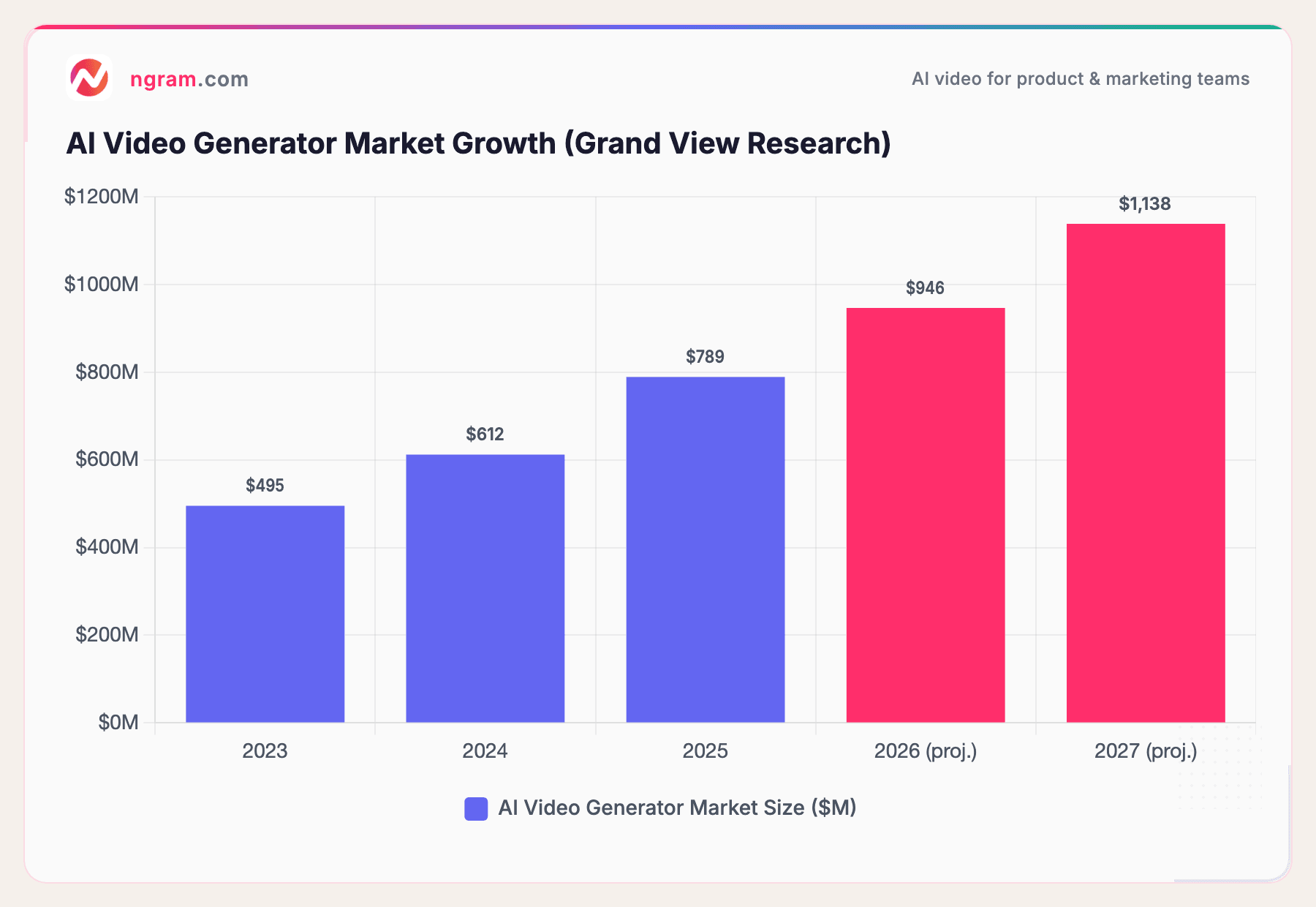
As the market approaches $1 billion, competition is compressing prices and raising quality floors. D-ID's 2017-era pricing model faces tools that offer more video per dollar.
What we actually tested
We didn't just list tools. We tested each platform, read hundreds of user reviews across G2, Capterra, TrustRadius, Reddit, and Product Hunt, and compared them across five weighted criteria:
| Criteria | Weight | What we looked at |
|---|---|---|
| AI Capabilities | 30% | Avatar realism, lip sync quality, emotional expressiveness, voice cloning, translation |
| Avatar Quality | 30% | Library size, diversity, custom avatar options, latest-gen model quality |
| Ease of Use | 20% | Onboarding experience, time-to-first-video, UI clarity, learning curve |
| Value | 15% | Price per minute of output, free tier generosity, feature-to-price ratio |
| Support & Community | 5% | Documentation quality, response times, community resources |
We also factored in:
- Real user reviews from G2, Capterra, TrustRadius, Reddit, and Product Hunt (qualitative sentiment, not numerical scores)
- Market presence and company stability (funding, user base, years in market)
- Integration ecosystem with common business tools
- Industry trends including the shift toward all-in-one platforms and away from single-use avatar tools
For AI avatar tools specifically, we weighted avatar quality and AI capabilities at 60% combined because that's the primary reason teams use these platforms. A tool with great AI but poor avatars, or vice versa, doesn't solve the core problem.
Frequently Asked Questions
Is there a free alternative to D-ID?
Several D-ID alternatives offer free tiers. VEED has a free plan with basic editing and AI features (watermarked). HeyGen offers 3 free videos per month. Fliki provides 5 minutes of free audio and video content monthly. ngram has a generous free plan for creating professional videos from any input format. None match D-ID's free trial length, but the paid plans start lower and include more output.
How does D-ID compare to HeyGen in 2026?
HeyGen has pulled ahead in avatar realism since launching Avatar IV in August 2025. HeyGen avatars show micro-expressions, natural head movements, and emotional responsiveness that D-ID's output doesn't match. HeyGen also offers unlimited videos on paid plans, while D-ID caps output by minutes. D-ID's advantage is its API ecosystem and developer focus, but for video quality, HeyGen leads.
What is the cheapest D-ID alternative?
VEED at $12/month (Lite plan) is the most affordable option with AI video features. Synthesia starts at $18/month. Colossyan and Pictory start at $19/month. ngram starts at $29/month. All of these cost less than D-ID's Pro plan at $49.99/month while offering comparable or greater output limits.
Can I use D-ID alternatives for commercial content?
Yes. All tools on this list include commercial usage rights on their paid plans. HeyGen, Synthesia, and Colossyan specifically serve enterprise customers with compliance features. ngram includes brand kit support for consistent commercial output. Always check the specific plan's terms, as free tiers may restrict commercial use.
Is D-ID still worth it in 2026?
D-ID's API remains valuable for developers building custom avatar integrations, and its acquisition of Simpleshow in September 2025 signals a push into explainer video territory. For pure API use cases with moderate volume, D-ID is still competitive. For studio-quality avatar videos, HeyGen and Synthesia offer better quality. For broader video creation beyond avatars, ngram and VEED offer more versatile workflows at lower price points.
What happened to D-ID's pricing?
D-ID restructured pricing in 2025, introducing a Lite plan at $5.99/month (10 minutes), Pro at $49.99/month (15 minutes), and Advanced at $299.99/month (65 minutes). The per-minute cost on Pro ($3.33/min) is among the highest in the category. The Lite plan is affordable but extremely limited. Most competitors now offer flat-rate or higher-volume plans at similar or lower price points.
Our verdict
The AI avatar video space in 2026 has outgrown D-ID's pricing model. If you need avatar-style videos with the most realistic presenters, HeyGen is the clear leader since Avatar IV. If your use case is enterprise training at global scale, Synthesia's compliance stack and 140+ languages are unmatched. And if you need professional videos that go beyond talking heads, turning docs, recordings, and images into polished output, ngram is the strongest fit.
D-ID still has a place for developers using its API at moderate volume. But for everyone else, $50 for 15 minutes is a tough sell when the rest of the market gives you more for less.
Try ngram free - your first video in under 5 minutes. Skip the avatar limitations. Turn any content into a polished, on-brand video without touching a timeline. Start free